In the realm of precision measurement and structural health monitoring, laser strain sensors have emerged as a pivotal technology, offering unparalleled accuracy and non-contact capabilities. Unlike traditional strain gauges that require physical attachment and can be influenced by environmental factors, laser-based systems provide a remote, high-fidelity method for measuring minute deformations in materials and structures. This article delves into the operational principles, key applications, and recent technological advancements of laser strain sensors, highlighting their critical role in modern engineering.
The fundamental principle behind a laser strain sensor is laser interferometry. It involves directing a coherent laser beam at the target surface. The reflected or scattered light from the surface interferes with a reference beam. Any microscopic displacement or strain in the target alters the optical path length of the measurement beam, resulting in a shift in the interference pattern. Sophisticated photodetectors and signal processing electronics analyze these fringe shifts, converting them into precise quantitative measurements of strain or displacement. Common interferometric techniques used include Laser Doppler Vibrometry (LDV) for dynamic measurements and Electronic Speckle Pattern Interferometry (ESPI) for full-field static and dynamic strain mapping. The non-contact nature is a paramount advantage, eliminating mass-loading effects and allowing measurements on hot, moving, or fragile surfaces inaccessible to contact sensors.
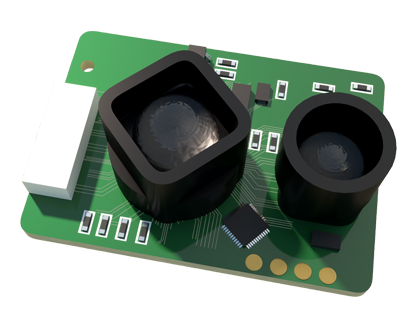
The applications of laser strain sensors span a diverse range of industries, driven by the demand for high precision and reliability. In aerospace engineering, they are indispensable for modal analysis and vibration testing of aircraft components, turbine blades, and entire airframes, ensuring structural integrity and fatigue life prediction. The automotive sector utilizes these sensors for NVH (Noise, Vibration, and Harshness) testing, analyzing chassis dynamics, and evaluating the performance of new materials like carbon fiber composites. Within civil engineering, laser sensors monitor critical infrastructure such as bridges, dams, and historical buildings, detecting subtle deformations that may indicate structural weakness long before catastrophic failure. Furthermore, in the field of microelectronics and MEMS (Micro-Electro-Mechanical Systems), laser interferometry is the go-to method for characterizing the mechanical properties of thin films and microscopic devices where contact methods are impossible.

Recent technological advancements are continuously expanding the capabilities and accessibility of laser strain sensing. The integration of fiber optics has led to compact, robust sensor heads suitable for harsh industrial environments. Advances in high-speed cameras and digital image correlation (DIC) software, when combined with laser illumination, enable full-field, 3D strain mapping with incredible spatial resolution. The development of portable and even handheld laser vibrometers has brought laboratory-grade precision into the field for maintenance and diagnostics. Additionally, the integration of artificial intelligence and machine learning algorithms with sensor data streams is enhancing predictive maintenance models, allowing for the early detection of anomalous strain patterns indicative of impending faults.
Despite their advantages, implementing laser strain sensors requires careful consideration. Surface preparation is often necessary to ensure sufficient laser light reflection, which can be a challenge for dark or transparent materials (often mitigated by applying a reflective tape or spray). Environmental vibrations and air turbulence can introduce noise into the measurements, necessitating the use of vibration isolation tables or advanced noise-cancellation algorithms in the signal processing chain. The initial capital investment for high-end systems can be significant, though the total cost of ownership is often justified by the data quality, reduced setup time, and non-destructive nature of the testing.
In conclusion, laser strain sensors represent a sophisticated and versatile tool in the engineer's arsenal. By leveraging the principles of laser interferometry, they deliver non-contact, high-precision strain measurements critical for research, development, and lifecycle monitoring across advanced industries. As technology progresses towards greater miniaturization, integration with IoT platforms, and smarter data analytics, the role of laser strain sensing is poised to grow even more central, ensuring the safety, performance, and innovation of the engineered world around us. Their ability to "see" stress and strain without touch continues to unlock new possibilities in material science and structural analysis.
