In the realm of industrial automation, sensing technology serves as the critical interface between the physical world and control systems. Among the diverse array of sensors, laser receiver sensors stand out for their precision, reliability, and versatility. This article delves into the operational principles, key applications, and essential considerations for selecting and implementing these sophisticated devices.
At its core, a laser receiver sensor is a photoelectric device designed to detect a laser beam emitted from a separate source. Unlike through-beam sensors that house both emitter and receiver in aligned units, a laser receiver operates independently, detecting light from an external laser emitter or even ambient laser light under specific conditions. The fundamental principle involves the conversion of photonic energy from the incident laser light into an electrical signal. The receiver's photodetector, typically a photodiode or a position-sensitive device (PSD), generates a current proportional to the intensity of the received light. Sophisticated internal circuitry then processes this signal, applying thresholds and filters to distinguish the target laser signal from background ambient light, ultimately providing a clean, digital, or analog output to a programmable logic controller (PLC) or other control unit.
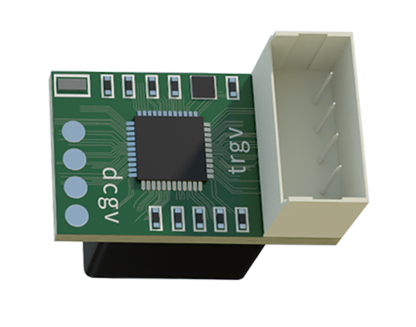
The advantages of laser receivers are manifold. They offer exceptionally high accuracy for alignment and positioning tasks, with some models capable of detecting beam displacement in the micrometer range. The coherent, narrow beam of a laser allows for operation over long distances and provides excellent resistance to interference from ambient light when paired with appropriate modulation techniques. Furthermore, their non-contact nature ensures no wear and tear on the sensed object, leading to high longevity and minimal maintenance.
Applications for laser receiver sensors are extensive and span numerous industries. In material handling and logistics, they are indispensable for precise pallet positioning, conveyor belt alignment, and robotic guidance systems. The manufacturing sector relies on them for critical quality control inspections, such as verifying component dimensions, detecting edge positions, and ensuring correct assembly alignment. In the construction and civil engineering fields, laser receivers are used with rotating or line lasers to establish level or plumb reference points over large distances, automating tasks like grading, excavation, and interior finishing. Emerging applications also include safety systems, where they form part of light curtains or scanning systems to create intrusion detection zones around hazardous machinery.
Selecting the appropriate laser receiver requires careful analysis of the application parameters. The first consideration is compatibility with the laser source. The receiver must be sensitive to the specific wavelength of the emitter (common industrial lasers operate at 650nm red or 850nm infrared). The sensing range, or the maximum distance over which it can reliably detect the beam, is paramount. Environmental factors pose another critical challenge; sensors destined for outdoor use or harsh indoor environments must have high Ingress Protection (IP) ratings against dust and water and may require specialized housings to withstand temperature extremes, vibration, or chemical exposure. The required output type—discrete (PNP/NPN) or analog (4-20mA, 0-10V)—must match the control system's input cards. For alignment tasks, the type of sensing field (e.g., a single point, a line, or a precise center point) and the receiver's response time are decisive factors.

Installation and calibration are crucial final steps for optimal performance. The receiver must be securely mounted to prevent vibration-induced misalignment. Precise alignment with the laser emitter's beam is often necessary, a task facilitated by models with built-in visual or auditory alignment aids. Regular maintenance, primarily keeping the lens clean from dust, oil, or debris, is simple but essential to prevent signal attenuation.
In conclusion, laser receiver sensors are powerful tools that enable high-precision measurement, alignment, and detection across a broad industrial spectrum. Their value lies in translating the invisible precision of a laser beam into actionable data for automation systems. By understanding their working principles and meticulously matching their specifications to the application's demands, engineers and system integrators can unlock significant gains in accuracy, efficiency, and process reliability. As automation continues to advance, the role of precise, reliable sensing, epitomized by the laser receiver, will only become more central to industrial innovation.
