Capacitive proximity level sensors represent a cornerstone technology in modern industrial automation, offering reliable and versatile solutions for liquid level detection across diverse sectors. Operating on the fundamental principle of capacitance change, these sensors detect the presence or absence of liquids by measuring variations in an electrical field. A typical sensor consists of an electrode (probe) that forms one plate of a capacitor, with the tank wall or a reference electrode acting as the other plate. When the liquid, acting as a dielectric medium, approaches or contacts the probe, it alters the capacitance value. This change is precisely measured by the sensor's internal circuitry, which then triggers an output signal—often a switching action—to indicate the liquid level status.
The operational superiority of capacitive sensors lies in their non-contact or minimal-contact design, which significantly reduces maintenance needs and prevents contamination. Unlike mechanical floats or optical sensors, they are unaffected by factors such as foam, vapor, or changes in liquid color and transparency. This makes them exceptionally suitable for challenging environments, including those involving viscous fluids, corrosive chemicals, or high-purity applications in the pharmaceutical and food industries. Advanced models feature adjustable sensitivity, allowing calibration to ignore buildup on tank walls or to detect specific materials through non-metallic containers.
In practical industrial settings, these sensors are deployed for high/low level alarms, pump control, and inventory management in storage tanks. For instance, in chemical processing plants, they monitor aggressive solvents without sensor degradation. In water treatment facilities, they control pumps based on reservoir levels. Their robust construction, often with materials like PTFE or stainless steel, ensures longevity even under extreme temperatures and pressures. Integration with PLCs and SCADA systems is seamless, typically via PNP/NPN outputs or analog signals (4-20 mA), enabling real-time monitoring and automated control loops.
However, optimal performance requires careful consideration during selection and installation. Factors such as the dielectric constant of the liquid, tank material, and environmental interference must be evaluated. Proper grounding and shielding are critical to mitigate electrical noise in industrial environments. Regular calibration checks are recommended to maintain accuracy, especially when handling fluids with variable compositions.
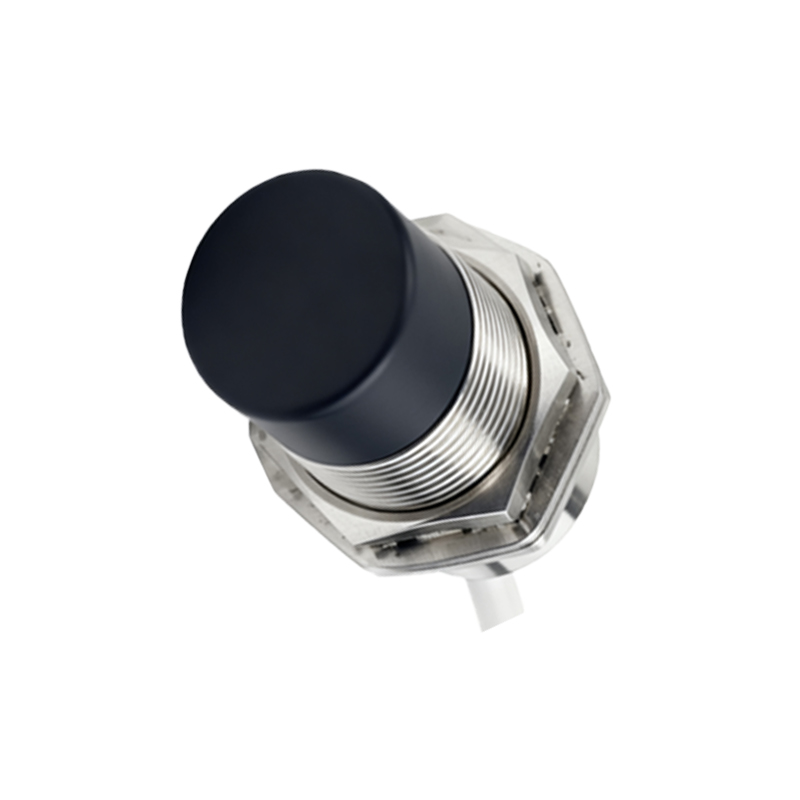
Looking ahead, innovations in smart sensor technology are enhancing capacitive level detection with features like IO-Link communication for predictive maintenance and digital diagnostics. These advancements promise greater precision and integration within Industry 4.0 frameworks, solidifying the role of capacitive proximity sensors as indispensable tools for efficient and safe liquid management in automation.