Laser sensors have become indispensable components in modern industrial automation, offering unparalleled precision in measurement, detection, and positioning tasks. At the heart of their functionality lies the generation, transmission, and interpretation of the laser sensor signal. This signal is the core data carrier, transforming physical parameters into actionable information for control systems.
Fundamentally, a laser sensor operates by emitting a focused beam of coherent light towards a target. The interaction of this beam with the target—whether through reflection, absorption, or diffraction—modifies the light's properties. A receiver within the sensor detects this altered light and converts it into an electrical signal. This raw electrical output is the primary laser sensor signal. Its characteristics, such as amplitude, frequency, phase, or time-of-flight, directly correlate with the measured variable, be it distance, displacement, presence, or thickness.

The quality and integrity of this signal are paramount. Signal-to-noise ratio (SNR) is a critical metric. A high SNR indicates a strong, clear signal relative to background electrical noise or ambient optical interference, such as from factory lighting or other machinery. Modern sensors employ various techniques to enhance SNR, including modulated laser beams (where the signal is encoded at a specific frequency), optical filters to block unwanted wavelengths, and sophisticated digital signal processing (DSP) algorithms. For instance, time-of-flight (ToF) sensors measure the precise time delay between an emitted laser pulse and the detection of its reflection. The signal here is a time-based digital pulse. Any jitter or distortion in this pulse directly translates to measurement error.
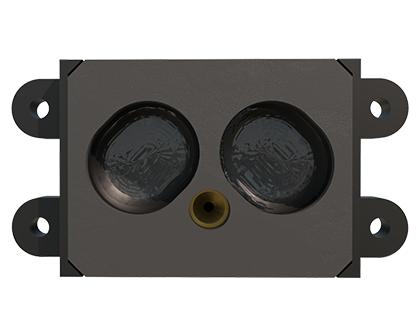
Signal output types are another crucial consideration. Common formats include analog (e.g., 0-10V, 4-20mA), digital (e.g., switching signals like NPN/PNP, serial data like RS-485), and increasingly, industrial Ethernet protocols (EtherNet/IP, PROFINET). The choice depends on the application's speed, resolution, and integration requirements. An analog signal provides a continuous range, ideal for precise positioning, while a discrete digital signal is perfect for simple object detection or part counting.
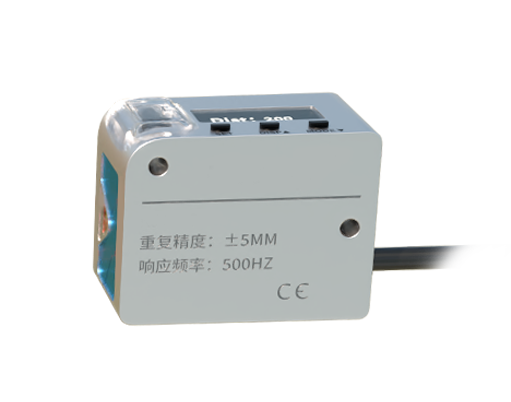
In practical applications, engineers must account for factors that can degrade the laser sensor signal. Target properties like color, reflectivity, surface texture, and angle of incidence significantly impact the strength of the returned signal. A matte black surface absorbs more light than a polished white one, resulting in a weaker signal. Environmental challenges such as dust, steam, vibration, and temperature fluctuations also pose risks. Many industrial-grade sensors are designed with robust housings, protective lenses, and temperature compensation circuits to mitigate these effects and maintain signal stability.
Furthermore, the journey of the signal does not end at the sensor. Signal conditioning—amplifying, filtering, and converting—is often necessary before the data is sent to a Programmable Logic Controller (PLC) or a supervisory system. Proper installation, alignment, and calibration are essential steps to ensure the sensor generates an optimal signal from the outset. Regular maintenance, including lens cleaning, is vital to prevent signal attenuation over time.
Looking ahead, advancements in laser diode technology, integrated photonics, and edge computing are pushing the boundaries of laser sensor signals. Higher-frequency modulation allows for more precise measurements. Intelligent sensors with onboard processing can pre-analyze the signal, sending only condensed, high-level data, which reduces network load and enables faster system response. Understanding the principles and nuances of the laser sensor signal is, therefore, not merely an academic exercise but a fundamental requirement for designing, implementing, and maintaining efficient, reliable, and high-performance automated systems. It is the language through which machines perceive their environment, and mastering it is key to unlocking greater levels of industrial productivity and quality control.