Lateral accuracy, often referred to as transverse or horizontal accuracy, is a critical performance parameter for proximity sensors in industrial automation and precision measurement systems. It defines the sensor's ability to consistently detect an object's presence or measure its position along an axis perpendicular to the sensor's primary sensing direction. In applications like robotic guidance, assembly verification, or edge detection, high lateral accuracy ensures reliable operation, minimizes errors, and contributes to overall system quality.
The fundamental principle behind lateral accuracy lies in the sensor's sensing field characteristics. Unlike the sensing range, which is measured along the central axis, lateral accuracy depends on the shape, uniformity, and stability of the electromagnetic or optical field generated by the sensor. For inductive and capacitive proximity sensors, the field shape is often conical or hemispherical. The "effective sensing zone" within this field—where the object is reliably detected—must have well-defined and repeatable boundaries. Any inconsistency or drift in these boundaries directly impacts lateral accuracy. Key factors influencing this include the sensor's head design, oscillator stability (for inductive types), and the internal signal processing algorithms that define the detection threshold.
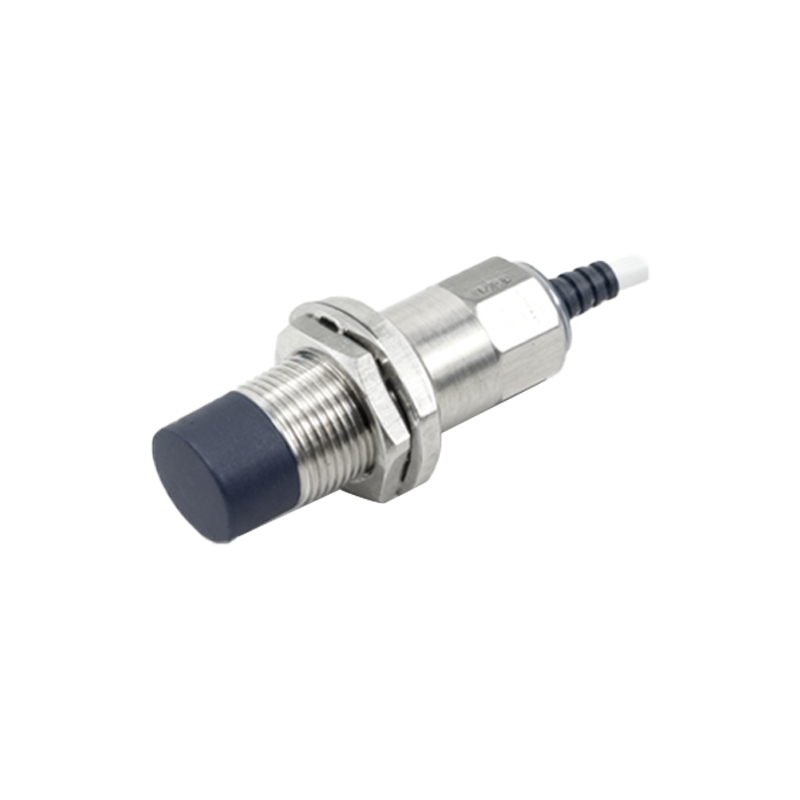
Several technical specifications quantify lateral accuracy. Repeatability, often expressed in micrometers (µm), is the most direct measure. It indicates the sensor's ability to produce the same output signal when an object repeatedly passes through the same lateral position under identical conditions. Hysteresis, another vital factor, is the difference in the switch-on and switch-off points along the lateral axis. Minimal hysteresis is essential for precise edge detection. Furthermore, the sensor's response to target material, size, and surface condition can affect lateral sensing consistency. For instance, a sensor might exhibit different lateral detection points for a steel target versus an aluminum one of the same size, due to differences in electromagnetic coupling.
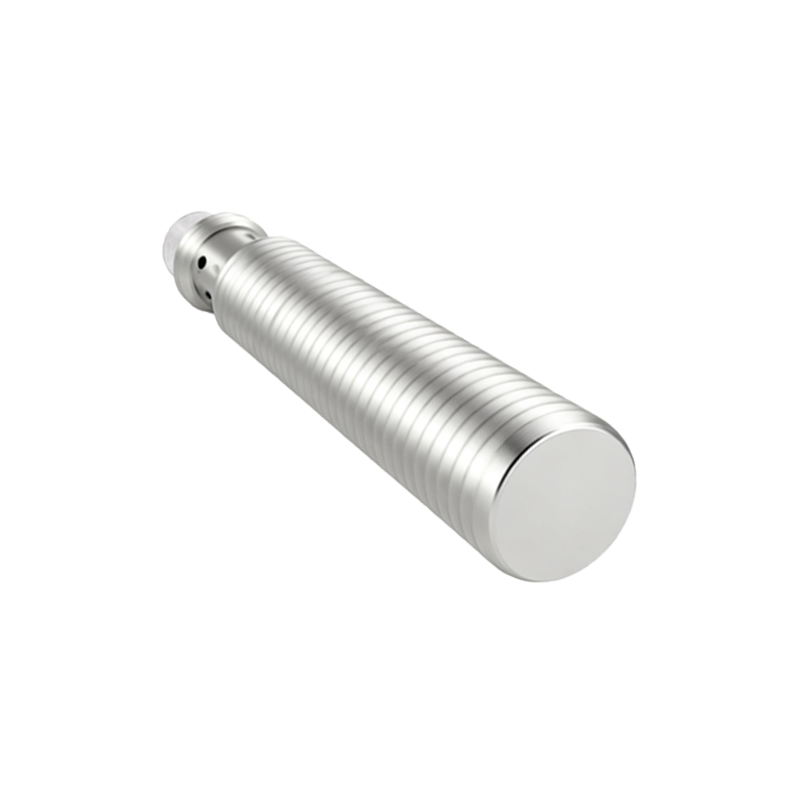
Environmental conditions pose significant challenges. Temperature fluctuations can alter the sensor's electronic components and the properties of its sensing field, leading to lateral drift. Industrial vibrations may cause mechanical misalignment or affect signal stability. Electrical noise from nearby motors or drives can interfere with sensor signals, causing false triggers or positional errors. To mitigate these, high-precision sensors incorporate temperature compensation circuits, robust housing designs, and advanced filtering in their electronics. Shielding, both in cables and sensor heads, is also crucial for noise immunity.
Selecting a sensor for high lateral accuracy applications requires careful consideration. First, choose the appropriate technology. Laser triangulation sensors and specialized eddy-current sensors typically offer superior lateral accuracy (down to single-digit microns) compared to standard inductive sensors. Second, evaluate the sensor's stated repeatability and hysteresis specifications under conditions matching the application. Third, consider the target characteristics; using a sensor with a smaller sensing face or a focused beam can improve lateral definition. Finally, mechanical mounting stability is paramount—any looseness in the bracket will destroy accuracy.
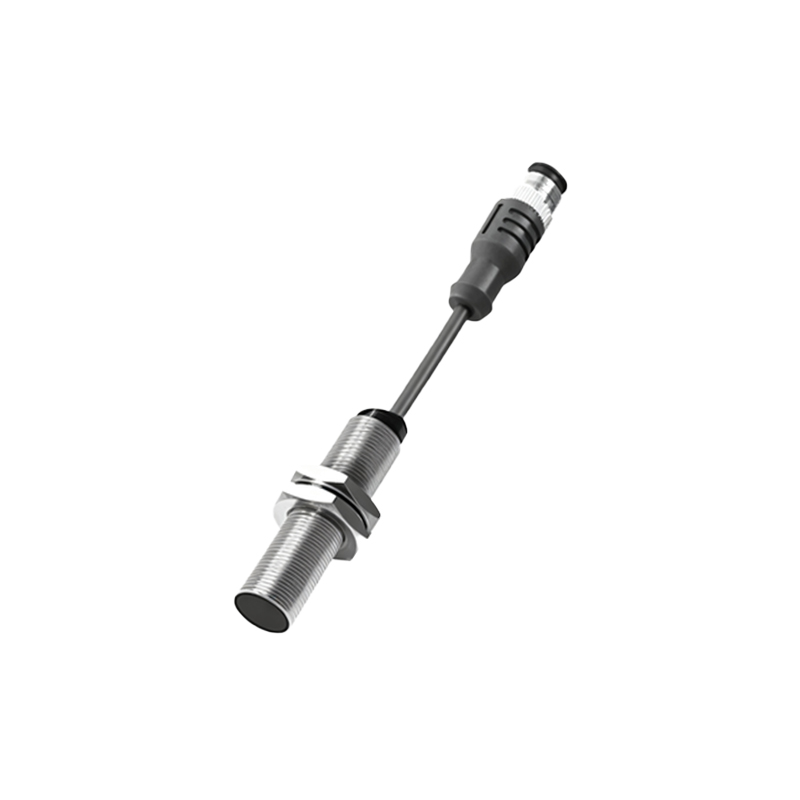
In practice, achieving optimal lateral accuracy extends beyond the sensor itself. Proper installation, alignment, and calibration are essential. The sensor should be mounted securely to prevent movement. During calibration, using a high-precision positioning stage to map the sensor's response across its lateral field can identify and compensate for any non-linearities. Regular maintenance checks for buildup of contaminants on the sensor face, which can distort the sensing field, are also necessary.
Future trends aim to push lateral accuracy limits further. Integration of microprocessors allows for intelligent compensation and real-time calibration. Multi-channel sensor arrays can provide averaged positional data, reducing the impact of local field anomalies. Furthermore, sensors with integrated IO-Link or other digital communication protocols enable detailed diagnostics and parameter adjustments remotely, facilitating fine-tuning for maximum accuracy in situ.
Ultimately, understanding and specifying lateral accuracy is not merely about reading a datasheet value. It involves a holistic view of the sensor's technology, its interaction with the target and environment, and the integrity of the entire mechanical and electrical system. By prioritizing lateral accuracy where needed, engineers can significantly enhance the precision, reliability, and efficiency of automated industrial processes.