Laser sensor watches represent a sophisticated fusion of optics, electronics, and precision engineering, offering unparalleled accuracy in timekeeping and health monitoring. At their core, these devices operate on the principle of laser interferometry or laser-based photoplethysmography (PPG), depending on their primary function—whether for measuring movement, distance, or physiological signals like heart rate.
The fundamental mechanism involves emitting a low-power laser beam, typically in the visible or near-infrared spectrum, toward a target surface—such as the skin on a wearer’s wrist or an external object. When the laser light strikes the surface, it reflects back to a photodetector within the watch. By analyzing the properties of the reflected light, such as its phase, intensity, or time-of-flight, the sensor can derive precise measurements. For instance, in distance or motion tracking, laser interferometry measures minute changes in the path length of the laser beam, calculating displacement with micron-level accuracy. This is achieved through interference patterns created when the reflected beam combines with a reference beam, allowing detection of even subtle movements like wrist tilts or gestures.
In health-focused applications, laser sensors utilize PPG technology to monitor vital signs. Here, the laser penetrates the skin’s superficial layers, where blood vessels absorb and scatter light. Variations in blood volume during cardiac cycles alter the amount of reflected light, enabling the sensor to detect heart rate, blood oxygen saturation (SpO2), and even stress levels through advanced algorithms. Unlike traditional LED-based sensors, lasers offer higher signal-to-noise ratios and deeper tissue penetration, resulting in more reliable data, especially during physical activities.
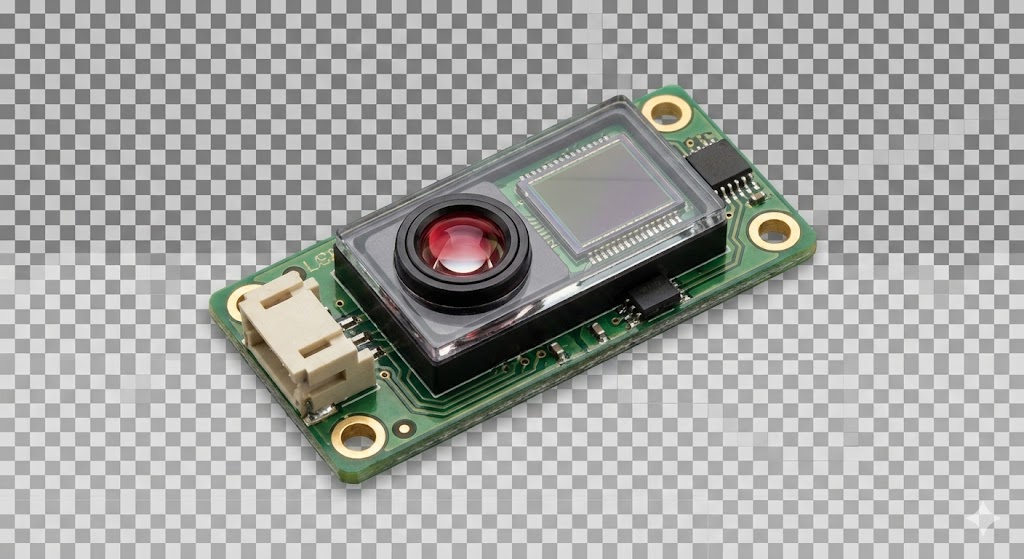
The integration of these sensors into watches involves miniaturized components, including laser diodes, micro-optic lenses, and application-specific integrated circuits (ASICs). Power efficiency is critical, as continuous laser emission can drain batteries; thus, modern designs incorporate pulsed laser systems and low-power modes. Data from the sensor is processed in real-time by onboard microprocessors, filtering out artifacts like ambient light or motion noise before transmitting insights to the watch’s display or paired devices via Bluetooth.
From an engineering perspective, challenges include ensuring user safety by adhering to Class 1 or Class 2 laser standards, which limit output power to non-hazardous levels. Additionally, environmental factors—such as skin tone, tattoos, or external vibrations—can affect accuracy, necessitating calibration algorithms. In industrial contexts, laser sensor watches are employed for precision timing in sports or fieldwork, leveraging their ability to measure speed, cadence, and elevation with minimal latency.
Looking ahead, advancements in quantum dot lasers and AI-driven signal processing promise to enhance sensitivity and multifunctionality. These watches may soon incorporate non-invasive glucose monitoring or early disease detection, expanding their role beyond timekeeping into proactive health management. As laser technology evolves, its integration into wearable devices will continue to redefine accuracy and utility, making laser sensor watches a cornerstone of modern personal electronics.
