In the realm of industrial automation and control systems, proximity sensors are indispensable components for non-contact object detection. Among the various technologies available, inductive and capacitive proximity sensors stand out as the two most prevalent and reliable types. While they share the common goal of detecting the presence or absence of an object without physical contact, their underlying operating principles, suitable materials, and typical applications differ significantly. A clear understanding of these differences is crucial for engineers and technicians to select the optimal sensor for a given task, ensuring system reliability, efficiency, and cost-effectiveness.
Inductive Proximity Sensors: The Metal Detectors
An inductive proximity sensor operates on the principle of electromagnetic induction. Its core component is a coil wound around a ferrite core, which forms part of an oscillator circuit. When an alternating current flows through this coil, it generates an oscillating electromagnetic field at the sensor's active face. When a conductive metal object enters this field, eddy currents are induced on the object's surface. These eddy currents draw energy from the oscillator, causing a reduction in the oscillation amplitude. An evaluation circuit within the sensor monitors this amplitude change. Once the amplitude drops below a predetermined threshold—indicating the object is within the specified sensing range—the sensor's output state switches, typically from open to closed (or vice-versa for a normally closed configuration).
Key characteristics of inductive sensors include:
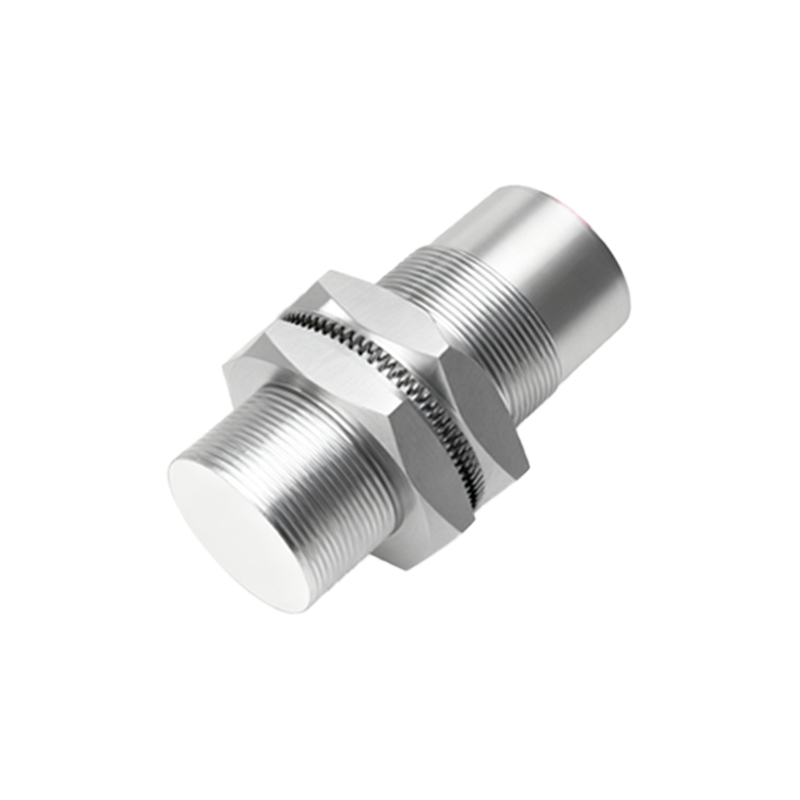
Target Material: They detect only electrically conductive metals, primarily ferrous metals like steel and iron. Detection of non-ferrous metals like aluminum, copper, or brass is possible but often with a reduced sensing range.
Sensing Range: Generally limited, often from a few millimeters up to about 60 mm for standard models. The range is influenced by the target's size, shape, and material.
Environmental Robustness: Highly resistant to environmental factors such as dust, dirt, oil, and non-conductive contaminants. The sensing field is largely unaffected by these materials.
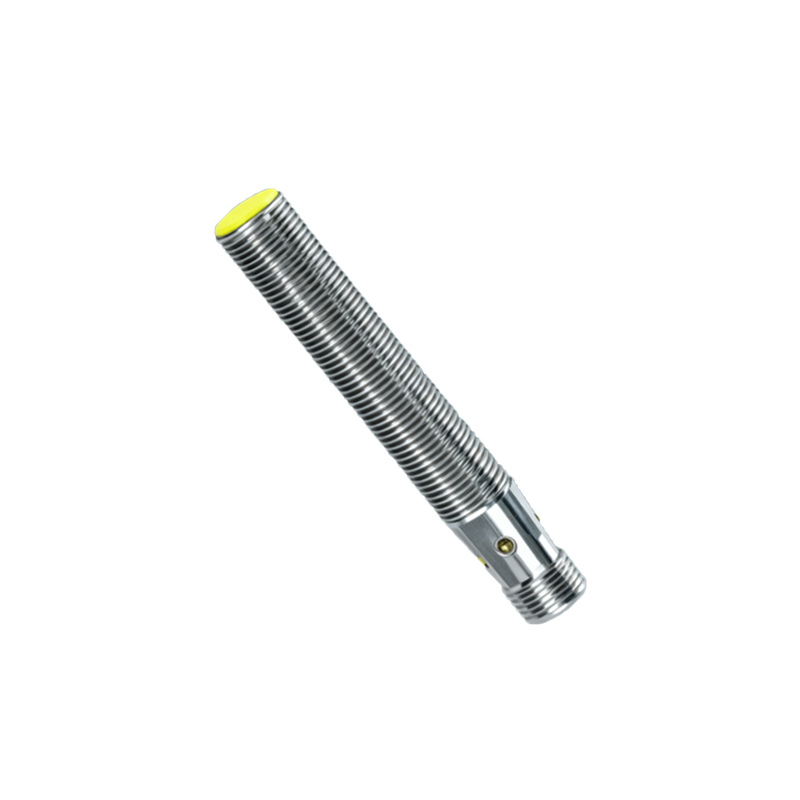
Typical Applications: Ideal for metal detection in harsh industrial environments. Common uses include counting metal parts on a conveyor, determining the position of a machine tool or cylinder, detecting the presence of a metal gear tooth, and as end-of-travel limit switches in machinery.
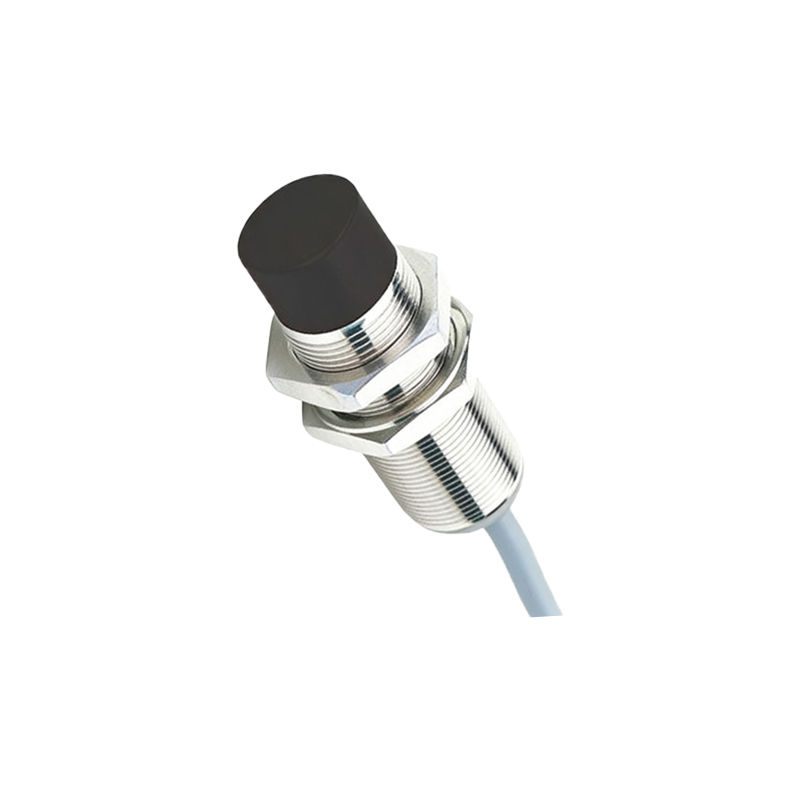
Capacitive Proximity Sensors: The Versatile Detectors
A capacitive proximity sensor functions based on the principle of capacitance change. The sensor's active face acts as one plate of a capacitor, with the target object (or the mounting surface) acting as the other plate. The sensor's internal electronics generate an electrostatic field. When any object—solid, liquid, granular, or powdered—enters this field, it alters the dielectric constant between the plates, thereby changing the circuit's capacitance. This change in capacitance is measured by an internal circuit. When the change exceeds a set level, the sensor triggers its output switch.
Key characteristics of capacitive sensors include:
Target Material: They can detect virtually any material: metals, plastics, glass, wood, cardboard, liquids, powders, and pastes. The material's dielectric constant determines the effective sensing distance; materials with higher constants (like water) are detected more easily than those with lower constants (like dry plastics).
Sensing Range: Typically shorter than comparable inductive sensors for metals but can be adjusted via a sensitivity potentiometer to fine-tune for different materials and to ignore unwanted background objects (like a container wall).
Environmental Sensitivity: Can be affected by moisture, humidity, and certain types of dust or contaminants that alter the dielectric properties in the sensing field. Some models are specifically designed to be immune to such effects.
Typical Applications: Excellent for non-metal detection and level sensing. They are used to detect filled levels of liquids in non-metallic tanks, monitor the presence of plastic bottles or glass containers, control the level of granular materials in hoppers, and detect wood or paper products.
Selection Criteria and Practical Considerations
Choosing between an inductive and capacitive sensor involves a systematic evaluation of the application requirements:
1. Target Material: This is the primary deciding factor. Is the target metallic? Choose inductive. Is it non-metallic, liquid, or granular? Choose capacitive.
2. Sensing Distance: Determine the required nominal sensing distance (Sn) and consider installation tolerances. Inductive sensors generally offer longer ranges for metals.
3. Operating Environment: Assess exposure to chemicals, washdowns, temperature extremes, and electrical noise. Both types are available in rugged, shielded housings (e.g., stainless steel, PBT plastic) with high IP (Ingress Protection) ratings.
4. Output Configuration: Decide between discrete outputs (PNP/NPN, NO/NC) or analog outputs (4-20 mA, 0-10V