In the rapidly evolving landscape of industrial automation, precision and reliability are paramount. Among the myriad of technologies driving this evolution, laser array sensors have emerged as a cornerstone for advanced measurement, inspection, and control systems. These sophisticated devices, composed of multiple laser emitters and corresponding receivers arranged in a specific pattern, offer unparalleled capabilities that traditional single-point sensors cannot match. Their primary function lies in capturing high-resolution, two-dimensional or even three-dimensional data of objects or environments with exceptional speed and accuracy.
The operational principle of laser array sensors is rooted in the emission of structured laser light patterns. Unlike a single laser beam that measures one point at a time, an array projects a line, grid, or other complex pattern onto a target surface. The reflected or scattered light is then captured by a dedicated receiver, such as a CMOS or CCD camera. By analyzing the deformation, displacement, or intensity variation of this projected pattern, the sensor can calculate critical parameters including distance, height, profile, contour, and surface defects. This method, often based on triangulation or time-of-flight principles, enables non-contact measurement, which is crucial for inspecting delicate, hot, or fast-moving objects without causing damage or disruption to the production line.
One of the most significant applications of laser array sensors is in dimensional gauging and quality control. In automotive manufacturing, for instance, these sensors are deployed to verify the precise gap and flushness between body panels, ensuring aesthetic consistency and structural integrity. They scan entire assemblies in seconds, generating comprehensive 3D point clouds that are compared against digital CAD models. Any deviation beyond tolerance thresholds triggers an immediate alert, allowing for real-time corrective actions. Similarly, in electronics assembly, laser arrays inspect solder paste deposition, component placement, and PCB warpage with micron-level precision, drastically reducing defects and rework rates.

Beyond static measurement, laser array sensors excel in dynamic environments. In logistics and packaging, they are integral to volume measurement systems for parcels and pallets. By rapidly scanning objects on conveyor belts, they determine exact dimensions for optimal space utilization in storage and transportation, directly impacting cost efficiency. Furthermore, in robotics and automated guided vehicles (AGVs), these sensors provide essential data for navigation, obstacle avoidance, and bin-picking operations. The rich environmental data allows robots to perceive their surroundings in detail, facilitating more autonomous and flexible material handling.
Another critical role is in surface inspection and defect detection. Industries such as steel, paper, and textiles rely on laser array sensors to identify imperfections like scratches, dents, coating irregularities, or thickness variations. The high-density data points captured across a wide area enable the detection of even minute flaws that might be invisible to the human eye or conventional vision systems. This proactive monitoring helps maintain product quality, reduces waste, and prevents downstream equipment damage.
The integration of laser array sensors with advanced software and machine learning algorithms has further expanded their utility. Modern systems can not only capture data but also interpret it, classifying defects, predicting maintenance needs, and optimizing processes autonomously. This convergence of hardware and intelligent analytics is a key driver toward the realization of smart factories and Industry 4.0, where data-driven decision-making enhances overall operational efficiency.
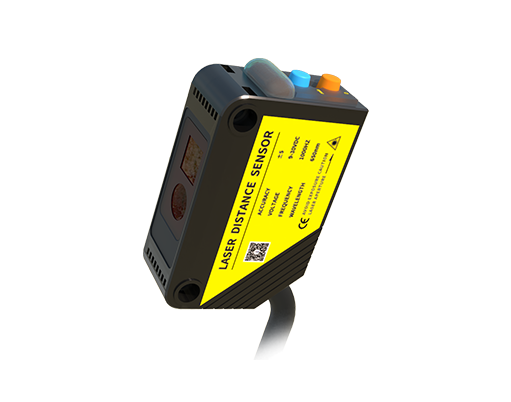
Despite their advantages, implementing laser array sensors requires careful consideration. Factors such as environmental conditions (ambient light, dust, vibrations), material properties (reflectivity, color, transparency), and required resolution must be evaluated to select the appropriate sensor configuration. Regular calibration and maintenance are also essential to ensure long-term accuracy and reliability.
In conclusion, laser array sensors are transformative components in modern industrial systems. By delivering high-speed, high-accuracy, and non-contact multidimensional data, they address complex challenges in measurement, inspection, and automation. As technology continues to advance, with developments in higher-density arrays, faster processing, and enhanced connectivity, their role is set to become even more pivotal, enabling new levels of precision, efficiency, and intelligence across diverse sectors from manufacturing to logistics and beyond.