In the realm of automation, robotics, and smart devices, sensors act as the fundamental sensory organs, providing critical data about the environment. Among the most commonly utilized are distance sensors and what are often colloquially referred to as proximity light sensors. While the terms are sometimes used interchangeably, they represent distinct technologies with unique operating principles, strengths, and ideal use cases. Understanding the difference between a distance sensor and a proximity light sensor is crucial for selecting the right component for any project.
At its core, a proximity light sensor is typically a simple device designed to detect the presence or absence of an object within a very short, predefined range. It often does not provide precise measurement of how far away the object is, only that it is "near" or "not near." A classic example is the infrared (IR) proximity sensor found in smartphones. It emits a beam of infrared light and has a receiver that detects the reflection. When an object (like your face during a call) is close enough to reflect a sufficient amount of light back to the receiver, the sensor triggers an event—in this case, turning off the touchscreen to prevent accidental inputs. These sensors are optimized for binary detection: something is either present within a few centimeters or it is not. They are generally low-cost, low-power, and simple to integrate.
Distance sensors, on the other hand, are engineered to provide quantitative data. Their primary function is to measure the exact distance between the sensor and a target object, often with remarkable precision over a much wider range. Technologies like ultrasonic sensors, laser rangefinders (LiDAR), and time-of-flight (ToF) sensors fall into this category. An ultrasonic sensor, for instance, emits high-frequency sound pulses and calculates distance by measuring the time it takes for the echo to return. LiDAR and ToF sensors use laser light and precisely measure the phase shift or round-trip time of the light beam to determine distance with millimeter accuracy. These sensors output a variable value—such as centimeters or millimeters—that can be used for mapping, navigation, level sensing, or complex object avoidance.
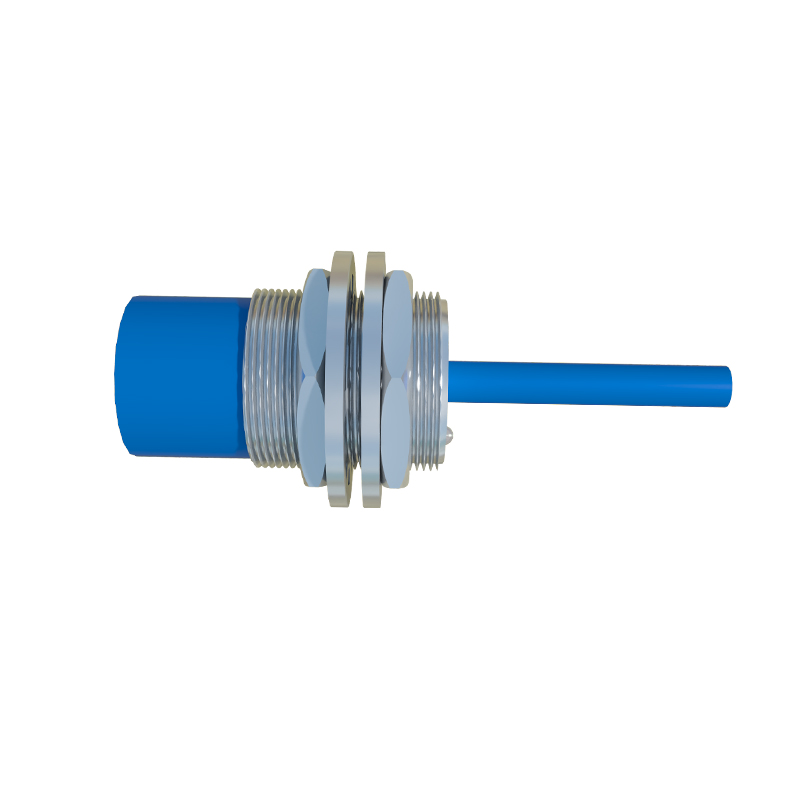
The key distinction lies in the output and application. A proximity light sensor gives a digital "yes/no" signal, while a distance sensor provides an analog or digital value representing a measurement. This fundamental difference dictates their roles. Proximity sensors are perfect for simple presence detection: automatic faucets, paper detection in printers, or safety interlocks on machinery doors. They answer the question, "Is something there?" Distance sensors answer the question, "How far away is it?" This makes them indispensable for robotics (for navigation and obstacle mapping), industrial automation (bin level monitoring, positioning), and photography (autofocus systems).
Another critical factor is environmental robustness. Simple IR proximity sensors can be fooled by ambient light or the reflectivity of the target object. A shiny surface might reflect too much light, causing a false "near" detection, while a dark, absorbent surface might not reflect enough. Distance sensors, particularly ultrasonic ones, are less affected by object color or reflectivity but can be challenged by soft, sound-absorbing materials. Laser-based sensors are highly accurate but can be more expensive and sensitive to certain environmental conditions like fog or dust.
When designing a system, the choice hinges on the required information. If the need is to simply detect when a user brings a phone to their ear, a low-power IR proximity sensor is the optimal, cost-effective solution. If an autonomous robot needs to navigate a cluttered room, a suite of ultrasonic or LiDAR distance sensors is necessary to build a spatial map. In some advanced systems, both are used in tandem; a proximity sensor might wake up a device from sleep mode, after which a more precise distance sensor activates for detailed interaction.
In conclusion, while both distance sensors and proximity light sensors serve to bridge the physical and digital worlds by detecting objects, they are not synonymous. The proximity light sensor is a specialist in simple, short-range presence detection, prized for its simplicity and low energy consumption. The distance sensor is a measurement tool, providing precise spatial data for complex tasks. Recognizing this technological divide is the first step toward creating more efficient, intelligent, and responsive electronic systems across consumer, industrial, and research domains.