In the realm of industrial automation and control systems, proximity sensors stand as fundamental components for non-contact object detection. While their primary sensing technologies—inductive, capacitive, ultrasonic, and photoelectric—are well-documented, the functionality of their output interfaces, particularly serial communication, is equally critical for system integration and data intelligence. This article delves into the serial output functionality of modern proximity sensors, exploring its protocols, advantages, and implementation considerations.
Serial output, in this context, refers to the sensor's ability to transmit data sequentially, bit by bit, over a communication channel. This is a significant step beyond traditional discrete outputs (like PNP/NPN) that simply provide an on/off signal. A proximity sensor equipped with a serial interface can communicate rich datasets to a host controller, such as a Programmable Logic Controller (PLC), a microcontroller, or a dedicated industrial computer.
The most common serial communication protocols implemented in industrial proximity sensors include RS-232, RS-422/485, and various fieldbus-oriented serial layers. In recent years, IO-Link, a point-to-point serial communication protocol, has gained tremendous popularity. IO-Link transforms a standard digital sensor into an intelligent device capable of two-way communication. Through its serial data stream, a proximity sensor with IO-Link can not only signal detection but also transmit parameters like measured distance (for analog-capable sensors), temperature data, operating hours, signal strength, and device health status. This enables predictive maintenance, remote configuration, and detailed process diagnostics.
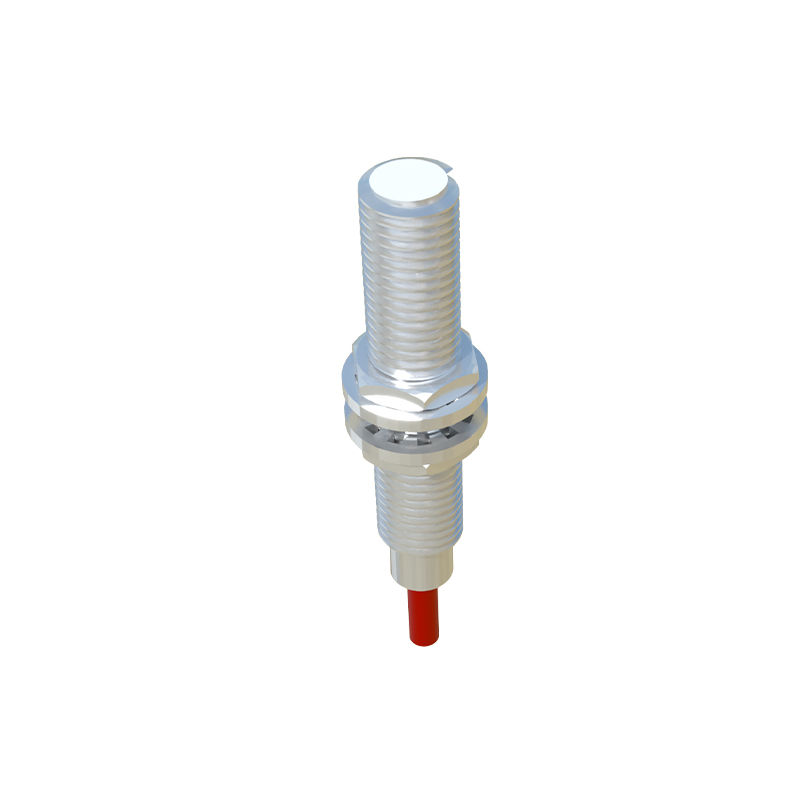
The advantages of utilizing proximity sensors with serial output are manifold. Firstly, they enable enhanced diagnostics and monitoring. Instead of merely knowing if an object is present or absent, engineers can access real-time operational data. For instance, a gradual decrease in the signal amplitude from an inductive sensor might indicate accumulating metallic debris or impending coil failure, allowing for intervention before a system halt. Secondly, serial communication simplifies wiring and reduces infrastructure costs. A single cable carrying serial data can replace multiple wires needed for discrete signals and analog values, especially in complex multi-sensor setups. Protocols like RS-485 support multi-drop networks, allowing several sensors to communicate on a single bus line.
Thirdly, it facilitates parameterization and flexibility. Settings such as sensing range, output delay, and switching hysteresis can be downloaded to the sensor via the serial interface. This allows for quick changeovers in production lines or fine-tuning without physical adjustments to the sensor. Finally, serial output integrates seamlessly into the Industry 4.0 and Industrial Internet of Things (IIoT) framework. Data from sensors becomes part of a larger data ecosystem, enabling advanced analytics, centralized management, and integration with Manufacturing Execution Systems (MES).
Implementing serial-output proximity sensors requires careful planning. The choice of protocol is paramount. RS-232 is suitable for short-distance, point-to-point connections to a computer. RS-485 is robust for longer distances and noisy industrial environments, supporting network topologies. IO-Link is ideal for achieving device-level intelligence and interoperability within a standardized ecosystem. Engineers must also consider the baud rate, data format (bits, parity, stop bits), and the physical connector type.
Furthermore, the software and firmware on the receiving controller must be capable of parsing the serial data frame. This often involves understanding the sensor's specific data structure or using standardized device description files, such as the IODD (IO-Link Device Description) for IO-Link devices. Electrical considerations, including cable shielding, grounding to prevent noise interference, and compliance with voltage level specifications, are crucial for reliable communication.
In practical applications, a serial-output inductive proximity sensor on a conveyor system might continuously stream the exact distance to a metal pallet. This data can be used not just for detection, but to trigger robotic arms at precise moments or to monitor pallet positioning accuracy. In automated storage systems, capacitive sensors with serial output can communicate material type detection and level information directly to the warehouse management software.
In conclusion, the serial output functionality elevates the humble proximity sensor from a simple switch to a smart, data-generating node in the industrial network. It unlocks capabilities for detailed process insight, simplified wiring, remote management, and future-ready connectivity. As industries continue to embrace digital transformation, specifying and understanding the serial communication features of proximity sensors will become an increasingly essential skill for electrical engineers and system integrators, driving efficiency and intelligence on the factory floor.