Laser sensors, particularly those utilizing phase-based measurement principles, have become indispensable tools in modern industrial automation. These advanced devices offer unparalleled precision, speed, and reliability for a wide range of sensing and measurement tasks. At their core, laser sensors operate by emitting a focused beam of coherent light toward a target. The sensor then analyzes the properties of the reflected light, such as its intensity, phase shift, or time-of-flight, to determine critical parameters like distance, displacement, thickness, or presence.
The principle of phase-shift measurement, often associated with high-precision laser displacement sensors, is a sophisticated technique. The sensor modulates the intensity of the emitted laser beam at a specific high frequency. When this modulated light reflects off a target and returns, its phase is shifted relative to the original emitted beam. By precisely measuring this phase difference, the sensor can calculate the distance to the target with micron-level accuracy. This method excels in applications requiring high resolution over short to medium ranges, such as in semiconductor wafer inspection, precision assembly, and vibration analysis.
Compared to traditional contact probes or other optical methods like ultrasonic or infrared sensors, laser sensors provide distinct advantages. Their non-contact nature eliminates mechanical wear and prevents damage to delicate surfaces. The focused laser spot allows for measurements on very small features or within confined spaces. Furthermore, the high response speed enables real-time process control in high-speed production lines, such as in automotive manufacturing for gap and flush measurement or in electronics for component placement verification.

A key component enabling this performance is the sensing element, often referred to in technical contexts as the "original phase" or core sensing module. This module integrates the laser diode, optics, and the high-speed photodetector that captures the returning light. The quality and design of this core directly influence the sensor's signal-to-noise ratio, linearity, and long-term stability. Modern designs incorporate advanced algorithms to compensate for environmental variables like ambient light or temperature fluctuations, ensuring consistent performance in harsh industrial environments.
The applications of laser sensors span virtually every sector of manufacturing. In the metals industry, they are used for precise thickness gauging of sheets and coils. In logistics, they facilitate package dimensioning and robotic palletizing. In pharmaceutical packaging, they verify fill levels in vials and blister packs without contamination risk. The advent of miniaturized and more cost-effective laser sensor packages is also driving their integration into consumer electronics and autonomous mobile robots for navigation and obstacle detection.
When selecting a laser sensor for an application, engineers must consider several specifications. The measuring range, resolution, spot size, and linearity are primary factors. The type of output (analog, digital, or serial communication) must interface seamlessly with the existing control system. Environmental ratings for dust, water, and vibration resistance (e.g., IP67) are crucial for rugged installations. Additionally, the choice of visible red laser or Class 1 or 2 infrared laser depends on the target material and workplace safety regulations.

Looking ahead, the integration of laser sensors with Industrial Internet of Things (IIoT) platforms is a significant trend. Smart sensors with embedded intelligence can perform preliminary data analysis, predict maintenance needs, and communicate directly with cloud-based systems. Furthermore, the development of multi-point laser profilers and line lasers is expanding capabilities from single-point measurement to full 3D contour scanning, opening new frontiers in quality control and reverse engineering.
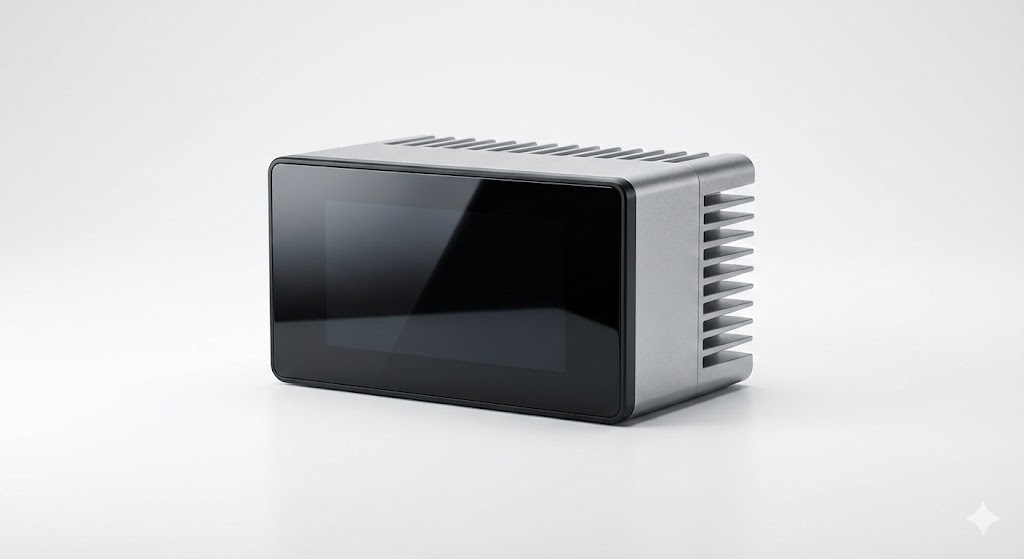
In conclusion, laser sensors represent a critical technology driving the evolution toward smarter, more flexible, and more precise manufacturing. Their ability to deliver accurate, non-contact measurements at high speeds makes them a cornerstone of industrial automation. As core sensing technology continues to advance, these devices will enable even more sophisticated applications, solidifying their role as essential eyes of the modern automated factory.