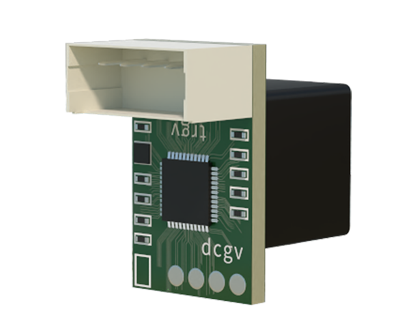
In the rapidly evolving landscape of industrial automation and robotics, the choice of sensing technology is paramount for achieving precision, reliability, and efficiency. Two prominent contenders in this domain are binocular vision sensors and laser sensors. Each technology offers distinct advantages and is suited to specific applications, making a comparative analysis essential for engineers and system integrators.
Binocular vision sensors, also known as stereo vision systems, operate on principles inspired by human depth perception. They utilize two cameras, spaced apart at a known distance (baseline), to capture simultaneous images of a target object or scene. By analyzing the disparity—the slight differences in the position of objects between these two 2D images—the system can compute highly accurate 3D depth information through sophisticated triangulation algorithms. The core strength of binocular vision lies in its ability to provide rich, contextual data. It doesn't just measure distance; it captures a full field of view, enabling complex tasks like object recognition, pose estimation, and detailed surface inspection. Modern systems are often enhanced with structured light patterns to improve accuracy in low-texture environments. However, their performance can be influenced by ambient lighting conditions and the computational power required for real-time processing of large image datasets.
In contrast, laser sensors, particularly Laser Distance Sensors (LDS) and LiDAR (Light Detection and Ranging), function by emitting a focused beam of laser light and measuring the time it takes for the reflection to return (Time-of-Flight or ToF principle) or by analyzing the phase shift of the modulated beam. This method provides extremely precise, single-point or line-based distance measurements. Laser sensors are renowned for their high speed, long range, and exceptional accuracy, often down to sub-millimeter levels, regardless of ambient light. They excel in applications demanding exact dimensional control, such as thickness gauging, precise positioning, and high-speed contour profiling. Their output is typically a straightforward point cloud or distance value, making data processing relatively simpler and faster compared to vision systems. A key limitation is their lack of inherent contextual awareness; a laser point measures distance to whatever surface it hits, without identifying what that object is.
The selection between these technologies hinges on specific application requirements. Binocular vision is the superior choice for tasks requiring high-level perception and decision-making. In robotic bin picking, for instance, a stereo vision system can identify randomly oriented parts, determine their precise 3D location and orientation, and guide the robot gripper accordingly. It is also indispensable in quality control for detecting complex surface defects, color variations, or assembly verification where visual context is critical. The automotive industry leverages it for assembly guidance and final inspection.

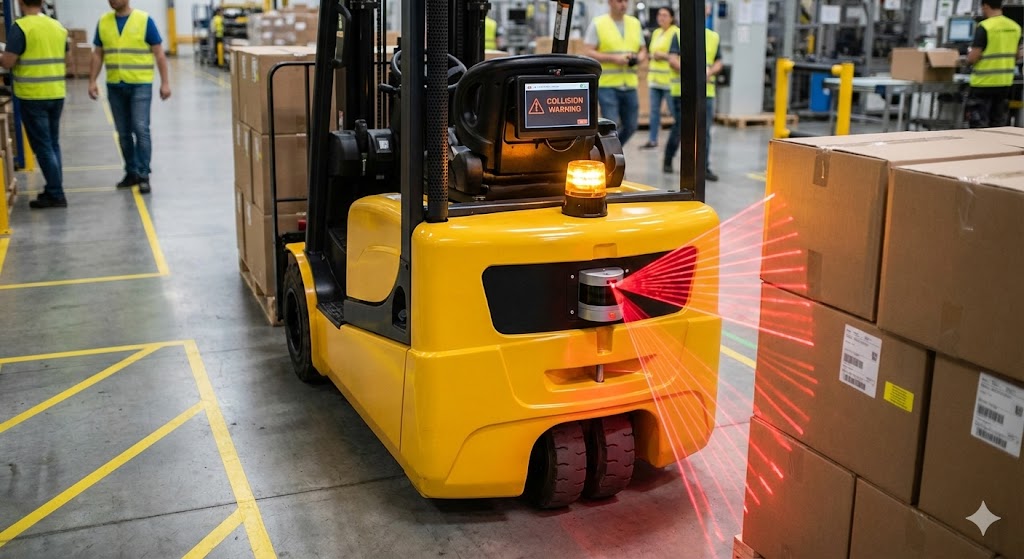
Laser sensors dominate in scenarios where sheer measurement speed, long-range capability, or operation in challenging environments is needed. They are integral in logistics for warehouse automation, measuring parcel dimensions on high-speed conveyors. In heavy industries like metal processing, laser scanners provide reliable profile monitoring and alignment where dust, sparks, or variable lighting would compromise vision systems. They are also the cornerstone of autonomous guided vehicles (AGVs) and drones for real-time obstacle detection and navigation via LiDAR mapping.
A growing trend is the synergistic integration of both technologies. A system might use a fast laser sensor for initial object detection and rough distance measurement, triggering a high-resolution binocular vision system for detailed inspection and identification only when needed. This hybrid approach optimizes both speed and intelligence.
For engineers, the decision matrix involves evaluating factors like required accuracy, processing speed, environmental robustness (light, dust, vibration), field of view, depth of field, and total system cost. While binocular vision offers a richer dataset for intelligent automation, laser sensors provide unparalleled metrological performance for controlled measurement tasks. The future will likely see continued advancements in both fields: machine learning algorithms making vision systems more adaptive and faster, and solid-state LiDAR reducing the cost and size of laser scanning solutions. Ultimately, understanding the fundamental principles and trade-offs of binocular vision and laser sensing is key to deploying the right technological solution for building smarter, more responsive, and more efficient automated systems.