Capacitive proximity sensors are widely used in industrial automation for non-contact detection of various objects, including metals, plastics, liquids, and granular materials. Unlike inductive sensors, which only detect metallic objects, capacitive sensors operate based on changes in capacitance, making them versatile for diverse applications. This article delves into the working principles, key components, and practical considerations of capacitive proximity sensors, providing insights for engineers and technicians in the electrical and automation fields.
The fundamental principle of a capacitive proximity sensor revolves around capacitance, which is the ability of a system to store an electric charge. A capacitor typically consists of two conductive plates separated by a dielectric material. In a capacitive sensor, one plate acts as the sensor electrode, while the other is formed by the target object or a reference ground. When an alternating voltage is applied to the sensor electrode, an electrostatic field is generated. As a target object enters this field, it alters the dielectric properties between the sensor and the object, leading to a change in capacitance. This change is detected by the sensor's internal circuitry, which triggers an output signal—usually a switch to ON or OFF state—indicating the presence or absence of the object.
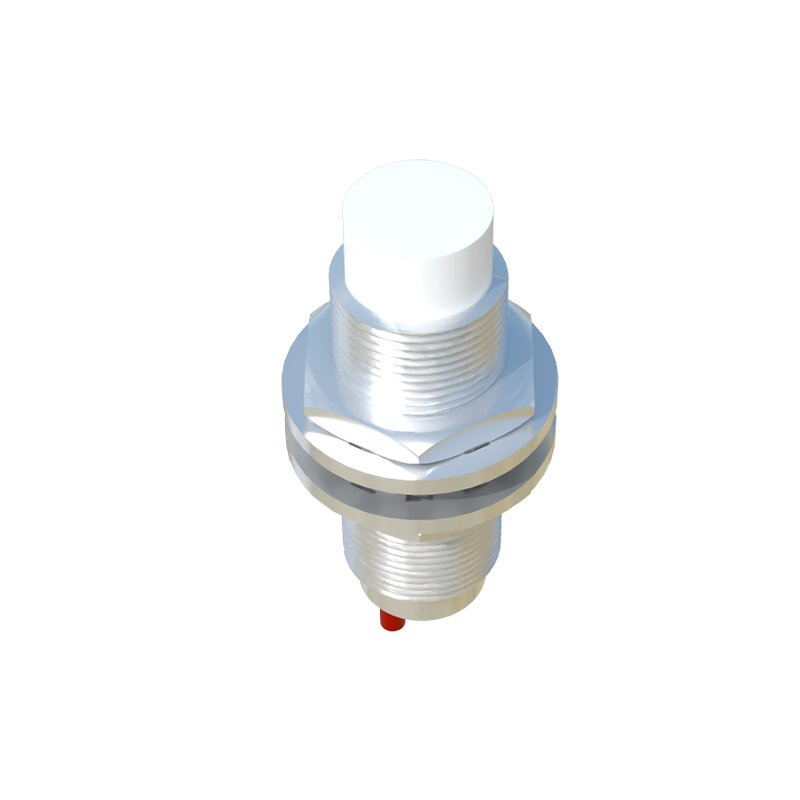
Key components of a capacitive proximity sensor include the oscillator, demodulator, amplifier, and output circuit. The oscillator generates a high-frequency electromagnetic field around the active surface of the sensor. When a target object approaches, it affects the oscillation amplitude due to changes in capacitance. The demodulator converts these amplitude variations into a direct current signal, which is then amplified to drive the output circuit. Modern capacitive sensors often incorporate compensation electrodes to minimize effects from environmental factors like humidity or contamination, ensuring stable operation in harsh industrial environments.
One of the primary advantages of capacitive sensors is their ability to detect non-metallic materials. For instance, in packaging industries, they can sense plastic bottles or cardboard boxes, while in food processing, they detect levels of liquids or powders through container walls. Adjustable sensitivity settings allow users to fine-tune sensors for specific materials and distances, typically ranging from a few millimeters to several centimeters. However, challenges such as false triggering from environmental interference (e.g., moisture or dust) require careful installation and calibration. Engineers should consider factors like sensor mounting, material dielectric constant, and operating temperature to optimize performance.
In practical applications, capacitive proximity sensors are integral to automation systems for tasks like object counting, fill level monitoring, and position detection. For example, in conveyor systems, they ensure proper spacing between items, while in liquid tanks, they prevent overflows by monitoring levels. Advanced models feature IO-Link communication for real-time data exchange and diagnostics, enhancing Industry 4.0 integration. When selecting a sensor, parameters such as sensing range, response time, and housing material (e.g., PTFE for corrosive environments) must align with operational needs.
Maintenance involves regular cleaning of the sensor surface to prevent buildup that could affect sensitivity, along with periodic testing to verify accuracy. As technology evolves, innovations like miniaturized designs and enhanced noise immunity continue to expand the capabilities of capacitive sensors, making them indispensable in smart manufacturing and IoT-driven applications. By understanding their principles, engineers can leverage these sensors to improve efficiency, safety, and reliability in automated processes.