In the dynamic landscape of industrial automation and process control, proximity counting sensors stand as fundamental components for enabling precise, reliable, and non-contact object detection and quantification. These specialized sensors are engineered to detect the presence or passage of an object and subsequently increment a counter, providing critical data for production monitoring, inventory management, and quality control. Unlike simple presence detection, counting functionality integrates sensing with logic to track quantities over time, forming the backbone of automated tallying systems.
At its core, a proximity counting sensor combines a proximity sensor with an embedded or connected counting circuit. The proximity sensor component is responsible for the physical detection. Several primary technologies are employed, each with distinct advantages:
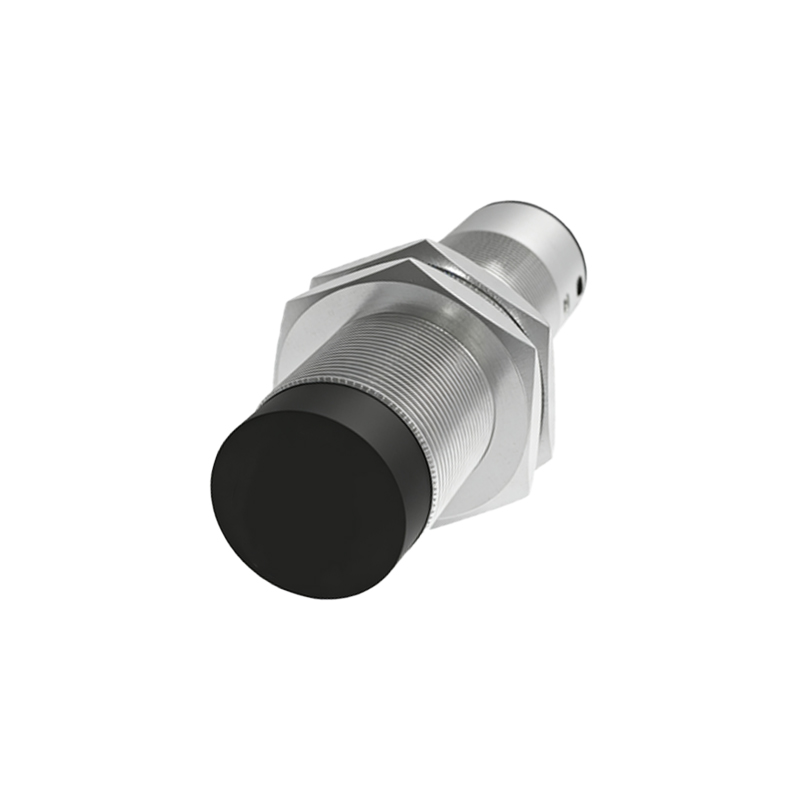
Inductive Sensors: These are the workhorses for detecting metallic objects. They generate an electromagnetic field. When a metal target enters this field, it induces eddy currents within the target, causing a change in the sensor's oscillation amplitude. This change is detected and converted into a switching signal. They are highly reliable, resistant to environmental contaminants like dust and oil, and ideal for counting metal parts on conveyors or in machining centers.
Capacitive Sensors: These sensors can detect both metallic and non-metallic materials (plastics, wood, liquids, granules) by measuring changes in capacitance. They generate an electrostatic field. Any object with a dielectric constant different from air will alter this field upon approach. This makes them versatile for counting bottles, cardboard boxes, or bags containing various materials.
Photoelectric Sensors: Utilizing a light beam (often infrared, laser, or visible LED), these sensors detect objects by either the interruption (through-beam) or reflection (retro-reflective or diffuse) of the beam. They offer the longest sensing ranges and can detect virtually any material, regardless of color or composition, provided it interrupts the light path. They are excellent for counting transparent bottles, small components, or objects on high-speed lines.
Ultrasonic Sensors: These measure distance by emitting sound waves and calculating the time for the echo to return. They are effective for counting objects regardless of color, transparency, or material, and are useful in challenging environments with dust or vapor where photoelectric sensors might struggle.
The counting logic is what transforms a detection event into quantifiable data. Upon each detection pulse (the object entering and then leaving the sensing field), the sensor's internal processor registers a count. Modern sensors feature sophisticated onboard electronics that handle functions like:
Debouncing/Delay: Preventing false counts from vibration or object jitter by requiring the signal to be stable for a set time.
Direction Sensing: Determining the direction of object movement (e.g., inbound vs. outbound on a conveyor) for incremental or decremental counting.
Preset and Output Control: Allowing users to set a target count (preset). When the count reaches the preset, the sensor can trigger an output to activate a diverter, stop a machine, or signal an operator.
Communication Protocols: Integration into broader networks via IO-Link, PROFINET, EtherNet/IP, or other industrial protocols, enabling real-time data transmission to PLCs (Programmable Logic Controllers) or SCADA (Supervisory Control and Data Acquisition) systems.
The applications for proximity counting sensors are vast and critical across industries:
Manufacturing & Assembly: Counting components for kitting, monitoring production rates, and ensuring correct parts per assembly.
Packaging: Verifying fill levels in bottles or cans, counting items into cartons, and monitoring packaging machine output.
Material Handling: Tracking boxes on conveyors, managing inventory in automated storage and retrieval systems (AS/RS), and counting parcels in logistics hubs.
Food & Beverage: Counting bottles, cans, and packages on high-speed filling lines. Capacitive sensors can even count items through non-metallic container walls.
Selecting the right proximity counting sensor requires careful consideration of several factors:
1. Target Material: Metal (inductive), non-metal (capacitive or photoelectric), or any material (photoelectric/ultrasonic).
2. Sensing Range: The required distance between the sensor and the target object.
3. Operating Environment: Exposure to dust, moisture, chemicals, temperature extremes, or washdown conditions (requiring high IP ratings like IP67 or IP69K).
4. Speed/Response Time: The sensor must be fast enough to detect objects moving at the line speed without missing counts.
5. Output Requirements: Discrete signals (PNP/NPN), analog outputs, or networked communication.
6. Mounting and Form Factor: Cylindrical, rectangular, or slot-style sensors to fit the physical installation constraints.
In conclusion, proximity counting sensors are indispensable tools for modern