Laser sensor technology has emerged as a cornerstone of modern industrial automation, precision measurement, and safety systems. These devices, often referred to as the "giants" of sensing solutions, leverage coherent light to detect, measure, and analyze objects with unparalleled accuracy and speed. Their evolution from bulky, expensive laboratory tools to compact, robust, and cost-effective industrial components marks a significant leap in engineering. This article delves into the core principles, key innovations, and transformative applications of laser sensors, highlighting why they are indispensable in today's advanced manufacturing and beyond.
At its heart, a laser sensor operates by emitting a focused beam of light—typically from a laser diode—towards a target. The sensor then analyzes the reflected light. The most common measurement principles include time-of-flight (ToF), triangulation, and interferometry. Time-of-flight sensors calculate distance by measuring the time delay between the emission and reception of the laser pulse. This method is highly effective for long-range measurements, such as in aerial LiDAR mapping or large-scale warehouse automation. Triangulation sensors, on the other hand, use a geometric approach. The laser beam, a receiver lens, and a position-sensitive detector form a triangle. By calculating the angle of the reflected beam, the sensor determines the distance to the target with exceptional precision at shorter ranges, making it ideal for quality control on production lines, inspecting surface profiles, or measuring tiny component displacements. Interferometric sensors exploit the wave nature of light, using interference patterns to measure minute changes in distance or vibration, crucial in semiconductor fabrication and precision metrology.
The rise of these technological giants is fueled by continuous innovation. Miniaturization and integration with micro-electro-mechanical systems (MEMS) have led to sensors that are smaller, more energy-efficient, and capable of being embedded into a vast array of devices. Advancements in laser diode technology, including the development of vertical-cavity surface-emitting lasers (VCSELs), have improved beam quality, reliability, and reduced costs. Furthermore, the integration of smart features—such as onboard processors, Ethernet connectivity, and IO-Link communication—has transformed laser sensors into intelligent nodes within the Industrial Internet of Things (IIoT). They can now perform self-diagnostics, adapt to changing environmental conditions, and communicate rich data directly to control systems, enabling predictive maintenance and real-time process optimization.
The applications of laser sensors are vast and transformative. In automotive manufacturing, they are used for robotic guidance, weld seam tracking, and 100% inspection of critical parts like brake discs and engine blocks, ensuring micron-level tolerances. In the electronics industry, laser sensors enable the precise placement of surface-mount devices (SMDs) on circuit boards and measure the thickness of coatings and films. Logistics and warehousing rely on laser distance and presence sensors for palletizing, dimensioning packages, and guiding autonomous mobile robots (AMRs) through dynamic environments. Beyond traditional industry, they play vital roles in agricultural automation for crop monitoring, in medical devices for non-invasive diagnostics, and in consumer electronics for features like facial recognition and gesture control.
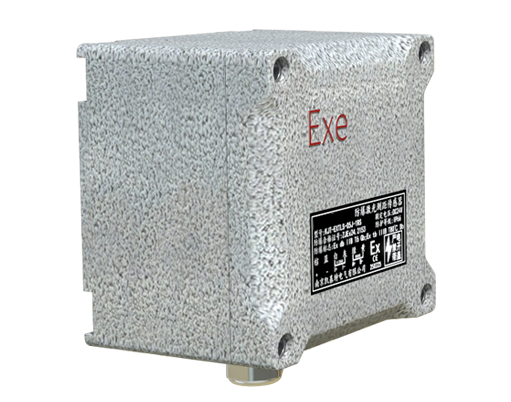
Safety is another paramount domain. Laser-based safety scanners create invisible protective fields around hazardous machinery. If the beam is interrupted by a person or object, the system triggers an immediate shutdown, preventing accidents. These systems, compliant with stringent standards like ISO 13849, are essential for collaborative robot (cobot) workcells and automated guided vehicle (AGV) pathways.
Looking ahead, the future of laser sensor technology is intertwined with artificial intelligence and machine learning. AI algorithms can process the vast point-cloud data from 3D laser scanners to identify complex defects or classify objects with human-like perception. The convergence of high-speed sensing, edge computing, and advanced optics promises even smarter, more adaptive systems. As industries push towards greater autonomy, efficiency, and quality, these "giants" of laser sensing will continue to be at the forefront, driving innovation and shaping the factories and technologies of tomorrow. Their journey from specialized instruments to ubiquitous industrial workhorses is a testament to engineering ingenuity, and their role is only set to expand further.
