Infrared proximity sensors have become indispensable components across a wide range of industrial and commercial applications due to their unique operational characteristics. These sensors function by emitting infrared light and detecting its reflection from nearby objects. Unlike mechanical switches or ultrasonic sensors, infrared variants offer distinct advantages in precision, response time, and environmental adaptability.
One of the primary features of infrared proximity sensors is their non-contact detection capability. This allows for the sensing of objects without physical interaction, thereby eliminating mechanical wear and tear. In automated production lines, this translates to higher reliability and reduced maintenance costs. For instance, in packaging machinery, these sensors accurately detect the presence of boxes on conveyor belts, ensuring seamless operations.
Another significant characteristic is their high-speed response. Infrared sensors can detect objects within milliseconds, making them ideal for high-speed automation processes. In robotics, they enable precise object avoidance and positioning, enhancing the efficiency of collaborative robots in assembly tasks. Additionally, their ability to function in various lighting conditions—from complete darkness to bright ambient light—sets them apart from optical sensors that rely on visible light.
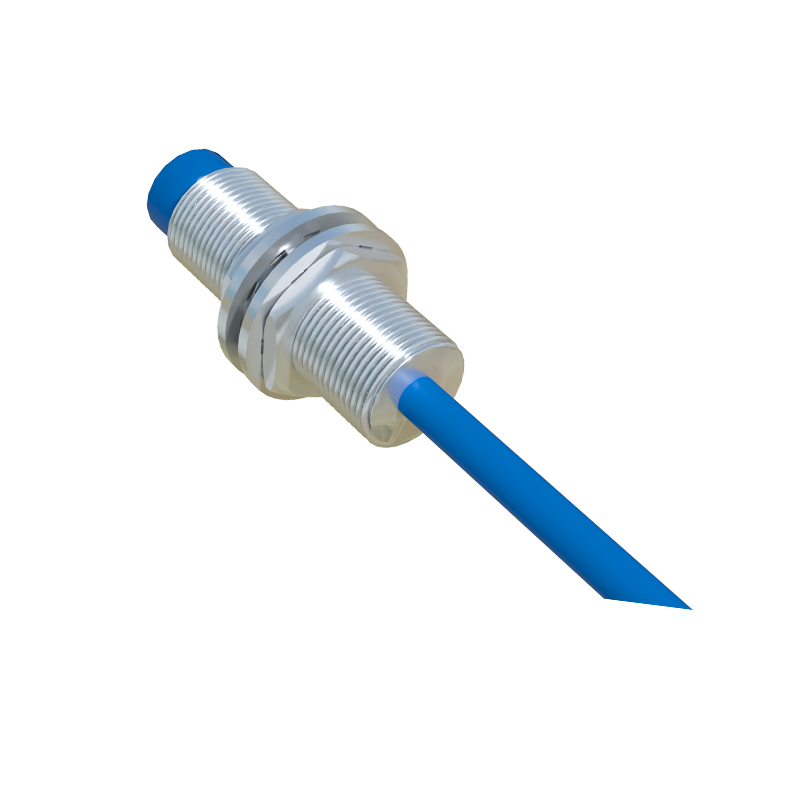
The compact design and versatility of infrared proximity sensors further contribute to their widespread adoption. Available in diverse form factors, including cylindrical and rectangular housings, they can be integrated into space-constrained environments. Modern variants also incorporate adjustable sensing ranges, often from a few centimeters to several meters, allowing customization based on application needs. In automotive systems, for example, they are used in parking assistance features to detect obstacles with high accuracy.
Energy efficiency is another notable advantage. Many infrared sensors consume minimal power, making them suitable for battery-operated devices like portable instruments or IoT-enabled monitoring systems. Advanced models feature pulsed infrared emission, which reduces power draw while maintaining detection reliability. This is particularly beneficial in wireless sensor networks deployed in industrial settings for predictive maintenance.
However, the performance of infrared proximity sensors can be influenced by environmental factors. Materials with low reflectivity, such as dark or matte surfaces, may reduce detection ranges. Similarly, ambient infrared sources (e.g., sunlight or heating elements) can cause interference. To mitigate these issues, manufacturers employ modulated infrared signals and specialized filters. These technologies enhance signal-to-noise ratios, ensuring stable operation in challenging conditions like outdoor logistics or foundry environments.
Applications of infrared proximity sensors span numerous sectors. In consumer electronics, they enable touchless interfaces in smartphones and appliances. Industrial uses include liquid level detection in tanks, part counting in manufacturing, and safety curtains around hazardous machinery. The healthcare sector leverages them in sanitization equipment and patient monitoring devices, where hygiene and non-invasiveness are critical.
Future trends point toward increased integration with smart technologies. The advent of Industry 4.0 has driven demand for sensors with digital outputs (e.g., IO-Link) that facilitate real-time data exchange with control systems. Enhanced algorithms for object discrimination and multi-sensor fusion are also emerging, paving the way for more autonomous industrial ecosystems. As material sciences advance, next-generation infrared sensors may offer improved resistance to dust, moisture, and extreme temperatures.
In summary, infrared proximity sensors provide a blend of speed, accuracy, and durability that meets the evolving demands of modern automation. Their non-contact nature, coupled with adaptability to diverse environments, ensures continued relevance in innovation-driven industries. Engineers and system designers must consider factors like target material, ambient conditions, and required sensing range to select the optimal sensor for each application, thereby maximizing operational efficiency and safety.