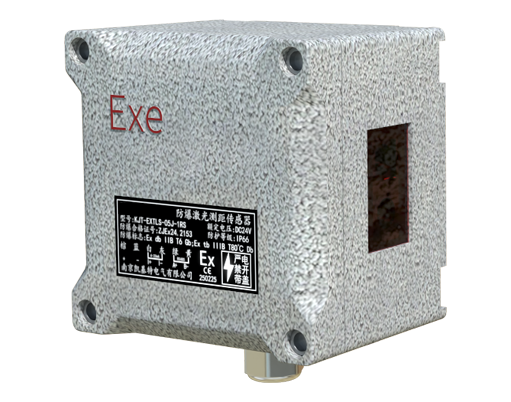
Anti-pinch laser sensors represent a critical advancement in industrial safety technology, designed to prevent injuries and equipment damage by detecting obstructions in automated systems. These sensors utilize laser beams to monitor designated zones, such as doors, windows, or machinery gaps, and instantly halt motion upon detecting an object—ensuring compliance with stringent safety standards like ISO 13849. Unlike traditional mechanical or infrared sensors, laser-based systems offer higher precision, with detection resolutions down to millimeter levels, and are less susceptible to environmental interference from dust, light, or temperature fluctuations.
In automotive manufacturing, for instance, anti-pinch laser sensors are integrated into robotic assembly lines and vehicle doors to safeguard workers from pinch-point hazards. The technology operates by emitting a continuous or pulsed laser beam across a monitored area; any interruption in the beam triggers an immediate stop signal to the control unit. This real-time response is facilitated by advanced algorithms that distinguish between false triggers (e.g., debris) and genuine obstructions, reducing downtime while maintaining safety.
The core components include a laser transmitter, receiver, and processing module. Modern variants incorporate IoT connectivity, enabling remote diagnostics and predictive maintenance—data on sensor performance can be analyzed to preempt failures. Industries like logistics, healthcare (e.g., hospital bed adjustments), and smart building automation increasingly adopt these sensors for their reliability and adaptability to complex environments.
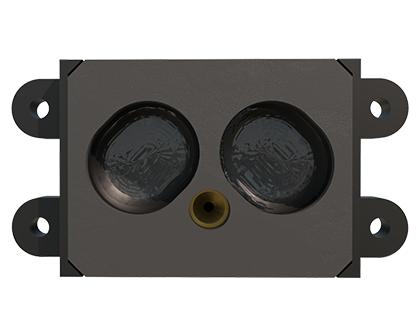
Key advantages encompass energy efficiency, as lasers consume minimal power, and scalability for large-scale installations. However, challenges persist, such as calibration requirements for reflective surfaces and initial setup costs. Engineers emphasize integrating these sensors with complementary systems like emergency stop circuits and AI-driven vision systems for layered protection. As automation evolves, anti-pinch laser sensors are poised to become standard in ensuring human-machine collaboration safety, driven by innovations in LiDAR and adaptive sensing technologies.
Overall, the deployment of anti-pinch laser sensors underscores a proactive approach to risk mitigation, blending precision engineering with smart functionality to create resilient operational frameworks. Their role in reducing workplace accidents and enhancing productivity solidifies their importance in the Industry 4.0 landscape, where safety and efficiency are inextricably linked.