In the rapidly evolving landscape of industrial automation and environmental monitoring, precision is paramount. Temtop, a prominent name in the sensor technology sector, has been at the forefront of this revolution with its advanced line of laser-based sensors. These devices, leveraging the fundamental principles of laser light scattering and absorption, offer unparalleled accuracy and reliability in measuring particulate matter (PM), distance, and other critical parameters. This article delves into the technology, applications, and advantages of Temtop laser sensors, highlighting their role in modern industrial and commercial settings.
At the core of Temtop's sensor technology lies laser diffraction and scattering. A highly focused laser beam is emitted into a measurement chamber or towards a target. When the beam interacts with particles in the air (for PM sensors) or reflects off a surface (for distance sensors), the light scatters or returns with specific characteristics. Sophisticated photodetectors and algorithms then analyze this scattered or reflected light. For particulate sensors, the intensity and pattern of the scattered light are directly correlated to the concentration and size distribution of particles like PM2.5 and PM10. This method, known as laser scattering nephelometry, is far superior to traditional methods, providing real-time, continuous data with minimal maintenance.
The applications of Temtop laser sensors are vast and critical. In industrial automation, laser distance sensors are indispensable for non-contact measurement, object detection, and positioning in assembly lines, robotics, and quality control systems. Their high speed and micron-level accuracy ensure processes are efficient and products meet stringent specifications. Concurrently, Temtop's laser PM sensors have become essential tools for indoor air quality (IAQ) monitoring in offices, schools, hospitals, and smart homes. They provide the data necessary to manage HVAC systems effectively, protecting occupant health and ensuring compliance with air quality standards. Furthermore, these sensors are deployed in environmental monitoring stations to track urban pollution, offering valuable data for public health advisories and policy-making.

One of the most significant advantages of Temtop laser sensors is their exceptional precision and stability. Unlike cheaper infrared-based sensors that can be influenced by humidity and require frequent calibration, laser sensors maintain accuracy over extended periods. They can detect ultrafine particles down to 0.3 microns, a crucial capability for assessing health risks. Moreover, their response time is nearly instantaneous, enabling real-time feedback for control systems. Durability is another hallmark; designed for continuous operation in demanding environments, these sensors feature robust housings that protect sensitive optical components from dust, vibration, and temperature fluctuations.
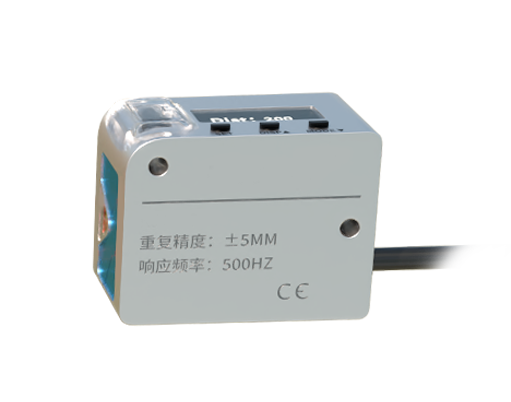
Integration into the Internet of Things (IoT) ecosystem is seamless with modern Temtop sensors. Many models come equipped with digital outputs (such as UART, I2C, or PWM) and can connect to networks via Wi-Fi or Bluetooth. This allows for the aggregation of data into centralized dashboards, enabling predictive maintenance, trend analysis, and automated alerts. For instance, a network of PM sensors across a factory floor can trigger air purifiers automatically when pollutant levels rise, or a distance sensor can halt a robotic arm if an object is misaligned, preventing costly damage.
While the technology is advanced, Temtop emphasizes user-friendly design. Devices often feature clear digital displays, intuitive configuration software, and plug-and-play compatibility with common industrial controllers and single-board computers like Arduino and Raspberry Pi. This accessibility empowers not only large corporations but also researchers, engineers, and tech enthusiasts to incorporate high-precision sensing into their projects.
Looking ahead, the future of Temtop and laser sensing technology is intertwined with advancements in artificial intelligence and miniaturization. Smarter algorithms will allow for even more precise particle identification—distinguishing between dust, smoke, and biological aerosols. Miniaturization will lead to smaller, more power-efficient sensors that can be embedded into a wider array of devices, from wearable personal monitors to micro-drones for environmental surveying.
In conclusion, Temtop laser sensors represent a critical convergence of optical physics, electronics, and data science. They provide the essential "eyes" for automated systems and the "nose" for environmental awareness. By delivering trustworthy, high-resolution data, these sensors empower industries to optimize operations, enhance safety, and contribute to a healthier environment. As the demand for automation and data-driven decision-making grows, the role of precise, reliable laser sensors from innovators like Temtop will only become more central to technological progress.