In the realm of modern smartphone engineering, the proximity sensor stands as a quintessential yet often overlooked component, playing a critical role in user experience, power management, and device integrity. As a senior electrical engineer specializing in consumer electronics, I aim to elucidate the underlying technology, operational principles, and sophisticated applications of this miniature marvel.
Fundamentally, a proximity sensor in a smartphone is a non-contact device designed to detect the presence of nearby objects without any physical interaction. The predominant technology employed is the infrared (IR) sensor, specifically an IR LED paired with an IR photodiode or phototransistor. The operational principle is elegantly straightforward: the IR LED emits a beam of infrared light. When an object, such as the user's ear or face during a call, comes into close range, this light is reflected back towards the device. The IR receiver detects this reflected signal. The sensor's integrated circuit then processes this change in received IR intensity, interpreting it as a "near" event. This data is instantly relayed to the phone's central processor, which triggers predefined actions.
The most ubiquitous application is during voice calls. When the sensor detects your ear, it automatically turns off the touchscreen display. This serves a dual purpose. First, it prevents accidental screen touches from your cheek or ear that could disrupt the call—muting, holding, or even hanging up. Second, and equally important, it conserves battery power by deactivating the power-hungry backlight of the display for the call's duration. Once you move the phone away from your ear, the sensor no longer detects an object, the screen illuminates again, and the touch functionality is restored, allowing you to access the keypad or switch to speakerphone seamlessly.
Beyond call management, proximity sensors are integral to advanced power-saving features. Many smartphones utilize the sensor in conjunction with ambient light sensors to implement "pocket mode" or "purse mode." When the device is placed in a dark, enclosed space like a pocket or bag, the proximity sensor (detecting a very close object) and the light sensor (detecting low ambient light) work in tandem. The system can then decide to ignore accidental touch inputs on the screen, preventing unintended app launches or dialing, and may further dim or turn off the display to extend battery life.
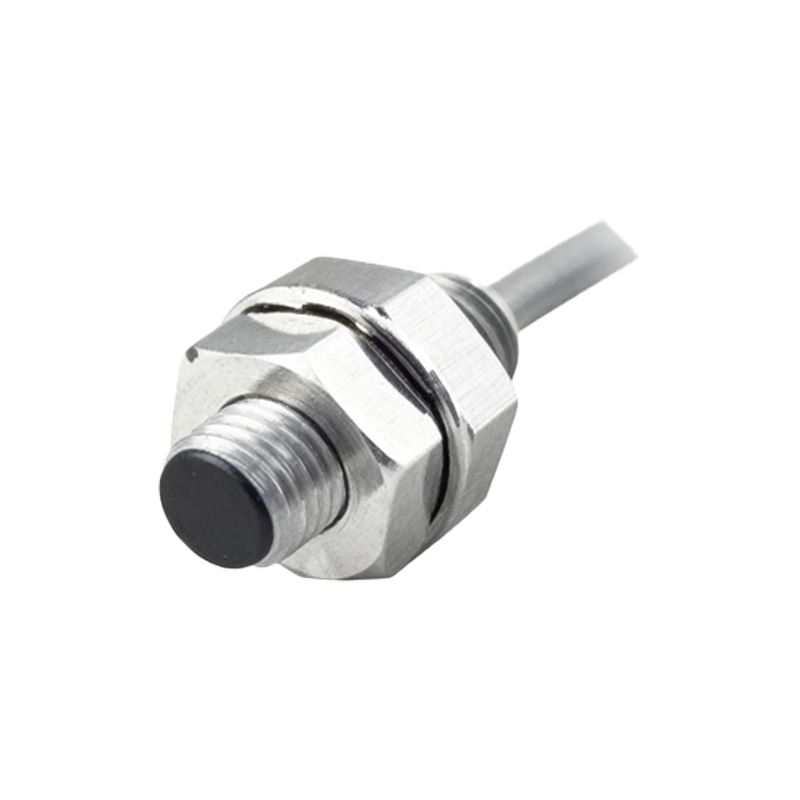
The engineering challenges associated with these sensors are non-trivial. Calibration is paramount. Sensors must be finely tuned to distinguish between a deliberate "near" event (an ear) and environmental noise, such as bright sunlight which contains significant IR radiation that could saturate the receiver. This is often managed through modulated IR signals and sophisticated digital filtering algorithms. Furthermore, the physical design presents hurdles. The sensor assembly must be meticulously positioned behind the front glass, often requiring a small, laser-cut aperture that is invisible to the user but transparent to IR wavelengths. Any misalignment or contamination (dust, adhesive) can severely degrade performance, leading to erratic screen behavior during calls.
Recent advancements are pushing the boundaries of this technology. Some high-end models now employ time-of-flight (ToF) based proximity sensors. Instead of merely measuring reflected intensity, these sensors calculate the time it takes for a light pulse to return, providing highly accurate distance measurements. This enables more nuanced interactions, such as precise gesture control above the screen without touching it. Additionally, the miniaturization trend continues, with sensor packages becoming smaller to maximize the precious real estate for the display in bezel-less phone designs.
Looking forward, the role of the proximity sensor is evolving. It is becoming a key enabler for augmented reality (AR) applications, where understanding the immediate spatial relationship between the phone and the user's environment is crucial. Its integration with other sensors in the device's fusion hub—like the accelerometer, gyroscope, and camera—will lead to more context-aware and intuitive user interfaces.
In conclusion, the smartphone proximity sensor is a masterpiece of practical electrical engineering. It embodies the seamless integration of optoelectronics, signal processing, and software to solve a simple user interface problem with remarkable efficiency and reliability. Its continuous evolution from a basic call-aid to a sophisticated spatial awareness tool underscores its enduring importance in the architecture of intelligent mobile devices. For engineers, it remains a fascinating area where physics, circuit design, and algorithmic logic converge to create an invisible yet indispensable feature of our daily digital interactions.