Laser Time-of-Flight (ToF) sensors represent a cornerstone technology in modern industrial automation and measurement systems. Operating on a deceptively simple principle, these devices emit a pulsed or modulated laser beam towards a target object. The sensor then precisely measures the time interval between the emission of the light pulse and the detection of its reflection. Since the speed of light (c) is a known constant in a given medium, the distance (d) to the target can be calculated with high accuracy using the fundamental equation: d = (c * t) / 2, where 't' is the measured time of flight. This direct time measurement differentiates ToF sensors from phase-based or triangulation methods, offering distinct advantages in terms of range, speed, and immunity to ambient light interference.
The core architecture of a laser ToF sensor comprises several critical components. A laser diode, typically operating in the near-infrared spectrum for eye safety and material penetration, serves as the light source. A high-speed timing circuit, often a Time-to-Digital Converter (TDC), is the heart of the system, capable of resolving picosecond-level time differences. This is paired with a sensitive photodetector, such as an Avalanche Photodiode (APD) or Single-Photon Avalanche Diode (SPAD), designed to capture the faint returning signal. Advanced signal processing algorithms are employed to filter noise, compensate for environmental factors, and deliver a stable, reliable distance value. Modern sensors often integrate these components into compact, robust housings rated for harsh industrial environments, featuring IP67 or higher protection against dust and moisture.
In industrial settings, the applications of laser ToF sensors are vast and transformative. One primary use is in precision distance measurement and positioning. They are indispensable in automated guided vehicles (AGVs) and autonomous mobile robots (AMRs) for navigation, obstacle detection, and slam (Simultaneous Localization and Mapping). In logistics, they enable volumetric dimensioning of packages on conveyor belts with remarkable speed, optimizing storage and shipping costs. Another critical application is in level monitoring within silos or tanks, even for bulk solids or opaque liquids, where non-contact measurement prevents contamination and mechanical wear. Furthermore, they are deployed in robotics for bin-picking applications, providing the 3D depth data needed for robotic arms to identify and grasp randomly oriented parts. The technology also facilitates safety systems, such as presence detection in hazardous areas around machinery, ensuring compliance with safety standards like ISO 13855.
When selecting a laser ToF sensor for an industrial project, engineers must evaluate several key performance parameters. Measurement range is paramount, with devices available from short-range (a few centimeters) for robotic tactile feedback to long-range (over 100 meters) for large-scale surveying. Accuracy and repeatability define the sensor's precision; high-end models can achieve sub-millimeter accuracy. Measurement rate, or update frequency, determines how fast the sensor can track moving objects, crucial for dynamic processes. The spot size of the laser beam affects resolution, especially for small or detailed targets. Environmental robustness, including operating temperature range and resistance to vibrations, is non-negotiable for factory floor deployment. Finally, the output interface (e.g., analog voltage, IO-Link, Ethernet/IP, PROFINET) must seamlessly integrate with the existing control architecture, such as PLCs or industrial PCs.
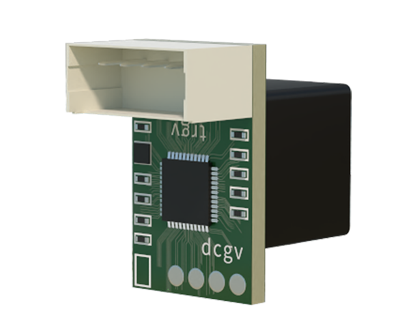
The future trajectory of laser ToF sensor technology points towards greater miniaturization, enhanced performance, and deeper integration. The development of solid-state, scanner-less systems using VCSEL (Vertical-Cavity Surface-Emitting Laser) arrays and SPAD arrays is creating compact, cost-effective 3D imaging solutions. These will further revolutionize machine vision, enabling detailed quality inspection and defect detection. Integration with artificial intelligence and edge computing will allow sensors to not only capture distance data but also interpret scenes, classify objects, and make autonomous decisions in real-time. As Industry 4.0 and smart manufacturing evolve, the laser ToF sensor will remain a fundamental enabler, providing the essential eyes for machines to perceive and interact with the physical world with unprecedented speed and accuracy.