In the rapidly evolving landscape of industrial automation, the demand for precision, reliability, and adaptability has never been higher. Custom laser sensors have emerged as a critical component in meeting these demands, offering tailored solutions that standard off-the-shelf products often cannot provide. As an experienced electrical engineer specializing in sensor technology, I will delve into the key considerations, benefits, and applications of custom laser sensors, providing insights for professionals seeking to optimize their systems.
Laser sensors operate on the principle of emitting a laser beam and detecting its reflection to measure distance, position, or presence with high accuracy. While standard sensors are suitable for many common tasks, custom laser sensors are designed to address specific challenges in unique environments. For instance, in harsh industrial settings with extreme temperatures, dust, or vibrations, a custom sensor can be engineered with enhanced durability and specialized coatings to ensure consistent performance. This level of customization often involves selecting the appropriate laser wavelength—such as infrared, visible, or ultraviolet—based on the target material and ambient conditions. For example, infrared lasers are ideal for detecting dark objects, while visible lasers may be preferred for alignment tasks in well-lit areas.
The process of customizing a laser sensor begins with a thorough analysis of the application requirements. Engineers must consider factors like measurement range, resolution, response time, and interface compatibility. In automotive manufacturing, custom laser sensors are used for precise gap detection between body panels, requiring sub-millimeter accuracy and high-speed data processing. Similarly, in the pharmaceutical industry, sensors may need to comply with strict hygiene standards, necessitating designs with smooth surfaces and resistance to chemical cleaning agents. By collaborating closely with clients, sensor manufacturers can develop prototypes that undergo rigorous testing to validate performance under real-world conditions. This iterative approach ensures that the final product not only meets but exceeds expectations, reducing downtime and improving overall efficiency.
One of the significant advantages of custom laser sensors is their ability to integrate seamlessly with existing control systems. Modern industrial networks, such as PROFINET, EtherCAT, or IO-Link, often require specific communication protocols. Custom sensors can be equipped with the necessary hardware and software interfaces, enabling plug-and-play functionality and simplifying installation. Additionally, advanced features like programmable logic controllers (PLCs) compatibility and data logging capabilities can be incorporated to support predictive maintenance and quality assurance. For instance, in logistics automation, custom laser sensors equipped with real-time monitoring can track package dimensions on conveyor belts, optimizing sorting processes and minimizing errors.
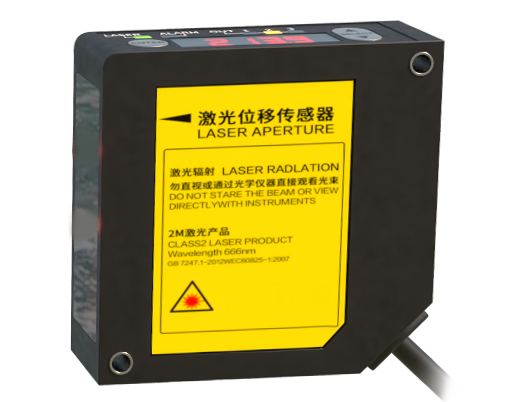
Despite their benefits, custom laser sensors come with challenges, including higher initial costs and longer development timelines compared to standard models. However, the long-term return on investment often justifies these upfront expenses. By reducing waste, enhancing safety, and increasing throughput, custom sensors contribute to significant operational savings. In robotics, for example, custom laser sensors enable precise object recognition and manipulation, allowing robots to perform complex tasks like welding or assembly with minimal human intervention. This not only boosts productivity but also reduces the risk of accidents in hazardous environments.
Looking ahead, trends in Industry 4.0 and the Internet of Things (IoT) are driving further innovation in custom laser sensor technology. Sensors with embedded artificial intelligence (AI) algorithms can now analyze data on-device, providing instant feedback and adaptive control. In smart manufacturing lines, such sensors can detect anomalies in real-time, triggering automatic adjustments to maintain optimal performance. As materials and miniaturization techniques advance, we can expect even more compact and energy-efficient designs, expanding applications into fields like aerospace and renewable energy.
In conclusion, custom laser sensors represent a powerful tool for industries aiming to achieve higher precision and flexibility. By understanding the specific needs of each application and leveraging expert engineering, businesses can unlock new levels of efficiency and competitiveness. Whether for quality control, automation, or safety monitoring, investing in tailored laser sensor solutions is a strategic move toward future-proofing industrial operations.