In the realm of modern manufacturing, CNC (Computer Numerical Control) machine tools stand as pillars of precision and automation. The integration of advanced laser sensor modules has revolutionized their capabilities, pushing the boundaries of accuracy, speed, and reliability. These non-contact measurement systems employ focused laser beams to detect, measure, and inspect workpieces with micron-level precision, fundamentally enhancing the machining process.
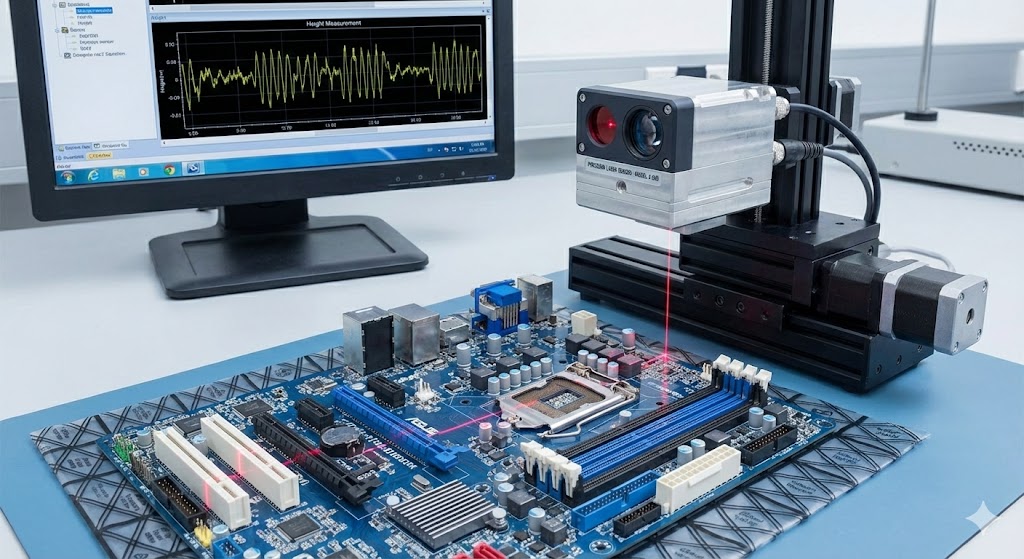
The core principle involves emitting a laser beam onto a target surface. The reflected light is captured by a receiver within the sensor. By analyzing properties such as triangulation, time-of-flight, or interferometry, the module calculates precise distance, position, or profile data. This real-time feedback is seamlessly fed into the CNC system's controller, enabling dynamic adjustments to tool paths, compensation for thermal drift, and immediate detection of dimensional deviations.
Key applications are transformative. In tool setting and breakage detection, laser sensors rapidly measure tool length and diameter upon loading, ensuring correct offsets and halting operations if a broken tool is identified, preventing costly scrap and machine damage. For workpiece alignment and calibration, they accurately locate part edges and datum features, drastically reducing setup time and human error. In-process gauging allows for continuous measurement of critical dimensions during machining, enabling closed-loop control for unparalleled consistency. Furthermore, surface inspection and 3D scanning capabilities facilitate quality control by detecting defects, warpage, or verifying complex contours against CAD models.

The benefits are substantial. Enhanced precision directly translates to higher part quality and tighter tolerances. Reduced setup and inspection times boost overall equipment effectiveness (OEE). The non-contact nature eliminates mechanical wear on both sensor and workpiece, ensuring long-term stability. Automated feedback loops minimize manual intervention, supporting lights-out manufacturing.
However, successful implementation requires careful consideration. Factors like material surface properties (reflectivity, color, texture), environmental conditions (coolant mist, ambient light, vibrations), and required measurement range and speed must be evaluated to select the appropriate sensor type. Integration with the CNC control system, often through standard interfaces like IO-Link or Ethernet/IP, is crucial for seamless data exchange. Regular maintenance, primarily keeping optical windows clean, ensures sustained accuracy.
Looking ahead, the convergence of laser sensing with Industrial IoT and AI analytics promises even greater advancements. Predictive maintenance models can analyze sensor data trends to forecast component wear, while adaptive machining algorithms can self-optimize processes in real-time based on live measurement feedback.
In conclusion, laser sensor modules are not mere accessories but critical enablers for next-generation CNC machining. They bridge the gap between digital design and physical part, ensuring that the high theoretical precision of CNC systems is consistently achieved on the shop floor, driving manufacturing towards unprecedented levels of intelligence and efficiency.
