Proximity sensors are essential components in modern industrial automation, enabling non-contact detection of objects with high precision and reliability. These devices are widely used across manufacturing, packaging, robotics, and automotive sectors due to their ability to operate in harsh environments without physical wear. Understanding the classification of proximity sensors is crucial for selecting the right technology for specific applications. This article provides a comprehensive diagram-based guide to the primary categories of proximity sensors, their operating principles, and typical use cases.
The first major category is inductive proximity sensors. These sensors detect metallic objects—primarily ferrous metals like steel and iron—by generating an electromagnetic field. When a metal target enters this field, it induces eddy currents, causing a change in the sensor's oscillation amplitude. This change triggers an output signal. Inductive sensors are ideal for detecting presence, position, or rotation of metal components in machinery, such as in conveyor systems or CNC machines. They are robust, resistant to dust and moisture, and offer short to medium sensing ranges, typically up to 60 mm. Common sub-types include shielded (flush-mountable) and unshielded versions, with the former allowing installation in metal environments without interference.
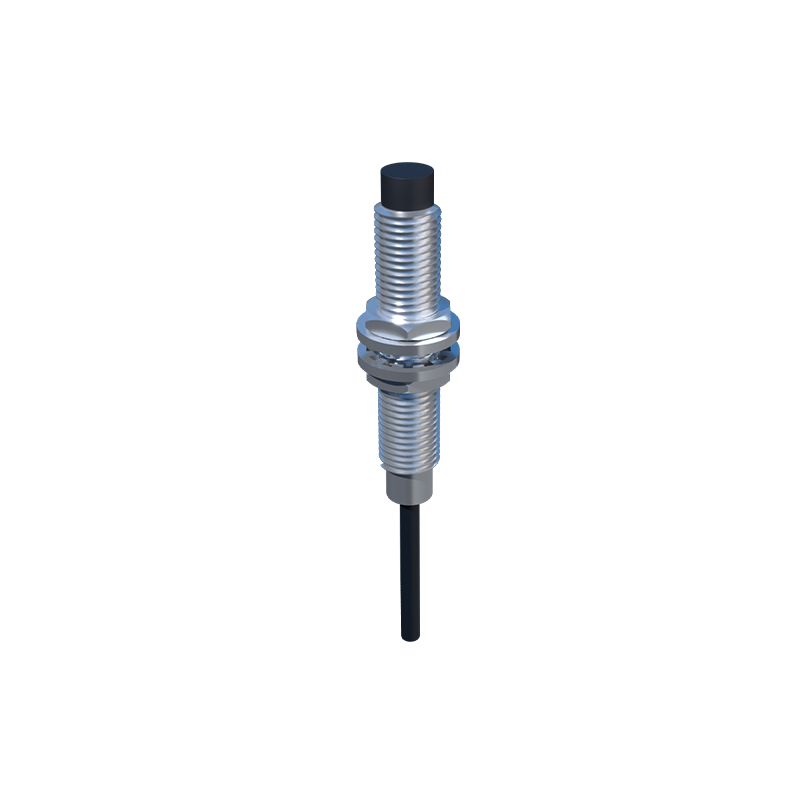
Capacitive proximity sensors form the second key category. Unlike inductive sensors, capacitive types can detect both metallic and non-metallic materials, including liquids, plastics, wood, and granular substances. They work by measuring changes in capacitance between the sensor's electrode and the target object. When an object enters the sensing field, it alters the dielectric constant, leading to a capacitance shift that activates the output. These sensors are versatile, used in level detection for tanks, material handling, and presence sensing of non-conductive items. Sensing ranges vary but generally extend up to 40 mm, with some models adjustable for sensitivity to different materials. Their ability to see through non-metallic containers makes them valuable in packaging and food processing industries.
Magnetic proximity sensors, or reed switches, represent another classification. They operate based on magnetic fields, typically using a reed contact sealed in a glass tube. When a permanent magnet or electromagnet approaches, the contacts close or open, creating a switching action. These sensors are simple, cost-effective, and suitable for detecting the position of cylinders, valves, or doors in hydraulic and pneumatic systems. They excel in low-power applications and can function in explosive or wet conditions due to their sealed design. However, their sensing range is limited, often under 50 mm, and they respond only to magnetic sources.
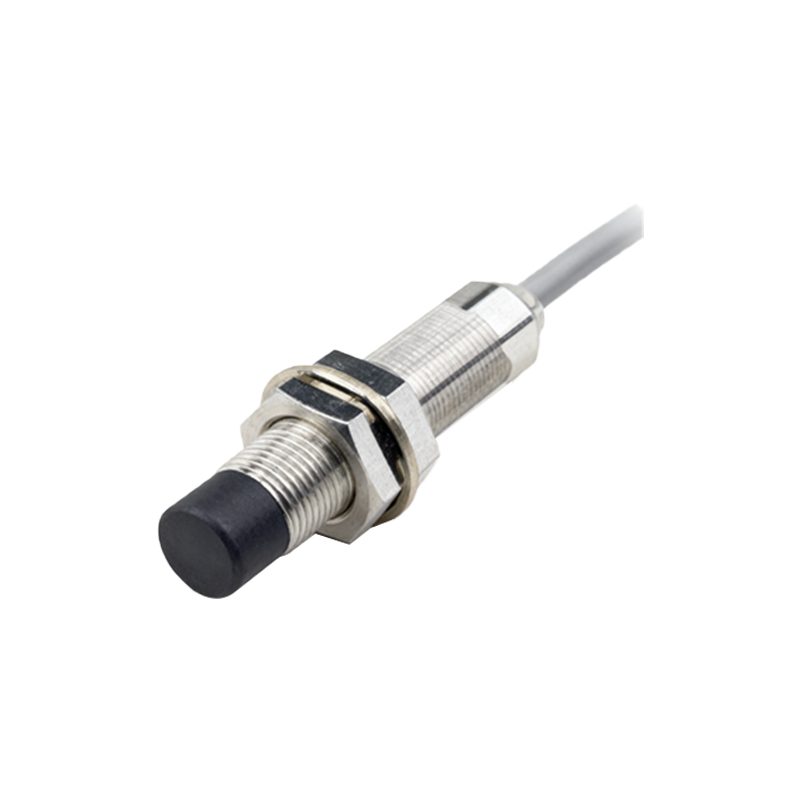
Ultrasonic proximity sensors use sound waves for detection, emitting high-frequency pulses and measuring the time taken for echoes to return from an object. They can sense a wide variety of materials, regardless of color, transparency, or surface texture, and are effective for long-range detection—up to several meters. Applications include distance measurement, object profiling, and liquid level control in tanks. These sensors are less affected by environmental factors like dust or light but may be influenced by temperature variations or acoustic noise. They are common in automotive assembly and logistics automation.
Optical proximity sensors, including photoelectric types, rely on light beams (infrared, LED, or laser) to detect objects. They are categorized into through-beam, retro-reflective, and diffuse reflective modes. Through-beam sensors have separate emitter and receiver units, offering long ranges and high accuracy. Retro-reflective types use a reflector to bounce light back, while diffuse sensors detect light reflected directly from the target. Optical sensors are highly flexible, capable of sensing tiny or transparent objects, and are used in packaging, electronics, and safety systems. However, they can be sensitive to ambient light or dirty lenses.
Finally, Hall effect sensors detect magnetic fields by measuring voltage changes in a semiconductor when exposed to magnetism. They are solid-state devices with no moving parts, providing high reliability and fast response. Common in speed sensing (e.g., motor RPM) and position detection in automotive and industrial equipment, they offer precise, wear-free operation but are limited to magnetic targets.
A classification diagram would visually map these categories, highlighting key attributes: sensing principle, target material, range, and typical industries. For instance, inductive sensors link to metals and manufacturing; capacitive to diverse materials and processing; magnetic to cylinders and automation; ultrasonic to distance and logistics; optical to precision and packaging; and Hall effect to speed and automotive. This diagram aids engineers in quick selection based on application needs.
In summary, proximity sensors are grouped by their detection technology, each with unique advantages. Inductive and capacitive sensors dominate general industrial use, while magnetic, ultrasonic, optical, and Hall effect types serve specialized roles. Factors like target material, environmental conditions, range, and cost dictate the optimal choice. By referring to a clear classification diagram, professionals can enhance system efficiency and reliability, ensuring seamless integration into automated processes. As Industry 4.0 advances, smart sensors