Laser measurement sensors have become indispensable tools in modern industrial environments, offering unparalleled precision, speed, and reliability for tasks ranging from distance measurement and object detection to quality control and automation. Proper installation is critical to ensuring optimal performance, longevity, and safety. This guide provides a comprehensive overview of best practices for installing laser measurement sensors, tailored for engineers and technicians in the electrical and automation sectors.
Before beginning installation, thorough planning is essential. Start by reviewing the sensor’s datasheet and technical documentation to understand its specifications, including measurement range, accuracy, operating temperature, and environmental ratings (e.g., IP protection class). Assess the application requirements: determine the target material, surface properties, and ambient conditions such as vibration, dust, or humidity. Select a mounting location that minimizes interference from external factors like ambient light, reflective surfaces, or electromagnetic noise. Ensure the sensor is positioned within its specified working distance and alignment angles to avoid measurement errors.
Mounting hardware should be selected based on the sensor’s design and the industrial setting. Use sturdy brackets or fixtures made of materials like aluminum or stainless steel to provide stable support, especially in high-vibration environments. Avoid flexible mounts that can lead to misalignment over time. Securely fasten the sensor using appropriate screws or clamps, but avoid over-tightening, which may damage the housing or affect calibration. For adjustable sensors, utilize built-in alignment features (e.g., tilt or swivel mechanisms) to fine-tune the beam direction. In applications involving moving parts, consider shock-absorbing mounts to protect the sensor from mechanical stress.

Electrical connections must adhere to industry standards to prevent malfunctions or hazards. Follow the wiring diagram provided by the manufacturer, typically including power supply, output signals (analog or digital), and communication interfaces (e.g., IO-Link, Ethernet). Use shielded cables to reduce electromagnetic interference (EMI) and ensure proper grounding. Connect the power source according to the sensor’s voltage requirements (commonly 12-24 V DC), and verify polarity to avoid reverse connection damage. For networked systems, configure settings such as baud rate or device addresses as needed. Test connections with a multimeter before powering on to check for shorts or open circuits.
Environmental protection is crucial for long-term reliability. If the sensor is exposed to harsh conditions—such as extreme temperatures, moisture, or particulate matter—install protective enclosures or choose models with high IP ratings (e.g., IP67 for dust and water resistance). In dusty or smoky environments, use air purging systems or protective windows to keep the lens clean, as contamination can scatter the laser beam and degrade accuracy. Regularly inspect and clean the lens with recommended tools (e.g., lint-free cloths) to maintain performance. Additionally, avoid placing the sensor near heat sources or direct sunlight, which can cause thermal drift.
Calibration and testing are final steps to validate installation. After mounting and wiring, power on the sensor and perform initial calibration according to the manufacturer’s instructions, often involving setting reference points or adjusting sensitivity. Use test targets or known distances to verify measurement accuracy and repeatability. Monitor output signals via software or a display unit to ensure consistency. In dynamic applications, simulate operational conditions to check for latency or interference. Document all settings and adjustments for future maintenance.

Safety considerations cannot be overlooked. Laser sensors emit concentrated light beams, so adhere to laser safety classifications (e.g., Class 1 or 2) and avoid direct eye exposure. Install warning labels and barriers in accessible areas. Ensure compliance with local regulations and industry standards, such as IEC 60825 for laser safety. For high-voltage setups, follow lockout-tagout procedures during installation.
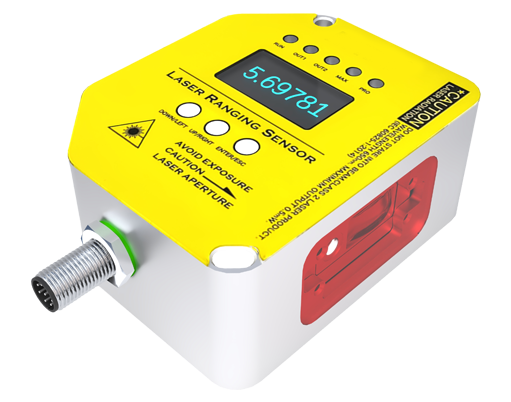
In summary, successful installation of laser measurement sensors hinges on meticulous planning, robust mounting, precise electrical integration, environmental safeguards, and thorough validation. By following these guidelines, engineers can enhance system efficiency, reduce downtime, and achieve reliable measurements in diverse industrial applications, from manufacturing lines to robotic systems. Regular maintenance and periodic recalibration further ensure sustained performance.