Magnetic proximity switches, often referred to as magnetic sensors, are fundamental components in modern industrial automation and control systems. These devices operate on the principle of detecting the presence or absence of a magnetic field, typically generated by a permanent magnet or an electromagnet. Unlike traditional mechanical limit switches, magnetic proximity switches offer non-contact sensing, which translates to enhanced reliability, longer operational life, and minimal maintenance requirements. This makes them indispensable in harsh environments where dust, moisture, oil, or extreme temperatures would compromise mechanical contacts.
The core technology behind these sensors is usually based on reed switches or solid-state Hall-effect sensors. Reed switches consist of two ferromagnetic blades sealed within a glass tube filled with an inert gas. When an external magnetic field of sufficient strength is applied, the blades attract each other, closing the electrical circuit. Once the magnetic field is removed, the blades spring back to their original open position. Reed switches are prized for their simplicity, low cost, and ability to switch relatively low-power circuits. However, they can be susceptible to mechanical shock and have a finite number of switching cycles.
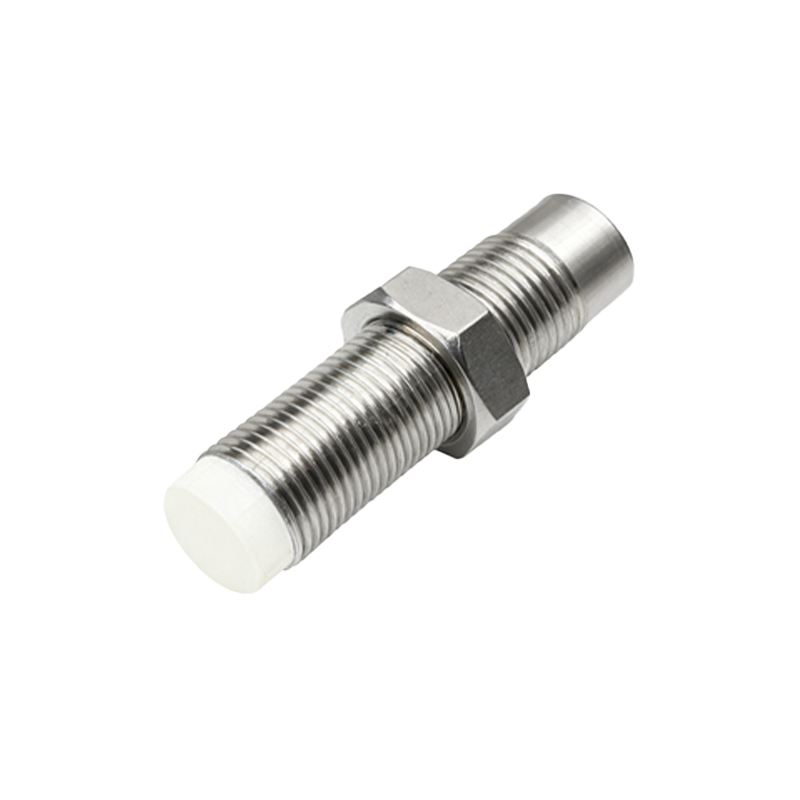
In contrast, Hall-effect sensors are solid-state devices. They generate a voltage difference (the Hall voltage) across an electrical conductor when a magnetic field is applied perpendicular to the current flow in the conductor. This voltage is then processed by integrated circuitry to provide a clean, digital output signal. Hall-effect sensors are more robust, offer faster switching speeds, and can operate over a wider temperature range than reed switches. They are also capable of detecting the polarity and strength of a magnetic field, enabling more sophisticated applications like speed sensing and position encoding.
The selection of a magnetic proximity switch for a specific application depends on several critical factors. Sensing distance, or the maximum range at which the sensor can reliably detect the target magnet, is paramount. This distance is influenced by the strength of the magnet (often measured in Gauss or Tesla) and the sensor's sensitivity. Engineers must also consider the switching frequency, environmental protection rating (IP or NEMA), output type (PNP/NPN, NO/NC), and supply voltage compatibility. For instance, in automotive applications for detecting seat belt buckles or door latches, small, sealed reed switches are common. In factory automation for detecting cylinder piston position or rotary machine speed, ruggedized Hall-effect sensors with high IP ratings are preferred.
Installation and alignment are crucial for optimal performance. The sensor and the actuating magnet must be positioned correctly within the specified sensing window. Misalignment can lead to reduced sensing distance or complete failure to detect. Shielding from stray magnetic fields from nearby motors or transformers is also essential to prevent false triggering. Modern sensors often incorporate features like built-in hysteresis to provide a stable output even when the target is at the boundary of the sensing range, preventing signal chatter.
Looking ahead, the integration of magnetic sensors with Industrial Internet of Things (IIoT) platforms is a growing trend. Smart sensors with digital interfaces (IO-Link, for example) can provide diagnostic data such as operating temperature, signal strength, and switch cycle count, enabling predictive maintenance and reducing unplanned downtime. Furthermore, advancements in magnet materials, like neodymium iron boron (NdFeB), allow for stronger magnets in smaller packages, enabling miniaturization of the entire sensing system without sacrificing performance.
In conclusion, magnetic proximity switches and sensors are versatile, reliable workhorses in industrial electrical engineering. Their non-contact nature, adaptability to tough conditions, and evolving intelligence ensure they will remain a cornerstone of automated systems, from simple presence detection to complex motion control, for the foreseeable future. Proper selection, installation, and integration are key to leveraging their full potential for safety, efficiency, and productivity.