In the rapidly evolving landscape of industrial automation, laser sensor drive technology stands as a cornerstone for precision measurement, object detection, and quality control. Laser sensors, leveraging coherent light beams, offer unparalleled accuracy and speed in diverse applications—from manufacturing assembly lines to autonomous robotics. The drive system, essentially the electronic circuitry that powers and controls the laser sensor, is critical to its performance, dictating parameters such as response time, stability, and energy efficiency.
At its core, a laser sensor drive comprises a power supply unit, modulation circuitry, and feedback control mechanisms. The power supply must deliver stable, low-noise voltage to the laser diode, ensuring consistent output power. Fluctuations can lead to measurement errors or sensor degradation. Modern drives often incorporate switching regulators for high efficiency, coupled with linear regulators to minimize ripple noise. Modulation circuitry enables the laser to pulse at high frequencies, allowing for time-of-flight calculations in distance sensing or encoding data in communication systems. Pulse-width modulation (PWM) is commonly employed to adjust intensity without compromising beam quality.
Feedback control, typically through photodiodes integrated into the sensor, is vital for maintaining laser output. Closed-loop systems monitor the emitted light and adjust drive current in real-time, compensating for temperature variations or aging components. This enhances longevity and reliability—key factors in harsh industrial environments where sensors face vibrations, dust, or extreme temperatures. Advanced drives use microcontrollers or digital signal processors (DSPs) to implement algorithms like proportional-integral-derivative (PID) control, optimizing response to dynamic conditions.
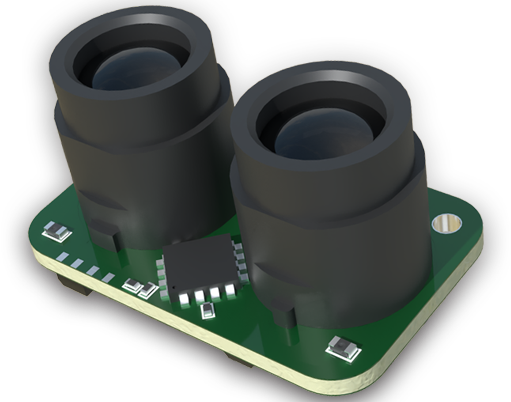
Energy efficiency is another crucial aspect. With industries prioritizing sustainability, laser sensor drives are designed to minimize power consumption. Techniques such as adaptive power management, where the drive adjusts output based on target proximity or ambient light, help reduce waste heat and extend battery life in portable devices. Moreover, the integration of smart features—like Ethernet or IO-Link interfaces—allows drives to communicate with central control systems, enabling predictive maintenance and data analytics.
In practice, selecting the right drive depends on sensor type and application. For instance, triangulation laser sensors used in high-precision metrology require drives with ultra-fast modulation to detect minute surface variations. In contrast, safety laser scanners for machinery guarding prioritize robust, fail-safe drives that ensure immediate shutdown upon obstruction detection. The trend toward miniaturization has also led to compact, surface-mount drive solutions, fitting into space-constrained setups like medical devices or consumer electronics.
Looking ahead, innovations in laser sensor drive technology are poised to revolutionize automation further. Emerging developments include the use of gallium nitride (GaN) transistors for higher switching speeds and efficiency, as well as AI-driven adaptive controls that learn from operational data to optimize performance autonomously. As Industry 4.0 accelerates, laser sensors with advanced drives will continue to enable smarter, more responsive systems—transforming how industries achieve precision and reliability.