In the realm of industrial automation and machinery, proximity sensors play a pivotal role in ensuring efficiency, safety, and precision. Among these, the 90 proximity sensor stands out as a widely utilized component, particularly in applications requiring non-contact detection of metallic objects. This article delves into the technical aspects, operational principles, and practical applications of the 90 proximity sensor, offering insights for engineers and technicians in the electrical and automation sectors.
The 90 proximity sensor is typically an inductive type, designed to detect ferrous and non-ferrous metals without physical contact. It operates on the principle of electromagnetic induction. Inside the sensor, an oscillator generates a high-frequency electromagnetic field that emanates from the sensing face. When a metallic object enters this field, eddy currents are induced on the surface of the object, causing a change in the oscillation amplitude. This change is detected by the sensor's circuitry, which then triggers an output signal—usually a switching action via a solid-state or relay output. The "90" designation often refers to specific model series or form factors, such as cylindrical housings with an 18mm diameter and standardized mounting threads, common in many industrial settings.
Key specifications of the 90 proximity sensor include sensing range, which typically varies from 2mm to 15mm depending on the target material and sensor model. Factors like temperature tolerance, switching frequency, and environmental protection ratings (e.g., IP67 for dust and water resistance) are crucial for harsh industrial environments. These sensors are known for their robustness, with many models featuring stainless steel or nickel-plated brass housings to withstand mechanical stress and corrosive conditions.
Installation and wiring of the 90 proximity sensor are straightforward, often involving two-wire or three-wire configurations compatible with DC or AC power supplies. Proper alignment and clearance from other metallic objects are essential to avoid false triggering. Maintenance is minimal due to the absence of moving parts, but regular checks for contamination or physical damage can prolong service life.
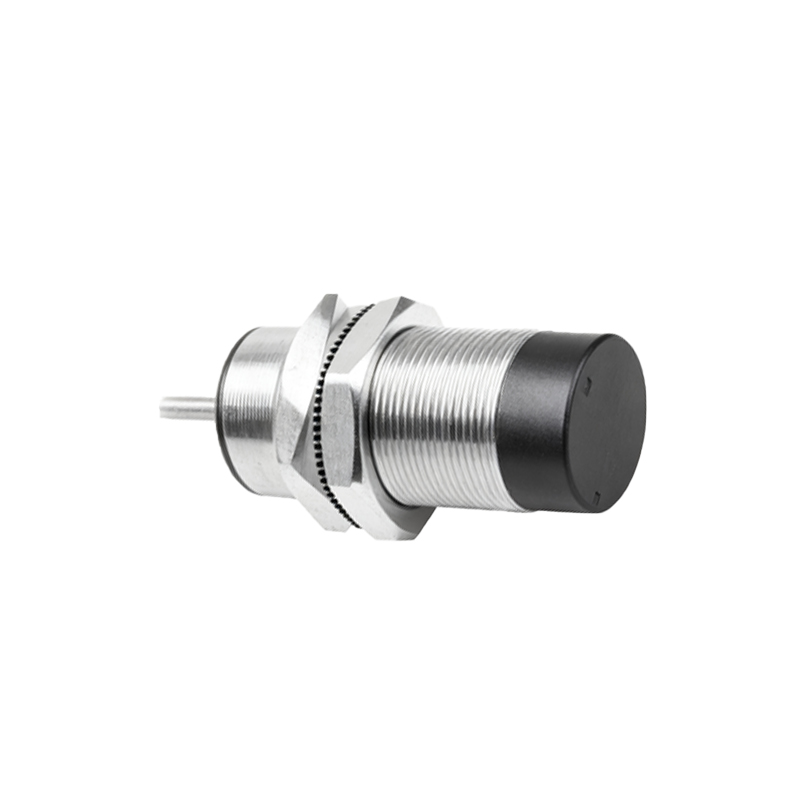
Applications of the 90 proximity sensor span various industries. In manufacturing, they are used for position sensing in conveyor systems, detecting the presence of parts in assembly lines, or ensuring safety in robotic cells by monitoring guard positions. In automotive production, these sensors help in verifying component placement, while in packaging machinery, they assist in counting and sorting items. Their reliability makes them suitable for high-speed operations where precision is paramount.
When selecting a 90 proximity sensor, engineers must consider factors such as the target material (steel, aluminum, etc.), required sensing distance, electrical output type (PNP or NPN), and environmental conditions like temperature extremes or exposure to chemicals. Compatibility with control systems, such as PLCs (Programmable Logic Controllers), is also vital for seamless integration.
In summary, the 90 proximity sensor is a versatile and durable solution for industrial automation. Its non-contact nature reduces wear and tear, enhancing system longevity. By understanding its technical nuances and application requirements, professionals can optimize their use in diverse settings, contributing to smarter and more efficient industrial processes.