In the global trade of electrical components, accurate classification under the Harmonized System (HS) is paramount for ensuring smooth customs clearance, determining correct duty rates, and maintaining compliance with international regulations. For electrical engineers and procurement specialists involved in the import or export of proximity sensors, understanding the correct HS code is a critical, yet often overlooked, aspect of the supply chain. This guide provides a detailed, industry-focused analysis of HS coding for proximity sensors, clarifying common points of confusion and outlining best practices.
The Harmonized System (HS) is a standardized numerical method of classifying traded products, used by over 200 countries. Products are classified into chapters, headings, and subheadings based on their nature, composition, and function. Proximity sensors, being sophisticated electronic components, do not have a single, universal "proximity sensor HS code." Their classification depends heavily on their specific technology, operating principle, and primary function.
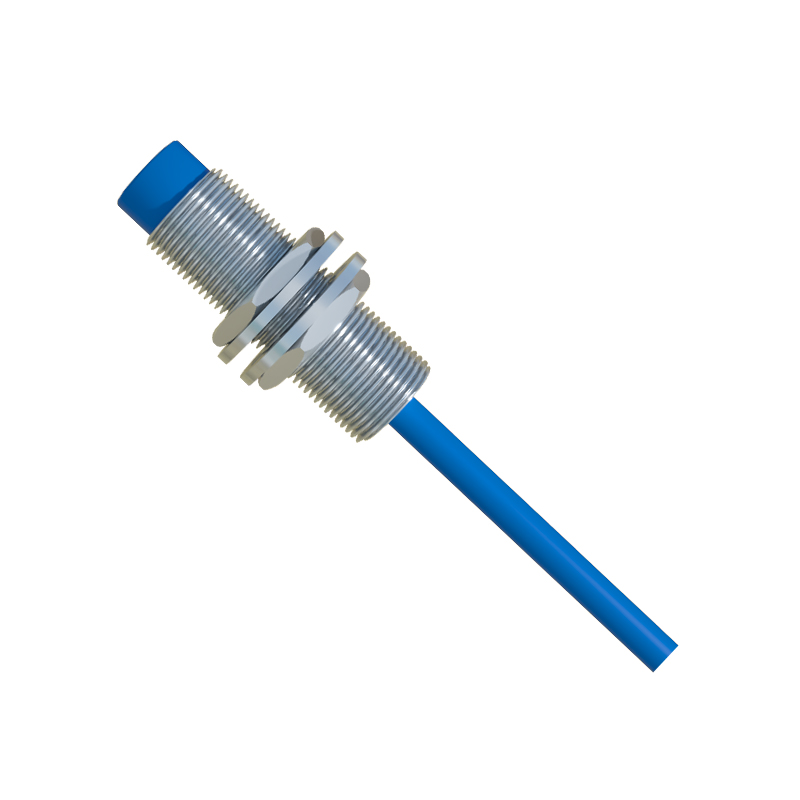
The most common and likely classification for industrial inductive or capacitive proximity sensors falls under HS Heading 8536: "Electrical apparatus for switching or protecting electrical circuits, or for making connections to or in electrical circuits." More specifically, they are often classified under:
8536.50: "Other switches." This subheading frequently covers basic proximity switches that function as non-contact, electronically operated switches to detect the presence or absence of a metallic object (inductive) or any material (capacitive) and provide a simple ON/OFF signal.
8536.90: "Other apparatus." This is a broader category that may encompass more complex sensor units or those integrated with additional circuitry.
It is crucial to distinguish a proximity switch (a binary output device) from a proximity sensor that provides analog or digital data output (e.g., for distance measurement). The latter, often called analog or measuring sensors, might be classified elsewhere if their primary function is deemed to be "measurement" rather than "switching." In such cases, one might need to consider:
HS Heading 9031: "Measuring or checking instruments, appliances and machines, not specified or included elsewhere in this chapter." Subheadings like 9031.80 or 9031.90 could be applicable for sensors designed to continuously measure position, distance, or thickness, outputting a proportional analog signal (e.g., 4-20mA, 0-10V) or a digital value via IO-Link or similar protocols.
Another point of consideration is the sensor's form and integration. A self-contained, packaged proximity sensor is classified as a single unit. However, a proximity sensor element embedded into a larger machine (e.g., a CNC lathe or robotic arm) is typically not classified separately; the entire machine carries its own HS code. Similarly, sensors that are integral parts of control panels (HS Heading 8537) are classified with the panel.
Common errors in classification include misclassifying all sensors under "instruments and apparatus for measuring" (Chapter 90) without considering the simpler switching function, or incorrectly placing them under headings for "photoelectric cells" (8541) if they use an optical principle. While optical proximity sensors exist, their classification still hinges on whether they act primarily as a switch or a measuring device.
For engineers and logistics personnel, here are the essential steps for accurate HS code determination:
1. Identify the Primary Function: Is it a simple presence detector (switch) or a measuring device? Review the sensor's datasheet and output specifications.
2. Determine the Technology: Inductive, capacitive, ultrasonic, magnetic, or optical? This supports the functional argument.
3. Consult Official Resources: Refer to the national customs tariff schedule of the importing or exporting country. The HS code is administered by the World Customs Organization (WCO), but national interpretations (often 10-digit codes) can vary.
4. Seek Binding Rulings: For high-value or frequent shipments, consider applying to your national customs authority for a Binding Tariff Information (BTI) ruling. This provides legal certainty for a defined period.
5. Document Thoroughly: Ensure commercial invoices and packing lists clearly describe the product with technical details (e.g., "Inductive Proximity Switch, 24V DC, PNP NO output, M12 connector") to justify the chosen code.
Incorrect classification can lead to customs delays, seizure of goods, underpayment or overpayment of duties, and potential penalties. In an industry where just-in-time delivery is critical, such disruptions can halt production lines and incur significant costs. Therefore, treating HS code classification with the same technical rigor applied to circuit design or system integration is not just a logistical task—it is an engineering and commercial imperative. By precisely aligning the sensor's technical