Proximity sensors are essential components in modern industrial automation, enabling non-contact detection of objects within a specified range. These devices enhance efficiency, safety, and precision in various applications, from manufacturing lines to robotics. Unlike mechanical switches, proximity sensors operate without physical contact, reducing wear and tear and ensuring longevity. This article explores the primary types of proximity sensors, their working principles, and common industrial uses.
Inductive proximity sensors are widely used for detecting metallic objects. They generate an electromagnetic field and sense changes caused by conductive materials. Typically, these sensors are ideal for harsh environments, such as automotive assembly or metalworking, due to their durability and resistance to dust, moisture, and vibrations. Key advantages include high switching rates and minimal maintenance requirements. However, they are limited to metal detection, making them unsuitable for non-metallic materials.
Capacitive proximity sensors can detect both metallic and non-metallic objects, including liquids, plastics, and wood. They work by measuring changes in capacitance when an object enters their electrical field. This versatility makes them popular in packaging, food processing, and chemical industries, where diverse materials need monitoring. For instance, they can sense fluid levels in tanks or detect paper in printing machines. While sensitive to environmental factors like humidity, proper calibration ensures reliable performance.
Ultrasonic proximity sensors utilize sound waves to detect objects, regardless of material composition. By emitting high-frequency pulses and measuring echo times, they calculate distances accurately. These sensors excel in challenging conditions, such as detecting transparent or irregularly shaped items in logistics or automotive systems. They are also effective for level sensing in silos or tanks. Drawbacks include potential interference from temperature variations or acoustic noise, but advanced models mitigate these issues with filtering technology.
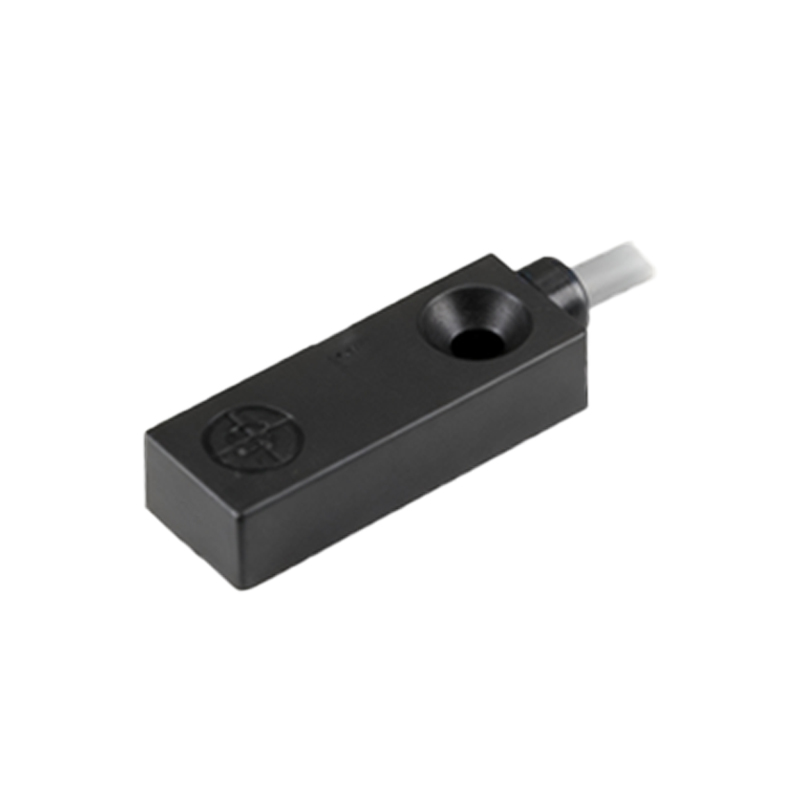
Magnetic proximity sensors rely on magnetic fields to detect permanent magnets or ferrous objects. Commonly used in safety applications, like door position sensing in elevators or machinery guards, they offer robust performance in extreme temperatures and dirty environments. Their simple design ensures low power consumption and high reliability. However, they are specific to magnetic materials, limiting their scope compared to other types.
Photoelectric proximity sensors use light beams, typically infrared, to detect objects. They come in three main configurations: through-beam, retro-reflective, and diffuse. Through-beam sensors have separate emitters and receivers, offering long-range detection for conveyor systems. Retro-reflective types use a reflector for medium-range applications, while diffuse sensors rely on light reflection from the object itself for short-range tasks. These sensors are prevalent in electronics assembly and pharmaceutical industries due to their precision and speed. Factors like ambient light or surface color can affect performance, but modern designs include compensation features.
In summary, selecting the right proximity sensor depends on factors like target material, environmental conditions, and required accuracy. Inductive sensors suit metal detection in rugged settings, capacitive sensors handle diverse materials, ultrasonic sensors provide versatile distance measurement, magnetic sensors ensure safety in harsh climates, and photoelectric sensors offer high-speed optical detection. Understanding these options helps engineers optimize automation systems for enhanced productivity and safety. As technology advances, smart sensors with IoT connectivity are emerging, enabling predictive maintenance and real-time data analytics for smarter industrial operations.