In the realm of industrial automation, proximity switch sensors are indispensable components for non-contact detection of objects. Among various design configurations, the side hole feature in proximity sensors plays a critical role in enhancing functionality and adaptability in complex installations. This article delves into the engineering principles, design considerations, and practical applications of side holes in proximity switch sensors, providing insights for professionals in electrical and automation fields.
The side hole, typically located on the lateral surface of the sensor housing, serves multiple purposes. Primarily, it facilitates auxiliary mounting or alignment, allowing for secure fixation in tight spaces where traditional mounting methods are impractical. For instance, in conveyor systems or robotic arms, sensors with side holes can be easily integrated using brackets or bolts without obstructing the sensing face. This design minimizes installation time and improves maintenance accessibility, as technicians can adjust or replace sensors without disassembling entire modules.
From a technical perspective, the side hole must be engineered to maintain the sensor's integrity. Materials such as stainless steel or ruggedized plastics are commonly used to ensure durability against environmental factors like moisture, dust, and mechanical stress. The hole's diameter and threading are standardized to comply with international norms (e.g., ISO or DIN specifications), enabling compatibility with a wide range of industrial fixtures. Engineers must also consider electromagnetic interference (EMI) shielding; improper hole placement can compromise the sensor's internal circuitry, leading to false triggers or reduced sensitivity. Thus, advanced designs incorporate shielded pathways or non-metallic inserts to preserve signal integrity.
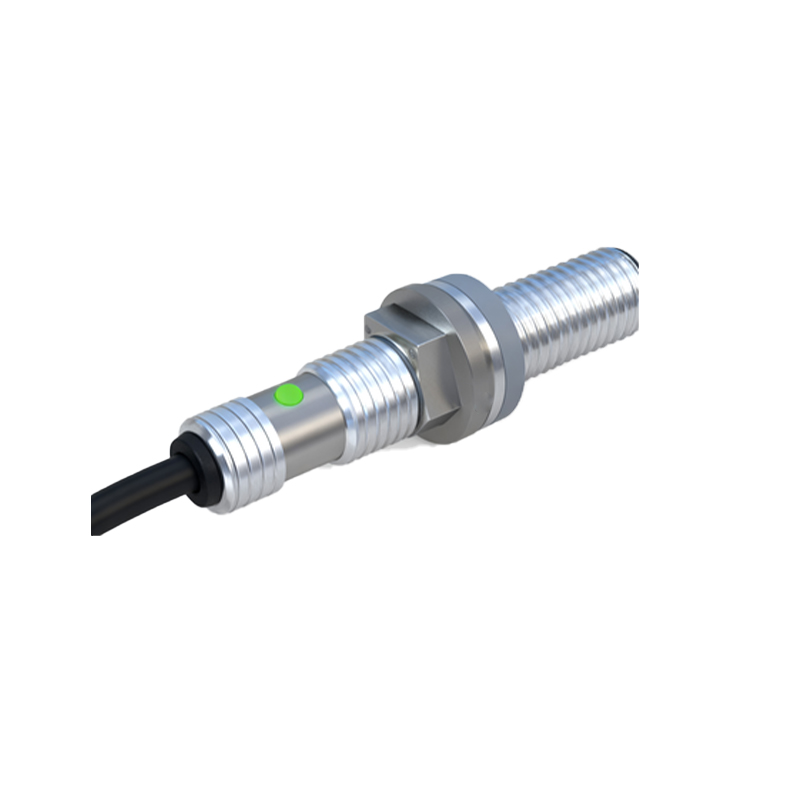
In applications, proximity sensors with side holes excel in scenarios requiring precise positioning. For example, in automotive assembly lines, these sensors detect component presence on moving pallets, with side holes allowing for angled mounting to avoid obstructions. Similarly, in packaging machinery, they monitor material flow, where the side hole enables quick reconfiguration for different product sizes. The versatility extends to hazardous environments, such as chemical plants, where explosion-proof sensors with side holes are used for leak detection, ensuring safety without compromising performance.
Maintenance and calibration are streamlined with side hole designs. Technicians can use alignment tools through the holes to verify sensor orientation, reducing downtime. Additionally, some models feature integrated side holes for wiring conduits, simplifying cable management and enhancing protection against abrasion. This is particularly beneficial in high-vibration settings, like mining equipment, where loose wiring can lead to failures.
Innovations in side hole technology continue to evolve. Smart sensors with IoT capabilities now incorporate side holes for auxiliary sensors or communication ports, enabling data exchange for predictive maintenance. As Industry 4.0 advances, the integration of side holes in proximity switches will likely focus on modularity, allowing sensors to adapt to dynamic production lines with minimal retrofitting.
In conclusion, the side hole in proximity switch sensors is more than a mere mechanical feature; it embodies practical engineering that addresses real-world challenges in industrial automation. By optimizing mounting, durability, and adaptability, it enhances system reliability and efficiency. Professionals should prioritize sensors with well-designed side holes when planning installations in constrained or variable environments, as they offer long-term operational benefits and cost savings.