In the realm of industrial automation and control systems, proximity sensors stand as critical components for detecting the presence or absence of objects without physical contact. These devices are essential for enhancing efficiency, safety, and precision in various applications, from manufacturing lines to robotics. Among the diverse types available, sensors designed for metal and non-metal detection are particularly significant due to their widespread use and technical nuances. This article delves into the principles, types, and applications of these sensors, offering insights tailored for electrical engineers and industry professionals.
Proximity sensors operate based on different physical principles, primarily electromagnetic, capacitive, and inductive technologies. Inductive proximity sensors are specifically designed for metal detection. They generate an electromagnetic field using a coil and oscillator. When a metallic object enters this field, it induces eddy currents, causing a change in the oscillation amplitude. This alteration is detected by the sensor's circuit, triggering an output signal. Inductive sensors are highly reliable for detecting ferrous and non-ferrous metals, such as steel, aluminum, and copper, with typical sensing ranges from a few millimeters to several centimeters. Their robustness makes them ideal for harsh industrial environments, including those with dust, moisture, or vibration.
In contrast, capacitive proximity sensors can detect both metal and non-metal objects, including liquids, plastics, glass, and wood. These sensors work by generating an electrostatic field between two electrodes. When an object enters this field, it changes the capacitance, which is measured by the sensor's circuitry. Capacitive sensors are versatile and can adjust sensitivity to ignore certain materials, making them suitable for applications like level detection in tanks or presence sensing in packaging lines. However, they may be influenced by environmental factors like humidity or temperature, requiring careful calibration.
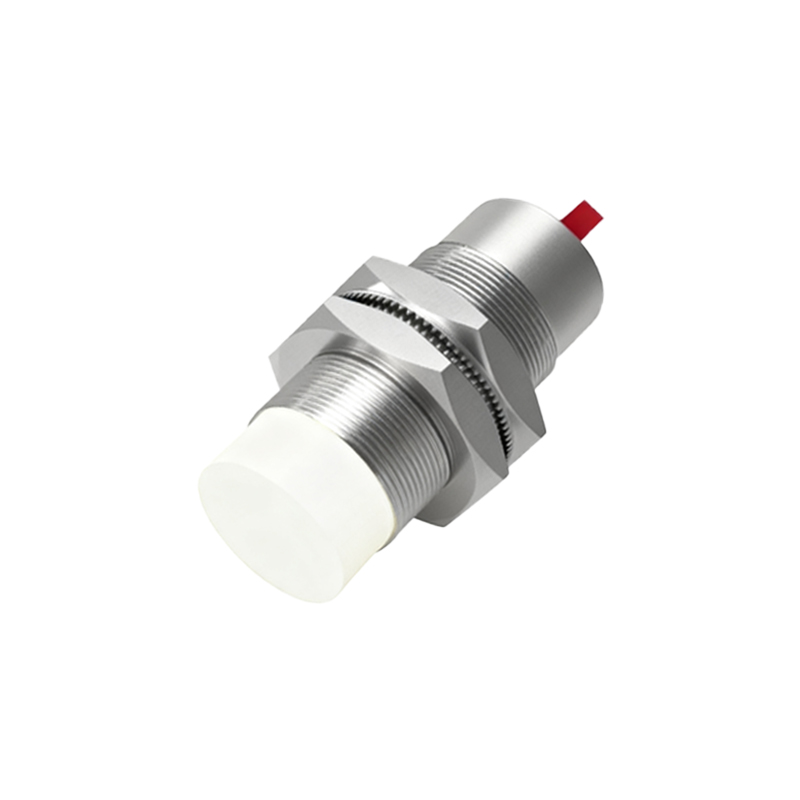
Another key type is the ultrasonic proximity sensor, which uses sound waves to detect objects regardless of their material composition. By emitting high-frequency ultrasonic pulses and measuring the time taken for echoes to return, these sensors calculate distance and presence. They are effective for non-metal detection in complex scenarios, such as transparent or irregularly shaped objects, but may face challenges in noisy environments or with sound-absorbing materials.
The selection between metal and non-metal detection sensors depends on application requirements. In automotive manufacturing, inductive sensors are commonly used for detecting metal parts in assembly lines, ensuring precise positioning and quality control. For food processing, capacitive sensors help monitor plastic containers or liquid levels without contamination risks. In electronics, ultrasonic sensors assist in handling delicate components. Engineers must consider factors like sensing range, response time, environmental conditions, and cost when choosing a sensor.
Advancements in technology have led to smart proximity sensors with integrated diagnostics and communication protocols, such as IO-Link or Ethernet/IP. These features enable real-time monitoring, predictive maintenance, and seamless integration into Industry 4.0 systems. For instance, sensors with self-calibration capabilities can adapt to changing conditions, reducing downtime and improving operational efficiency.
In summary, proximity sensors for metal and non-metal detection are indispensable tools in modern industry. Understanding their working principles and applications allows engineers to optimize system performance and innovate in automation. As industries evolve towards greater connectivity and intelligence, these sensors will continue to play a pivotal role in driving productivity and safety.