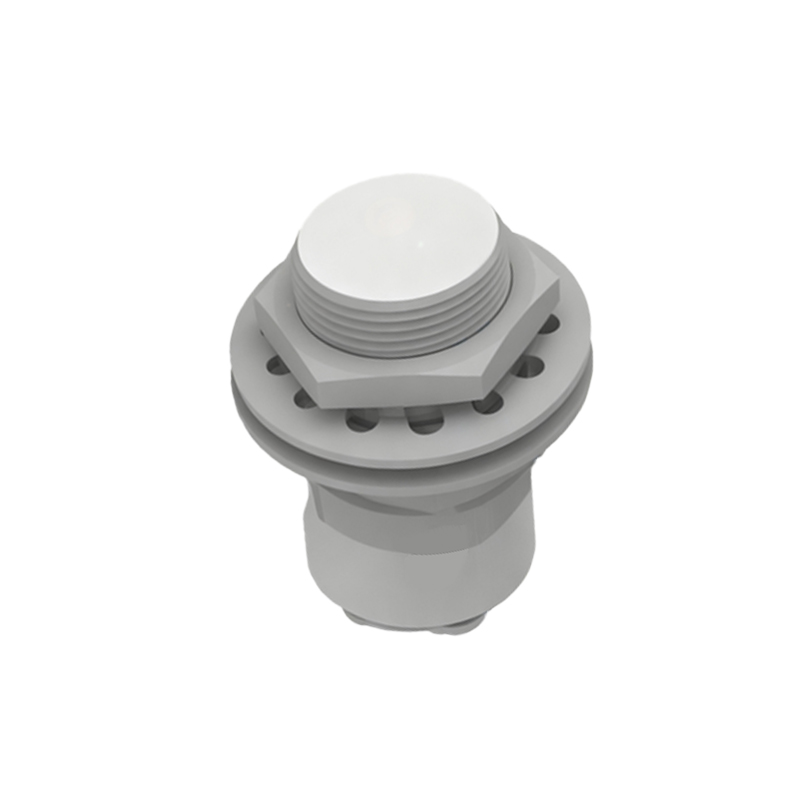
Proximity sensors play a critical role in modern industrial automation, particularly in the detection of hollow cylinders—a common component in manufacturing, packaging, and assembly lines. These non-contact sensors, including inductive, capacitive, and ultrasonic types, offer reliable solutions for position sensing, object counting, and quality control without physical interaction. For hollow cylinders, which lack solid cores, detection challenges arise due to their material composition, wall thickness, and internal geometry. Inductive proximity sensors are widely preferred for metallic hollow cylinders, as they generate an electromagnetic field to detect ferrous or non-ferrous metals. However, factors like sensor range, cylinder diameter, and wall thickness must be carefully calibrated to avoid false triggers or missed detections. For non-metallic hollow cylinders, such as those made of plastic or glass, capacitive or ultrasonic sensors are more suitable, as they respond to changes in dielectric properties or sound wave reflections.
In practice, engineers must consider several parameters to optimize detection. The sensing distance, typically specified by manufacturers, should account for the hollow cylinder's material and size. For instance, a thin-walled steel cylinder may require a shorter range to ensure consistent signal output, while a thick-walled aluminum cylinder might need sensor adjustment for higher sensitivity. Environmental conditions, such as temperature fluctuations, humidity, or nearby electromagnetic interference, can also impact sensor performance. Shielding and housing designs help mitigate these issues, ensuring stable operation in harsh industrial settings. Additionally, the orientation of the cylinder relative to the sensor—whether axial or radial—affects detection accuracy. Axial alignment often provides stronger signals, but radial setups may be necessary for space-constrained applications.
Advanced proximity sensors with programmable logic controllers (PLCs) enable real-time monitoring and data integration. For example, in automotive assembly lines, sensors detect hollow engine components to verify placement before welding, reducing defects and downtime. In packaging, they ensure cylindrical containers are correctly positioned for labeling or filling. Regular maintenance, including calibration checks and contamination prevention, extends sensor lifespan and reliability. As Industry 4.0 evolves, smart sensors with IoT connectivity offer predictive analytics, alerting operators to potential failures before they disrupt production. Ultimately, selecting the right proximity sensor for hollow cylinders involves a balance of technical specifications, environmental factors, and cost-efficiency, driving efficiency and precision in diverse industrial sectors.