In the realm of industrial automation and machinery, proximity sensors serve as the critical eyes of a system, enabling non-contact detection of objects with precision and reliability. Among the diverse range of sizes available, the 8mm proximity sensor stands out as a particularly versatile and widely adopted component. This article delves into the technical specifications, operational principles, common types, and key application considerations for 8mm proximity sensors, providing a thorough understanding for engineers and technicians.
An 8mm proximity sensor, as the name implies, features a sensing face with a diameter of 8 millimeters. This compact form factor is a significant advantage in modern machinery design, where space is often at a premium. Despite its small size, it is engineered to deliver robust performance in challenging industrial environments. The core function of any inductive proximity sensor, including the 8mm variant, is to detect the presence or absence of metallic objects—typically ferrous metals like steel and iron—without any physical contact. This is achieved through an electromagnetic field generated by an oscillator circuit within the sensor. When a metallic target enters this field, it induces eddy currents on the target's surface, which in turn dampens the oscillation. This change is detected by the sensor's circuitry, triggering a solid-state output switch (typically PNP or NPN).
The sensing range, or nominal sensing distance (Sn), for a standard 8mm inductive proximity sensor is usually up to 2mm, though this can vary slightly by model and manufacturer. It is crucial to note that this is the rated operating distance for a standard target (often a 1mm thick square of mild steel). Factors such as target material, size, and shape can influence the effective sensing distance. For non-ferrous metals like aluminum or copper, the sensing range is significantly reduced, often requiring a correction factor provided in the datasheet.
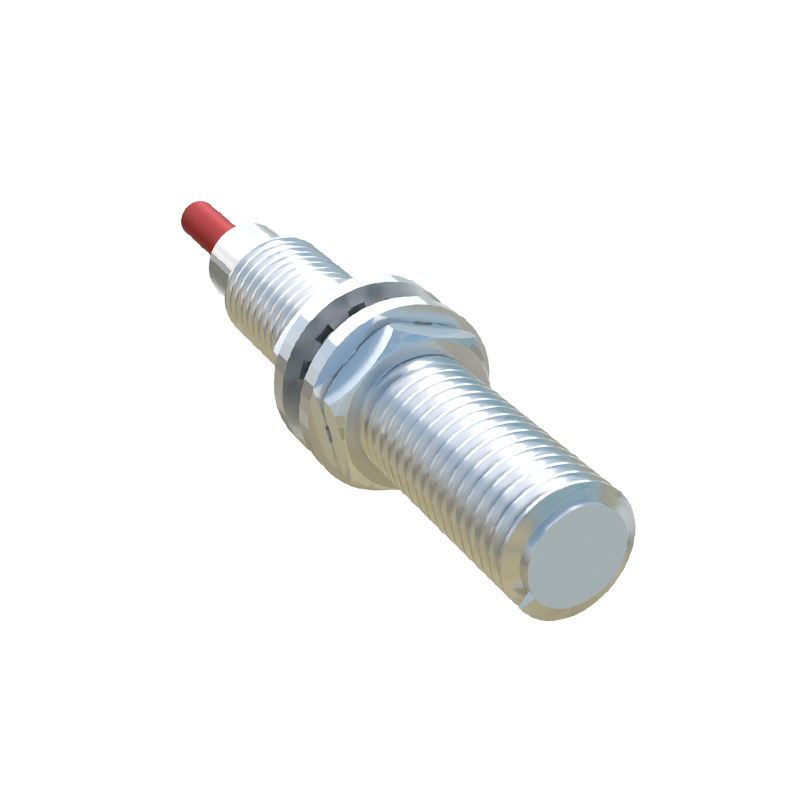
Two primary housing styles are prevalent for 8mm sensors: cylindrical (threaded) and rectangular (block-style). The cylindrical type, frequently with an M8 threaded barrel, is immensely popular for its ease of installation. It can be easily mounted using a standard locknut, allowing for adjustable positioning. The rectangular or "cube" style offers an alternative form factor that may be preferable in certain mounting configurations. Both styles are commonly available with various output configurations (e.g., 3-wire DC, 2-wire DC/AC) and connection methods, such as pre-wired cables or quick-disconnect connectors.
When selecting an 8mm proximity sensor for an application, several parameters demand careful attention beyond just the size. The sensing distance, as mentioned, is paramount. The switching frequency, which indicates how many on/off cycles the sensor can handle per second, determines its suitability for high-speed counting or positioning tasks. Environmental robustness is another critical factor; look for ingress protection ratings like IP67 or IP68, which guarantee resistance to dust and temporary or prolonged immersion in water. Temperature ratings ensure stable operation within the specified ambient range of the application. Furthermore, the output type must be compatible with the controller's input module—be it a sinking (NPN) or sourcing (PNP) input.
The applications for 8mm proximity sensors are vast and span across numerous industries. In automotive assembly lines, they are used for part presence verification, end-of-travel detection on actuators, and rotary speed monitoring. In packaging machinery, they detect metal components on conveyors or confirm the position of capping heads. They are integral to CNC machines for tool positioning and in material handling for detecting pallets or metal guides. Their small size makes them ideal for integration into robotic grippers or compact assembly jigs where larger sensors would be impractical.
Installation and maintenance are straightforward but require adherence to best practices. Ensure adequate clearance around the sensing face—known as the non-flush or shielded mounting style often requires no lateral clearance, while unshielded types do. Avoid mounting multiple sensors of the same type too close to each other to prevent mutual interference. Regular cleaning of the sensing face from accumulated metal chips, oil, or dirt is essential to maintain reliable operation. While these sensors are solid-state and have no moving parts, ensuring stable power supply voltage within the specified range is crucial for longevity.
In conclusion, the 8mm proximity sensor is a powerhouse of functionality packaged in a miniature format. Its reliability, durability, and adaptability make it a fundamental building block in automated systems. By understanding its operating principles, key selection criteria, and application nuances, engineers can effectively leverage this component to enhance machine performance, safety, and efficiency. As industrial trends continue toward miniaturization and higher precision, the role of compact sensors like the 8mm proximity type will only become more pronounced.