Optical proximity sensors are pivotal components in automation and industrial control systems, utilizing light beams to detect the presence, absence, or distance of objects without physical contact. These sensors operate based on the principles of light emission and reception, offering high precision, rapid response, and reliability in diverse environments. In the electrical and automation engineering fields, understanding the various types of optical proximity sensors is essential for selecting the right technology for specific applications. This article explores the primary categories, their working mechanisms, and industrial use cases, adhering to professional industry standards and English-language conventions for global readability.
The first major type is the Through-Beam Sensor, also known as a opposed-mode sensor. It consists of separate emitter and receiver units placed opposite each other. The emitter projects a continuous or modulated light beam toward the receiver. When an object interrupts this beam, the sensor triggers a detection signal. Through-beam sensors are renowned for their long sensing ranges, often exceeding 10 meters, and high immunity to environmental interference like dust or ambient light. They are commonly deployed in packaging lines, security systems, and material handling equipment where reliable object detection over distances is critical. However, installation requires precise alignment of two separate units, which can be more complex compared to other types.
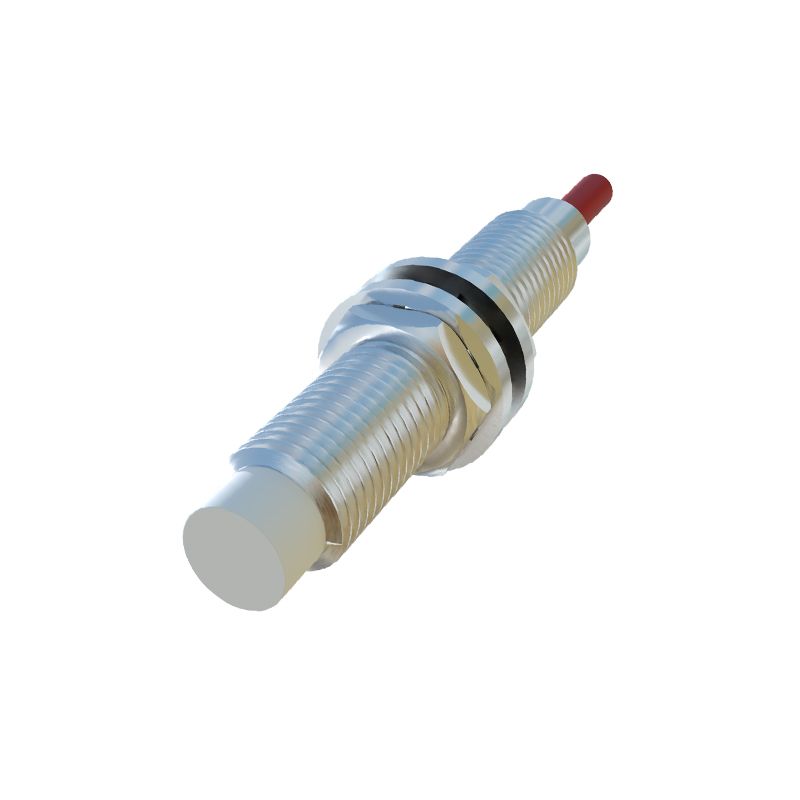
Another widely used variant is the Retroreflective Sensor. This design integrates both emitter and receiver into a single housing, using a reflector (such as a corner-cube reflector) placed opposite the sensor. The emitter sends light toward the reflector, which bounces it back to the receiver. Detection occurs when an object blocks the reflected beam. Retroreflective sensors offer easier installation than through-beam types, with sensing ranges typically up to 5 meters. They are suitable for applications like conveyor belt monitoring, automated doors, and pallet detection. A key consideration is that highly reflective objects might cause false triggers, though modern sensors often incorporate polarization filters to mitigate this issue.
Diffuse Reflective Sensors, or proximity-mode sensors, represent a third category. These sensors house the emitter and receiver together, but unlike retroreflective types, they rely on the target object itself to reflect light. The emitter projects light onto the object, and the receiver detects the scattered reflection. Diffuse sensors are compact and ideal for short-range detection, usually within a few centimeters to about 1 meter. They are extensively used in robotics for object positioning, assembly line part verification, and liquid level sensing. Their performance can be affected by object color, texture, and reflectivity, requiring careful calibration. Advanced models feature background suppression or fixed-field technology to ignore distant objects and enhance accuracy.
A specialized form is the Fiber-Optic Sensor, which uses optical fibers to transmit light from the emitter to the sensing head and back to the receiver. This design allows the electronic components to be remotely located, making fiber-optic sensors ideal for harsh environments with extreme temperatures, high vibration, or corrosive substances. They are also useful in confined spaces due to their small sensing heads. Applications include semiconductor manufacturing, chemical processing, and medical device assembly. These sensors can be configured in through-beam, retroreflective, or diffuse modes, offering versatility despite higher costs.
Emerging technologies like Time-of-Flight (ToF) Sensors and Laser Triangulation Sensors provide advanced capabilities for distance measurement and 3D profiling. ToF sensors calculate distance by measuring the time delay between emitted light pulses and their return, enabling precise positioning in robotics and autonomous vehicles. Laser triangulation sensors use geometric principles to determine object displacement, commonly applied in quality inspection and thickness gauging. Both types represent the cutting edge of optical sensing, integrating digital interfaces for Industry 4.0 connectivity.
In industrial practice, selecting an optical proximity sensor involves evaluating factors such as sensing range, response time, environmental conditions (e.g., dust, moisture, temperature), and target material properties. For instance, in automotive manufacturing, diffuse sensors with background suppression might detect painted parts on a conveyor, while through-beam sensors ensure safety in robotic cell barriers. Regular maintenance, including lens cleaning and alignment checks, is crucial to sustain performance.
Overall, optical proximity sensors are indispensable tools in modern electrical engineering, driving efficiency and safety across sectors from logistics to precision machining. As industries evolve toward smart automation, these sensors continue to advance with features like IO-Link communication and enhanced durability, meeting the demands of next-generation industrial systems. Engineers must stay informed about these developments to leverage optical sensing technology effectively, ensuring optimal system integration and operational success.