In the realm of precision measurement and industrial automation, laser sensors have become indispensable tools for applications ranging from distance measurement and object detection to quality control and alignment. However, the high-power operation of these sensors often generates significant thermal loads, which can compromise accuracy, stability, and longevity. To mitigate these challenges, water cooling systems have emerged as a critical solution for maintaining optimal operating temperatures. This article delves into the principles, design considerations, and benefits of water cooling systems specifically tailored for laser sensors, offering insights for engineers and technicians in the electrical and automation industries.
The fundamental principle behind water cooling lies in its superior heat transfer capacity compared to air cooling. Water has a high specific heat capacity, meaning it can absorb substantial thermal energy with minimal temperature rise. In a typical laser sensor water cooling system, a closed-loop circuit circulates deionized water or a coolant mixture through a cold plate or heat exchanger attached to the laser diode or sensor housing. As the coolant flows, it absorbs heat from the laser components and transports it to a radiator or chiller, where the heat is dissipated into the environment. This continuous cycle ensures that the laser sensor operates within its specified temperature range, preventing thermal drift and performance degradation.
Designing an effective water cooling system for laser sensors requires careful attention to several key factors. First, the flow rate and pressure of the coolant must be optimized to achieve efficient heat removal without causing leakage or damage to sensitive components. Engineers often use pumps with variable speed controls to adjust flow rates based on real-time thermal loads. Second, the choice of coolant is crucial; deionized water is preferred for its purity and non-conductive properties, reducing the risk of electrical shorts, while glycol-based mixtures may be used in sub-zero environments to prevent freezing. Additionally, materials compatibility must be considered—components such as tubing, fittings, and reservoirs should be made from corrosion-resistant materials like stainless steel or specialized polymers to ensure long-term reliability.
Another critical aspect is system integration. Modern laser sensors often feature compact designs, necessitating miniaturized cooling solutions. Microchannel cold plates, for instance, offer high surface area-to-volume ratios, enabling efficient cooling in space-constrained applications. Furthermore, smart monitoring systems incorporating temperature sensors and flow meters can provide real-time data on cooling performance, allowing for predictive maintenance and immediate response to anomalies. In industrial settings, these systems can be integrated with programmable logic controllers (PLCs) to automate cooling processes and enhance overall system efficiency.
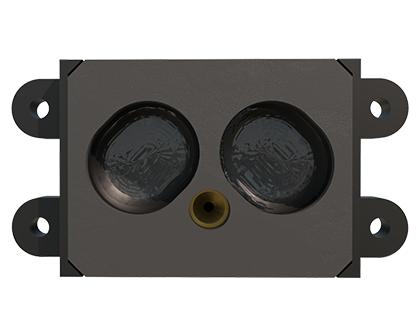
The benefits of implementing a water cooling system for laser sensors are manifold. Primarily, it enhances measurement accuracy by minimizing thermal expansion and wavelength shifts in laser diodes, which are common sources of error in high-precision applications. For example, in semiconductor manufacturing or laser cutting machines, even minor temperature fluctuations can lead to costly defects. Water cooling also extends the operational lifespan of laser sensors by reducing thermal stress on electronic components, thereby lowering maintenance costs and downtime. Moreover, by maintaining consistent temperatures, these systems enable lasers to operate at higher power levels without compromising safety or performance, unlocking new capabilities in fields like material processing and scientific research.

In practice, successful deployment requires thorough testing and validation. Engineers should conduct thermal simulations during the design phase to identify potential hotspots and optimize coolant pathways. Field testing under actual operating conditions is equally important to verify system robustness. Case studies from industries such as automotive manufacturing, where laser sensors are used for robotic welding and inspection, demonstrate that water-cooled systems can achieve temperature stability within ±0.5°C, significantly improving repeatability and throughput.
Looking ahead, advancements in cooling technology continue to evolve. Innovations like two-phase cooling, which utilizes the latent heat of vaporization for even greater efficiency, and the integration of Internet of Things (IoT) sensors for remote monitoring, are poised to further enhance laser sensor performance. As industries demand higher precision and reliability, the role of water cooling systems will only grow in importance.
In conclusion, water cooling is not merely an accessory but a vital component for maximizing the potential of laser sensors in demanding environments. By understanding its principles and adhering to best practices in design and maintenance, engineers can ensure sustained accuracy, durability, and efficiency, driving progress in automation and measurement technologies.
