In the rapidly evolving landscape of industrial automation, ADM (Absolute Distance Measurement) laser sensors have emerged as a cornerstone technology, driving unprecedented levels of accuracy, reliability, and efficiency. These advanced sensors utilize laser interferometry or time-of-flight principles to determine absolute distance without the need for a reference point or continuous tracking, making them indispensable for applications demanding high precision over long ranges. Unlike incremental encoders that can lose position data upon power loss, ADM sensors provide immediate absolute position information upon startup, significantly reducing downtime and enhancing system robustness.
The core operational principle of many ADM laser sensors is based on frequency-modulated continuous wave (FMCW) technology. The sensor emits a laser beam whose frequency is linearly modulated over time. This beam reflects off a target and returns to the sensor. By comparing the frequency of the returned beam with the emitted beam at that precise moment, the sensor calculates the phase difference, which is directly proportional to the absolute distance to the target. This method allows for simultaneous measurement of both distance and speed with micron-level accuracy, even at distances exceeding 100 meters. This capability is critical in large-scale manufacturing, such as in aerospace assembly or shipbuilding, where aligning massive components with sub-millimeter precision is paramount.
Another prevalent technology in this domain is pulsed time-of-flight. Here, the sensor emits short, powerful laser pulses and measures the time taken for the reflection to return. Given the constant speed of light, the distance is calculated with high precision. Modern ADM sensors employing this method incorporate sophisticated signal processing algorithms to filter out ambient noise and compensate for atmospheric conditions, ensuring stable performance in challenging industrial environments with variable temperatures, dust, or vibrations.

The integration of ADM laser sensors into automated systems unlocks a multitude of applications. In coordinate measuring machines (CMMs) and laser trackers, they enable the ultra-precise 3D metrology of complex parts, ensuring quality control in automotive and electronics manufacturing. For robotic guidance, these sensors provide real-time, absolute positioning data, allowing robots to perform intricate tasks like welding, dispensing, or assembly with minimal pre-programming and maximum adaptability. In logistics and warehousing, ADM sensors facilitate automated crane positioning and inventory management by accurately locating goods within vast storage spaces.

Furthermore, the advent of Industry 4.0 and the Industrial Internet of Things (IIoT) has amplified the value proposition of ADM sensors. Equipped with digital interfaces like Ethernet-APL, OPC UA, or IO-Link, these sensors seamlessly integrate into smart factory networks. They not only transmit measurement data but also diagnostic information, enabling predictive maintenance. Engineers can monitor sensor health, track performance trends, and receive alerts before potential failures, thus minimizing unplanned outages and optimizing production flow.
When selecting an ADM laser sensor for a specific application, several key parameters must be evaluated. Measurement range, resolution, and linearity are fundamental. The sampling rate, or update frequency, determines how quickly the sensor can respond to dynamic changes, which is vital for high-speed automation. Environmental ratings, such as IP67 for dust and water ingress protection, and operational temperature range, ensure durability. Finally, the choice of laser class (typically Class 2 or Class 1 for eye safety) and the type of target surface (diffuse, reflective, or cooperative retro-reflector) significantly influence measurement stability and accuracy.
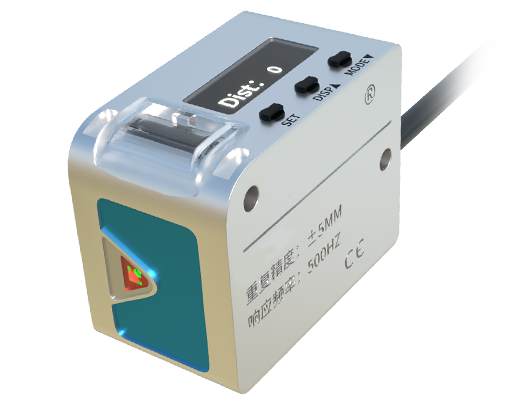
In conclusion, ADM laser sensors represent a transformative force in industrial measurement and automation. By delivering absolute, high-precision distance data in real-time, they form the sensory backbone of modern smart manufacturing, enhancing quality, productivity, and operational intelligence. As technology advances, we can anticipate even more compact, cost-effective, and intelligent ADM sensors, further pushing the boundaries of what is possible in automated precision engineering.