In the realm of industrial automation, process control, and precision measurement, the ability to detect the presence, absence, or position of an object without physical contact is paramount. Among the various non-contact sensing technologies, proximity fiber optic sensors stand out for their unique capabilities and versatility. These sensors represent a sophisticated fusion of optical principles and practical engineering, offering solutions in environments where traditional sensors falter.
At its core, a proximity fiber optic sensor operates by transmitting light from a source through a flexible fiber optic cable to a sensing head. This light beam is then projected towards a target. The fundamental principle involves monitoring the changes in the properties of the light that is either reflected back from the target or interrupted by it. This returning light is guided back through the fiber (or a separate fiber in a bifurcated design) to a photodetector. The sensor's electronic circuitry analyzes the received light intensity. A significant change in this intensity—caused by the target approaching the sensing head, reflecting light differently, or breaking the beam—triggers the sensor's output switch.
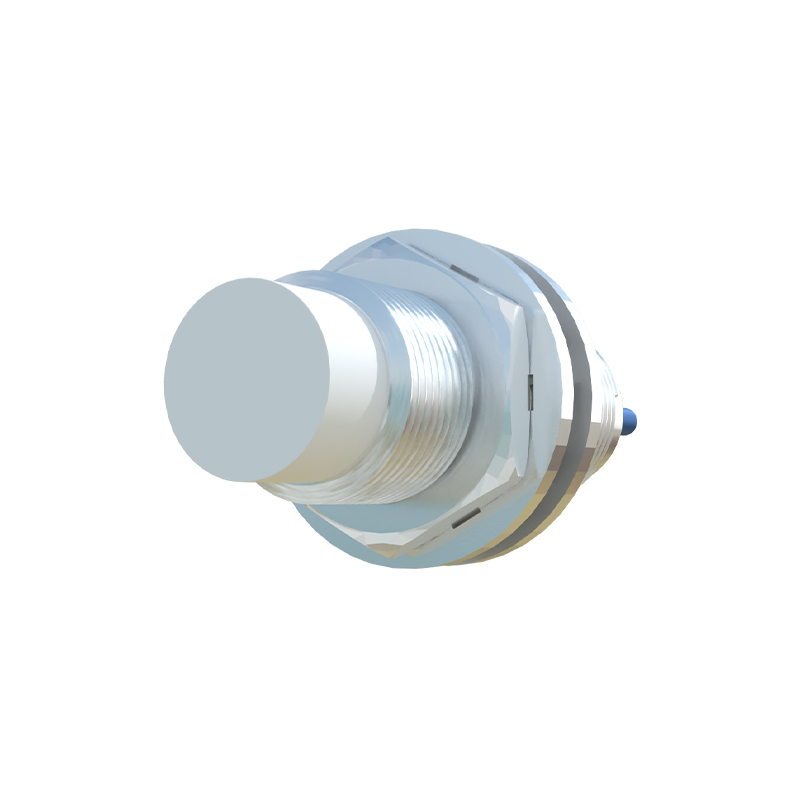
The architecture of these sensors typically falls into two main categories: diffuse reflective and through-beam. In a diffuse reflective setup, both the light transmitter and receiver are housed in the same sensing head. The sensor detects the target by measuring the light scattered back from its surface. The sensing distance depends heavily on the target's color, material, and surface finish; a bright white object can be detected from farther away than a dull black one. The through-beam, or opposed, configuration uses separate units for transmission and reception. The sensor detects a target when it interrupts the light beam between these two units. This method offers longer sensing distances and is largely immune to the target's color or surface characteristics, providing higher precision and reliability for position verification or counting applications.
The advantages of choosing fiber optic sensors for proximity detection are compelling. Their most celebrated benefit is immunity to electromagnetic interference (EMI) and radio frequency interference (RFI). Since the sensing signal is light traveling through glass or plastic fibers, these sensors perform flawlessly in areas with strong magnetic fields, near welding equipment, or in high-voltage environments where inductive or capacitive sensors would fail. Furthermore, the sensing head itself contains no electronic components. This makes the sensors intrinsically safe for use in hazardous, explosive, or high-temperature environments. The small size of the sensing tip allows for detection in extremely confined spaces where a standard photoelectric or inductive sensor simply cannot fit.
Applications for proximity fiber optic sensors are vast and varied. In electronics manufacturing, they reliably detect tiny components on circuit boards, such as chips and connectors. Within the automotive industry, they are used for precise edge guiding of materials, verifying the presence of small parts in assemblies, and monitoring robotic tooling. In pharmaceutical and food packaging, they count pills, verify cap placement on bottles, and inspect label presence—all without any risk of contamination as the sensor remains outside the sterile zone. They are also indispensable in machine tools for tool breakage detection and in textile machinery for monitoring thread breakage.
When selecting a fiber optic sensor for a specific proximity task, several factors must be considered. The required sensing distance, the size and material of the target, the environmental conditions (temperature, chemicals, space constraints), and the necessary response speed all guide the choice between diffuse and through-beam models, as well as the type of fiber cable. Proper installation is also crucial; securing the fragile fiber cables away from sharp bends, excessive vibration, and abrasive surfaces ensures long-term reliability and consistent performance.
In conclusion, proximity fiber optic sensors are a critical enabling technology for modern automation. By leveraging light transmitted through flexible fibers, they solve complex detection challenges with elegance and robustness. Their unique combination of EMI immunity, environmental resilience, and miniaturized sensing points makes them an irreplaceable tool for engineers seeking reliable, non-contact detection in demanding applications. As industries continue to push the boundaries of precision and efficiency, the role of these sophisticated optical sensors is only set to expand.