Proximity sensors are widely used in industrial automation, robotics, and consumer electronics for detecting the presence or absence of objects without physical contact. A common question that arises in various applications is whether these sensors can effectively detect plastic materials. The answer depends on the type of proximity sensor and the properties of the plastic being sensed.
There are several main types of proximity sensors, including inductive, capacitive, ultrasonic, and optical sensors. Each operates on different principles and interacts with materials in distinct ways.
Inductive proximity sensors are designed to detect metallic objects. They generate an electromagnetic field and sense changes caused by conductive materials. Since most plastics are non-conductive and non-metallic, standard inductive sensors cannot detect them. However, if a plastic item contains metallic fillers or is coated with a conductive layer, it might be detectable under specific conditions.
Capacitive proximity sensors, on the other hand, can detect both conductive and non-conductive materials, including plastics. These sensors work by measuring changes in capacitance caused by the presence of an object within their electric field. Since plastics have a different dielectric constant than air, they can alter the capacitance and trigger detection. The effectiveness depends on factors like the plastic's composition, thickness, and moisture content. For instance, plastics with higher dielectric constants (such as PVC or nylon) are easier to detect than those with lower values (like polyethylene).
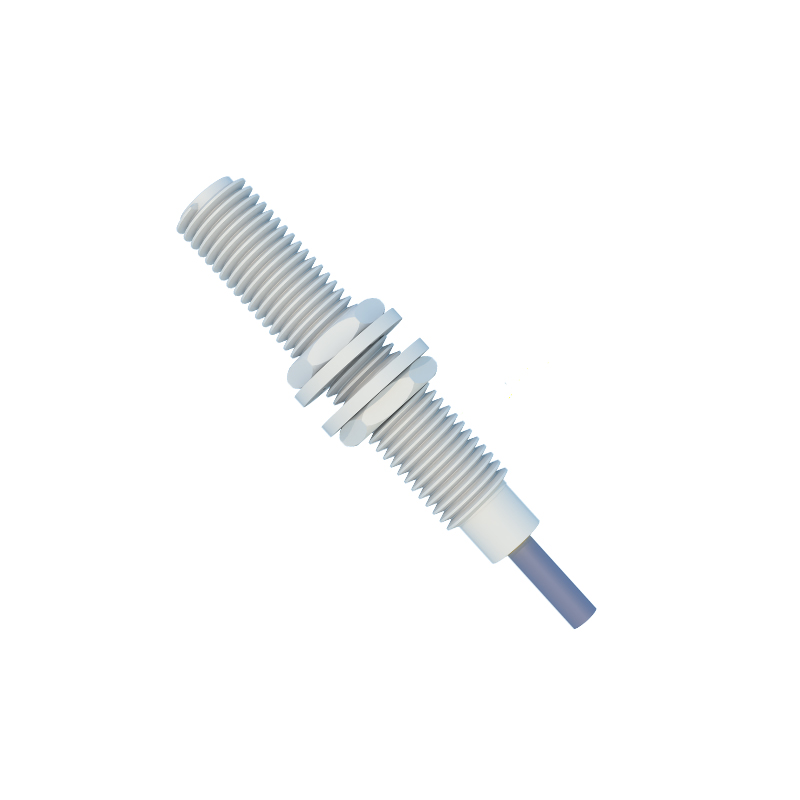
Ultrasonic proximity sensors use sound waves to detect objects. They emit high-frequency pulses and measure the time taken for echoes to return. These sensors can detect plastic materials reliably, as long as the plastic surface reflects sufficient sound waves. Factors like surface texture, angle, and density can influence performance, but most solid plastics are detectable unless they are exceptionally soft or absorbent.
Optical proximity sensors, including infrared and laser types, detect objects based on light reflection or interruption. They can sense plastics effectively if the material reflects or interrupts the light beam appropriately. Transparent or clear plastics might pose challenges, as they may allow light to pass through without sufficient reflection. In such cases, sensors with adjustable sensitivity or specific wavelengths may be required.
In practical applications, selecting the right sensor involves considering the plastic's properties and the operating environment. For example, in packaging lines where plastic bottles are conveyed, capacitive or ultrasonic sensors are often preferred. In automotive assembly, where plastic components might contain metal inserts, inductive sensors could be suitable.
It's also important to account for environmental factors like dust, humidity, or temperature, which can affect sensor performance. Regular calibration and testing with the actual plastic materials are recommended to ensure reliability.
In summary, while inductive proximity sensors are generally unsuitable for pure plastics, capacitive, ultrasonic, and optical sensors can detect plastic materials effectively under the right conditions. Understanding the sensor technology and material characteristics is key to successful implementation in any system.