Proximity sensors are fundamental components in modern automation and interactive systems. Their primary function is to detect the presence or absence of an object within a specific range without any physical contact. This non-contact detection capability is the cornerstone of their widespread utility. The "representation" of a proximity sensor refers to how its state or output is communicated and interpreted within a control system. This is not merely an on/off signal; it encompasses the method of data transmission, the format of the output, and how this information integrates into larger electronic or digital frameworks.
At its core, the output representation varies significantly based on the sensor technology. Inductive proximity sensors, ideal for detecting metals, typically provide a simple digital switch output. This is often represented as a discrete signal: a 24V DC level for "object detected" and 0V for "no object." This binary representation is straightforward for programmable logic controllers (PLCs) to process. Capacitive sensors, which can detect non-metallic materials like liquids or plastics, often offer a similar digital output but sometimes include analog or adjustable sensitivity, adding a layer of configuration to their representation.
A more complex representation comes from analog sensors. These devices output a continuous signal, usually a voltage (e.g., 0-10V) or current (e.g., 4-20mA), that is proportional to the distance to the target. This analog representation allows for precise position monitoring, not just detection. For instance, in a robotic arm, an analog proximity sensor can continuously report how far an object is, enabling nuanced control. The representation here is a scaled electrical value that must be read by an analog input module and converted into a meaningful engineering unit, like millimeters.
Modern systems increasingly utilize sensors with digital or serial communication outputs. Representations like IO-Link, a point-to-point serial communication protocol, revolutionize sensor representation. An IO-Link proximity sensor does more than signal detection; it transmits a digital data packet containing not just the switch state but also diagnostic information (operating temperature, signal strength), parameter settings, and identification data. This transforms the sensor from a simple switch into an intelligent node on the network, with its representation being rich, structured data.
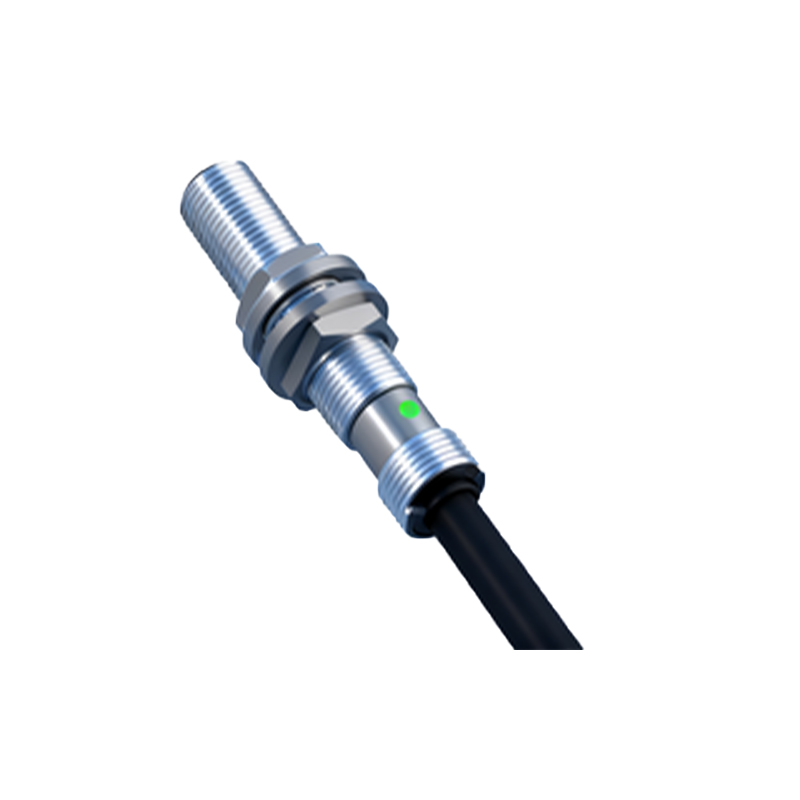
Another critical aspect of representation is the interface with the user. This includes the physical indication, typically via a built-in LED that lights when the sensor is active. For configurable sensors, the representation might involve a sequence of LED flashes indicating mode or fault codes. In software environments, the sensor's representation becomes a data tag or variable (e.g.,Part_Present_1 orDistance_Raw_Value) within a human-machine interface (HMI) or control programming software, abstracting the electrical signal into actionable information for operators and engineers.
The choice of output representation directly impacts system design. Digital outputs offer robustness and simplicity for basic counting or presence applications. Analog representations are key for tasks requiring granularity, such as tension control or fill level monitoring. Networked digital representations, through protocols like IO-Link or PROFINET, enable advanced condition monitoring, predictive maintenance, and easier device replacement, as parameters can be stored and downloaded automatically.
In application, these representations are everywhere. In automotive assembly, digital inductive sensors reliably confirm the presence of a metal component, their binary representation triggering the next step in the sequence. In mobile phones, a miniaturized infrared or capacitive proximity sensor's digital representation tells the screen to turn off when held to the ear. In packaging machinery, an analog capacitive sensor's voltage representation might monitor the level of chips in a bag, ensuring consistent fill. In smart factories, an IO-Link sensor's data representation feeds into a dashboard, providing real-time health metrics of the production line.
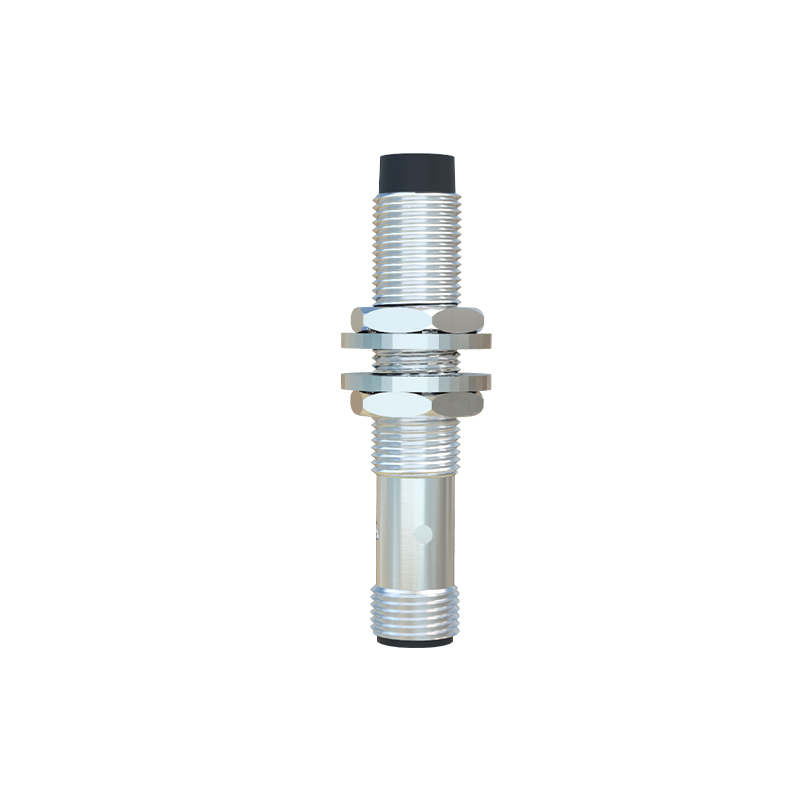
Understanding proximity sensor representation is therefore essential for effective integration. It bridges the gap between the physical event of detection and the digital world of control. Selecting the correct sensor involves not just choosing the right sensing technology (inductive, capacitive, ultrasonic, photoelectric) but also specifying the appropriate output representation—discrete, analog, or networked—that aligns with the information needs of the control system. This ensures reliable, maintainable, and intelligent automation solutions.