The TFmini laser sensor represents a significant advancement in distance measurement technology, designed to meet the rigorous demands of modern industrial environments. As a compact, low-cost LiDAR (Light Detection and Ranging) module, it utilizes time-of-flight (ToF) principles to deliver precise, non-contact distance readings. Operating typically within a range of 0.1 to 12 meters, with an accuracy of ±1% and a frame rate up to 1000 Hz, the TFmini is engineered for reliability in applications such as robotics navigation, vehicle detection, industrial automation, and volume measurement.
Its core working mechanism involves emitting modulated infrared laser pulses and calculating the distance by measuring the time delay of the reflected signal. This method ensures high immunity to ambient light interference and provides stable performance across varying surface materials and colors. The sensor module commonly interfaces via UART (TTL level) or I2C, offering straightforward integration with microcontrollers like Arduino, Raspberry Pi, or industrial PLCs. The output data packet is simple, typically containing distance, signal strength, and temperature information, allowing for real-time processing and decision-making in automated systems.
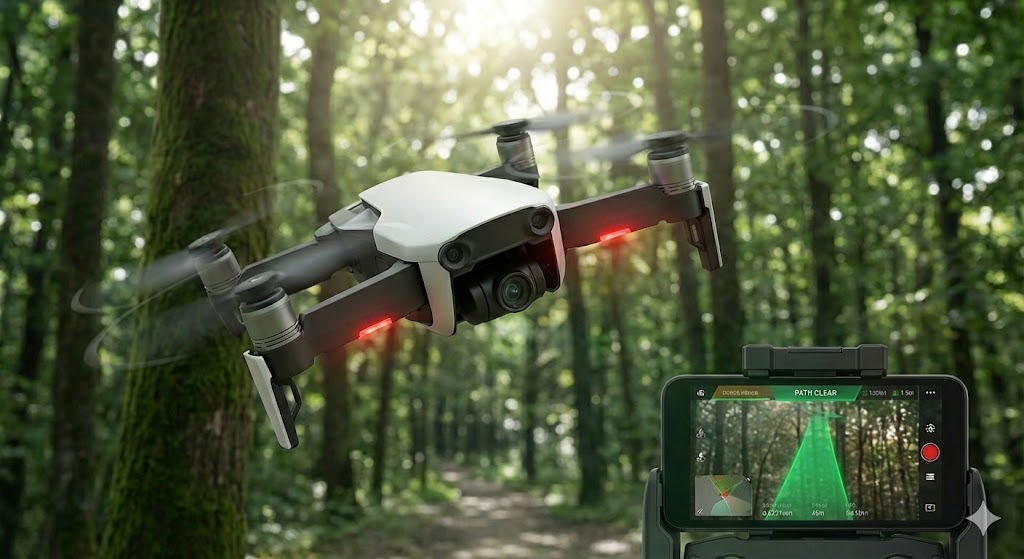
In robotics, the TFmini serves as an essential component for obstacle avoidance and spatial mapping, enabling autonomous vehicles and robotic arms to navigate complex environments safely. For industrial automation, it facilitates precise object positioning on conveyor belts, liquid level monitoring in tanks, and height detection in packaging lines. Its small form factor and low power consumption make it suitable for embedded systems and portable devices. Compared to ultrasonic sensors, the TFmini offers higher accuracy and faster response times; compared to more expensive industrial laser rangefinders, it provides a cost-effective solution for medium-range applications without sacrificing critical performance metrics.

Installation and calibration require attention to environmental factors. Ensuring a clean lens free of dust or condensation is vital for maintaining signal integrity. The sensor should be mounted securely to minimize vibration, and its alignment with the target surface must be considered, as highly reflective or absorbent materials can affect readings. Many users develop protective housings for harsh conditions involving moisture, extreme temperatures, or physical impacts.
Programming the TFmini is generally simple, with open-source libraries and example codes available for popular platforms. A basic Arduino sketch might involve initializing the serial port, reading the incoming data stream, parsing the distance value, and implementing logic based on threshold values. For instance, a system can trigger an alarm or stop a motor when an object is detected within a predefined zone. Advanced implementations may involve filtering algorithms to smooth data or fusing inputs from multiple sensors for enhanced environmental perception.
Despite its advantages, understanding its limitations is key to successful deployment. The TFmini performs optimally with solid, opaque surfaces; transparent materials like glass or liquids may yield inaccurate results. Extremely bright direct sunlight can occasionally saturate the receiver, though the built-in optical filter mitigates this effectively. For long-term industrial use, periodic verification against a known reference distance is recommended to ensure ongoing accuracy.

The evolution of the TFmini platform includes variants like the TFmini Plus and TFmini-S, which offer improved performance parameters such as extended range or different interface options. The ecosystem is supported by detailed datasheets, application notes, and active user communities, facilitating troubleshooting and innovation. As Industry 4.0 and smart manufacturing trends grow, sensors like the TFmini empower engineers to create more adaptive, efficient, and intelligent systems, bridging the gap between basic sensing and high-end metrology.
In summary, the TFmini laser sensor is a versatile, robust tool that democratizes precise distance measurement. By combining solid technical specifications with ease of integration, it has become a staple in both prototyping and production-grade industrial solutions, driving advancements in automation, safety, and operational efficiency across numerous sectors.