Proximity sensor circuits are fundamental components in modern electronics, enabling devices to detect the presence or absence of nearby objects without physical contact. These circuits form the backbone of countless automated systems, from industrial machinery to consumer smartphones. Their operation hinges on converting a physical phenomenon—the approach of an object—into a reliable electrical signal that a microcontroller or logic circuit can interpret.
At its core, a proximity sensor circuit consists of three primary sections: the sensor element, the signal conditioning unit, and the output stage. The sensor element is the transducer. Common types include inductive, capacitive, photoelectric, and ultrasonic sensors. Inductive sensors generate an electromagnetic field and detect changes caused by metallic objects. Capacitive sensors, on the other hand, can detect both metallic and non-metallic objects by sensing changes in capacitance. The choice of sensor dictates the circuit's initial design parameters.
The signal from the sensor element is typically weak, noisy, and not directly usable. This is where the signal conditioning circuit becomes critical. This stage often involves amplifiers to boost the signal, filters to remove unwanted electrical noise, and sometimes oscillators to drive the sensor element itself. For instance, in an inductive proximity sensor, an oscillator circuit creates a high-frequency electromagnetic field. When a metal object enters this field, eddy currents are induced, which dampens the oscillator's amplitude. This change is then detected.
Following conditioning, the processed signal is fed to the output stage. This stage's function is to provide a clean, standardized signal to the external control system. Common output types include digital (NPN/PNP transistor switching), analog (voltage or current proportional to distance), or even specific serial protocols. A comparator is a key component in digital output circuits, comparing the conditioned signal to a predefined threshold. When the signal crosses this threshold—indicating an object is within the detection range—the comparator switches the output transistor on or off.
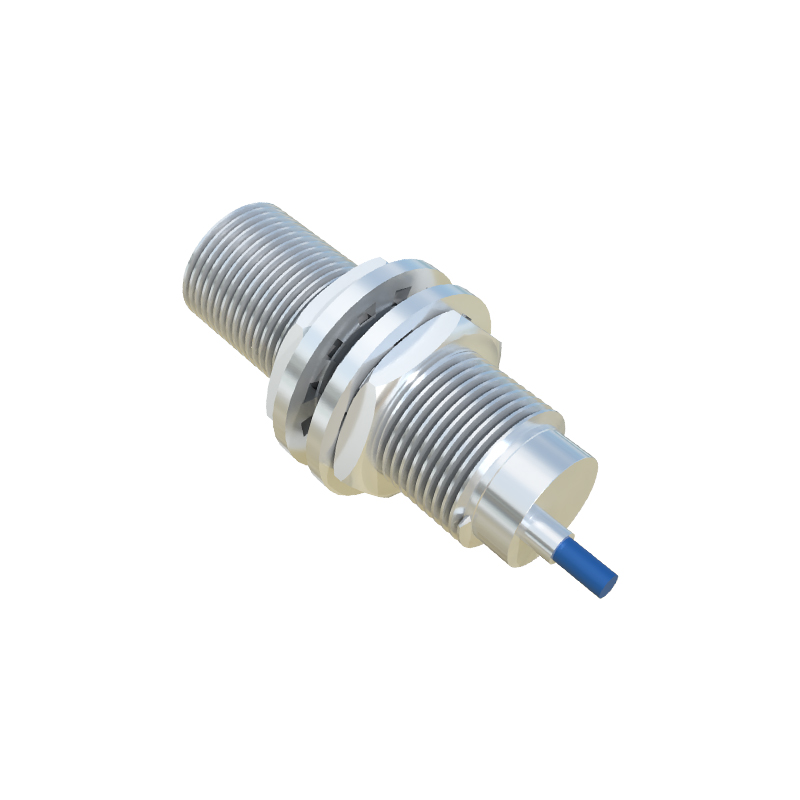
Designing a robust proximity sensor circuit presents several engineering challenges. Environmental factors like temperature fluctuations, humidity, and electromagnetic interference can affect performance. Shielding, proper grounding, and temperature-compensating components are essential for stability. Another critical consideration is the sensing distance and the material of the target object. Designers must carefully calibrate the circuit's sensitivity to avoid false triggers from background objects while ensuring reliable detection of the intended target.
The applications of these circuits are vast and varied. In automotive systems, they enable parking assist features and collision avoidance. On factory assembly lines, inductive proximity sensors count metallic parts or verify the position of robotic arms. Capacitive sensors in consumer devices detect a user's finger near a touchscreen or a face near a smartphone to turn off the display during a call. Ultrasonic sensors measure fluid levels in tanks, and photoelectric sensors ensure correct packaging on high-speed bottling lines.
Troubleshooting a malfunctioning proximity sensor circuit often follows a systematic approach. First, verify power supply integrity and grounding. Next, use an oscilloscope to examine the signal at different stages: at the sensor output, after the amplifier, and at the comparator input. This helps isolate whether the fault lies in the sensing element, the conditioning electronics, or the output driver. Common issues include degraded sensor performance due to physical damage, drift in component values altering sensitivity, or electrical noise coupling into signal lines.
Future trends point toward greater integration and intelligence. Modern circuits increasingly incorporate microcontrollers on the same board, allowing for digital calibration, self-diagnosis, and adaptive sensing algorithms. The rise of the Industrial Internet of Things (IIoT) demands sensors with built-in communication capabilities, such as IO-Link, which can transmit not just a switch signal but also parameter data and health status. Furthermore, miniaturization continues, pushing the boundaries of how small and efficient these circuits can become.
In conclusion, the proximity sensor circuit is a sophisticated interplay of physics and electronics. Its design requires a deep understanding of the sensing principle, analog circuit design for signal integrity, and consideration of the harsh real-world environment in which it must operate. From simple presence detection to complex distance measurement, these circuits provide the essential "eyes" for automated systems, making them indispensable in our increasingly automated world. Mastery of their design and application remains a valuable skill for electronics engineers across all industries.