In the realm of automation and smart technology, the proximity sensor stands as a fundamental yet powerful component. Often unseen, these devices are the silent sentinels that detect the presence or absence of nearby objects without any physical contact. Their operation hinges on emitting an electromagnetic field or a beam of radiation, such as infrared light, and then monitoring for changes in the field or the return signal. This simple principle enables a vast array of functionalities, from preventing collisions in industrial robots to turning off a smartphone screen during a call.
The core technology behind proximity sensors is diverse, leading to several distinct types, each suited for specific environments and tasks. Inductive proximity sensors are workhorses in industrial settings. They generate an oscillating electromagnetic field and detect eddy current losses induced in conductive metallic targets. This makes them ideal for detecting metals in harsh environments, as they are largely immune to dust, oil, and moisture. Common applications include position sensing in machine tools, part counting on assembly lines, and speed monitoring of rotating metal gears.
In contrast, capacitive proximity sensors can detect both metallic and non-metallic materials, including liquids, powders, and plastics. They function by measuring changes in capacitance between the sensor's electrode and the target object. This versatility finds use in level detection for tanks containing liquids or granular materials, touch-sensitive interfaces, and material handling systems where the type of object may vary.
Optical proximity sensors, often employing infrared (IR) light, are another major category. They consist of an IR LED emitter and a photodetector. The presence of an object is detected either by the reflection of the emitted light (reflective mode) or by the interruption of a beam between a separate emitter and receiver (through-beam mode). These sensors are precise and fast, commonly found in automated packaging, object counting, and, most familiarly, in consumer electronics to disable touchscreens.
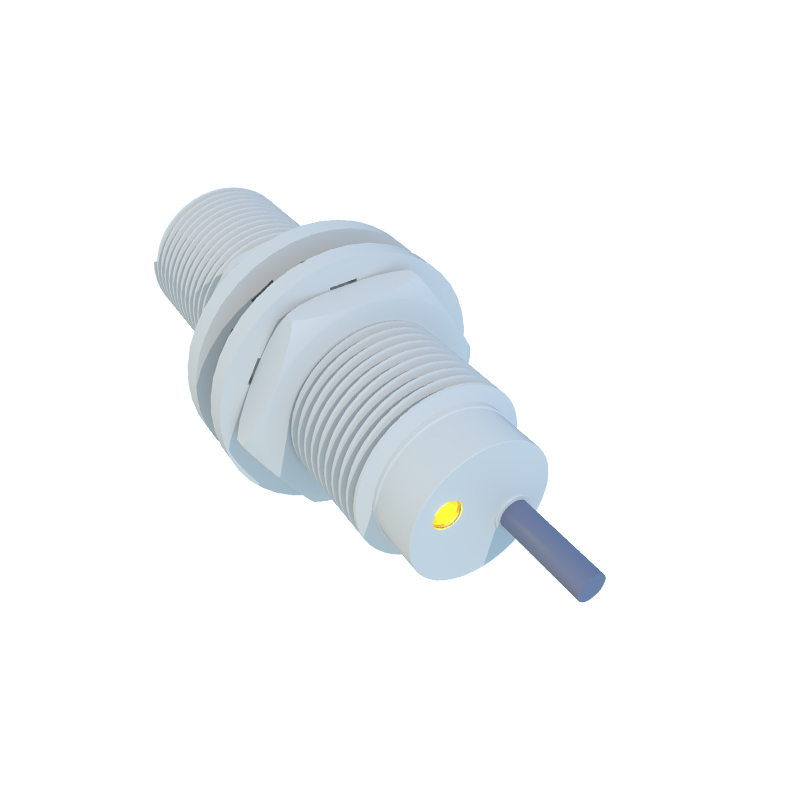
Ultrasonic sensors use sound waves beyond human hearing. They calculate distance by measuring the time interval between sending an ultrasonic pulse and receiving its echo. This technology is excellent for detecting objects regardless of color, transparency, or material, and it performs well in challenging environments with dust or vapor. Applications range from parking assist systems in vehicles to bulk level sensing in silos and collision avoidance for autonomous guided vehicles (AGVs).
The selection of the appropriate proximity sensor is a critical engineering decision. Key parameters include sensing range, repeat accuracy, response time, and environmental robustness. Factors like the target material's properties, ambient temperature, potential electrical interference, and the required switching frequency all play a role. For instance, an inductive sensor would fail to detect a plastic bottle, while an ultrasonic sensor might struggle with sound-absorbing materials like foam.
Looking forward, the evolution of proximity sensing is tightly integrated with the Internet of Things (IoT) and Industry 4.0. Modern sensors are becoming smarter, equipped with integrated microprocessors for self-diagnosis, digital communication protocols like IO-Link, and the ability to provide more data than a simple on/off signal. This data can include temperature, device health metrics, and precise distance measurements, feeding into predictive maintenance systems and sophisticated control algorithms.
Furthermore, miniaturization continues to advance, enabling more compact and energy-efficient designs for wearable devices and ultra-portable electronics. The fusion of sensing technologies, such as combining a time-of-flight (ToF) optical sensor with an inertial measurement unit (IMU), is creating new possibilities for precise 3D gesture recognition and environmental mapping in robotics and augmented reality systems.
In essence, proximity sensors are a cornerstone of modern automation. By providing a reliable, non-contact method of detection, they enhance safety, improve efficiency, and enable the intuitive interfaces we increasingly rely on. As technology progresses, these humble components will continue to evolve, becoming more intelligent, interconnected, and indispensable in our automated world.