In today's rapidly automating world, the ability to detect the presence, absence, or position of an object without physical contact is fundamental. This capability is powered by proximity sensors, with short-range variants being particularly critical for applications demanding high precision in confined spaces. A specialized ecosystem of short-range proximity sensor companies is driving innovation across industries, from consumer electronics and automotive manufacturing to robotics and medical devices. These firms are not merely component suppliers; they are enablers of smarter, safer, and more efficient systems.
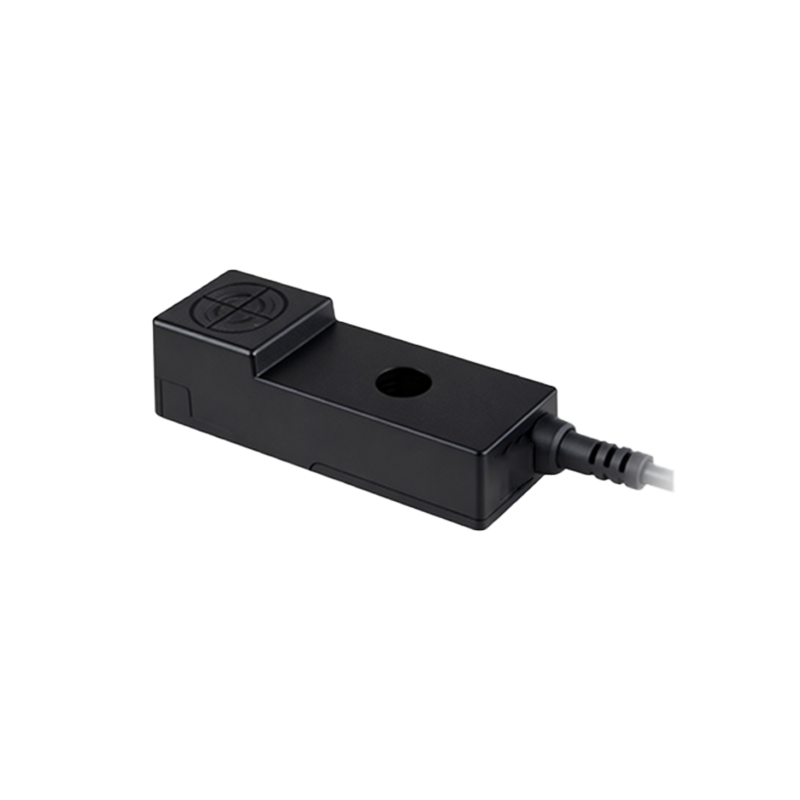
The core technology behind short-range proximity sensing is diverse, with leading companies often specializing in a particular method. Inductive sensors, which detect metallic objects, are a staple in industrial automation for tasks like part counting on conveyor belts or determining the position of a machine tool. Capacitive sensors, capable of detecting both metallic and non-metallic materials like liquids, plastics, or wood, are indispensable in level sensing and touch-sensitive interfaces. Photoelectric sensors, using light beams, offer versatile solutions for object detection, while ultrasonic sensors use sound waves for applications where the target's material or color is irrelevant. The most advanced players are integrating these technologies with microprocessors and digital interfaces, creating sensors that are not only sensitive but also intelligent—capable of self-monitoring, diagnostics, and communication via IO-Link or other industrial protocols.
The competitive landscape features a mix of established industrial automation giants and agile, focused innovators. Large multinational corporations bring scale, extensive global distribution networks, and the ability to provide a broad portfolio of sensing solutions. They often cater to high-volume, rugged industrial environments where reliability and interoperability with other automation components are paramount. Their sensors are engineered to withstand extreme temperatures, vibration, and exposure to chemicals, making them the go-to choice for automotive plants, packaging lines, and heavy machinery.
Conversely, a vibrant segment of smaller, specialized companies thrives by pushing the boundaries of performance in niche areas. These innovators might focus on ultra-miniaturized sensors for wearable devices, sensors with exceptionally high switching frequencies for robotics, or designs with unparalleled resistance to electromagnetic interference. They compete on precision, size, power efficiency, and customization. For instance, a company might develop a sub-millimeter resolution inductive sensor for a semiconductor wafer handling robot or a capacitive sensor with such fine tuning it can distinguish between different types of plastic. This specialization allows them to solve unique challenges that standard, off-the-shelf sensors cannot address.
The market drivers for these companies are powerful and interconnected. The rise of Industry 4.0 and the Industrial Internet of Things (IIoT) is perhaps the most significant. Modern short-range proximity sensors are increasingly seen as data points on the network. Smart sensors provide valuable operational data—such as cycle counts, temperature drift, or signal strength—that can be used for predictive maintenance, process optimization, and overall equipment effectiveness (OEE) calculations. This transforms the sensor from a simple switch into a critical source of business intelligence.
Furthermore, the relentless advancement in robotics, especially collaborative robots (cobots), demands a new generation of safety and guidance sensors. Short-range sensors are embedded in cobot arms to enable safe human interaction and precise detection of components in assembly tasks. The proliferation of autonomous mobile robots (AMRs) in warehouses relies heavily on arrays of proximity sensors for navigation and obstacle avoidance in dynamic environments. In consumer electronics, the demand for bezel-less smartphones and sophisticated touch interfaces continues to drive the need for ever-smaller, more reliable capacitive and optical sensors.
Looking ahead, the trajectory for short-range proximity sensor companies points toward greater integration, intelligence, and miniaturization. The convergence of sensing and edge computing will lead to devices that can perform initial data analysis locally, reducing latency and network load. Advances in materials science may yield new sensing elements with higher sensitivity or durability. As applications in electric vehicles, renewable energy systems, and advanced biomedical equipment grow, the requirements will become more stringent, rewarding companies that can consistently innovate.
Ultimately, the value provided by these companies extends far beyond the sensor unit itself. They deliver precision, safety, efficiency, and data. By enabling machines to perceive their immediate environment with accuracy and reliability, short-range proximity sensor companies form an essential, though often unseen, layer of our technological infrastructure. Their continued evolution is a prerequisite for the next waves of automation and smart device development, making them pivotal players in shaping an increasingly automated future.