In the realm of automation, robotics, and smart devices, the ability to detect the presence or measure the distance to an object without physical contact is fundamental. This capability is primarily enabled by two key technologies: distance sensors and proximity sensors. While the terms are sometimes used interchangeably, they represent distinct concepts with overlapping functionalities. Understanding their principles, differences, and applications is crucial for engineers, developers, and technology enthusiasts.
A proximity sensor is a device that detects the presence or absence of a nearby object within a specified range, typically without providing precise measurement. Its primary function is to answer a simple binary question: "Is an object there or not?" These sensors are often used for object detection, position verification, or as safety switches. Common types include inductive proximity sensors, which detect metallic objects through electromagnetic fields; capacitive proximity sensors, which can detect both metallic and non-metallic materials like plastic or liquid by sensing changes in capacitance; and photoelectric sensors, which use a light beam (often infrared) to detect an object's interruption or reflection. Ultrasonic sensors can also function as proximity detectors. The output is usually a simple on/off signal.
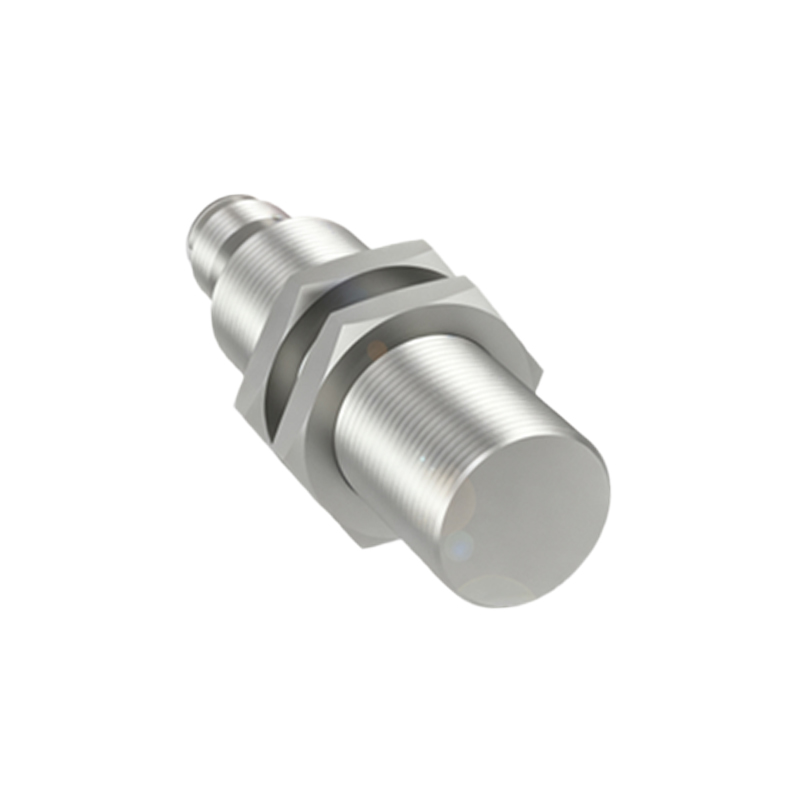
Distance sensors, on the other hand, are designed to provide quantitative data. They answer the question: "How far away is the object?" These sensors measure the exact distance between the sensor and a target, providing continuous analog or digital data. This measurement is vital for applications requiring precision, such as level monitoring, robotic navigation, or gesture control. Technologies commonly used for distance measurement include ultrasonic sensors (calculating distance based on the time-of-flight of sound waves), laser rangefinders or LiDAR (using light pulses for extremely high accuracy), and infrared (IR) distance sensors, which often work on the principle of triangulation or intensity reflection.
The line between the two can blur. Many ultrasonic and IR sensors are configurable to operate in both a proximity (threshold) mode and a distance-measuring (analog output) mode. The core distinction lies in the intent and output: proximity sensing is about detection, while distance sensing is about measurement.
The applications for these sensors are vast and growing. In the automotive industry, ultrasonic proximity sensors are ubiquitous in parking assist systems, alerting drivers to nearby obstacles. More advanced distance sensors like radar and LiDAR are the eyes of advanced driver-assistance systems (ADAS) and autonomous vehicles, creating detailed 3D maps of the environment. In consumer electronics, a simple IR proximity sensor in a smartphone detects when the phone is held to the ear during a call, turning off the display to save power and prevent accidental touches. More sophisticated time-of-flight (ToF) distance sensors enable features like portrait mode photography and augmented reality applications by mapping depth.
Industrial automation heavily relies on both. Inductive proximity sensors count metallic parts on a conveyor belt or verify a robot's end-of-arm position. Laser distance sensors precisely measure the thickness of materials or control the fill level in tanks. In robotics, a suite of proximity sensors provides collision avoidance, while distance sensors like LiDAR are critical for simultaneous localization and mapping (SLAM), allowing robots to navigate complex spaces.
When selecting a sensor for a project, several factors must be considered. The sensing range is paramount—from a few millimeters for capacitive sensors to hundreds of meters for laser rangefinders. The material of the target object dictates the technology; inductive sensors only work with metals, while capacitive and ultrasonic sensors are more versatile. Environmental conditions such as dust, fog, ambient light, or acoustic noise can severely impact the performance of optical and ultrasonic sensors, respectively. Finally, requirements for resolution, accuracy, response speed, and cost will narrow down the choices.
The future of sensing technology points towards greater integration, miniaturization, and intelligence. Sensors are becoming smaller, cheaper, and more power-efficient, enabling their proliferation in Internet of Things (IoT) devices. Sensor fusion—combining data from multiple types of sensors (e.g., camera, LiDAR, radar)—is enhancing the reliability and perception capabilities of autonomous systems. Furthermore, the advent of smart sensors with embedded processing allows for edge computing, where basic decision-making happens within the sensor itself, reducing latency and system complexity.
In conclusion, distance and proximity sensors are the unsung heroes of the modern technological landscape. From the simple act of turning off a smartphone screen to the complex navigation of a self-driving car, these devices provide machines with a critical sense of spatial awareness. By understanding their operating principles and appropriate applications, designers can create smarter, safer, and more responsive systems that interact seamlessly with the physical world.