In the demanding environments of modern industrial automation, the marriage of robust construction and reliable performance is not just an advantage—it's a necessity. Proximity sensors, the silent sentinels of production lines, are tasked with the critical role of non-contact object detection. When these electronic components are encased in cast iron, they transcend standard duty, entering a realm of exceptional resilience tailored for the harshest conditions.
Cast iron, an alloy primarily of iron, carbon, and silicon, has been a cornerstone of industrial manufacturing for centuries. Its resurgence in high-tech sensor housings is a testament to its irreplaceable properties. The primary benefit is unparalleled physical strength. Cast iron housings provide superior protection against mechanical impacts, crushing forces, and persistent vibration—commonplace in heavy machinery, mining operations, stamping presses, and material handling systems. A sensor with a plastic or light aluminum body might falter where a cast-iron-clad unit operates unfazed.
Beyond brute strength, cast iron offers significant electromagnetic shielding. In facilities dense with motors, drives, and welding equipment, electromagnetic interference (EMI) can wreak havoc on sensitive sensor signals. The ferromagnetic nature of cast iron acts as a Faraday cage, effectively attenuating external EMI and ensuring signal integrity and operational stability. This results in fewer false triggers, reduced downtime, and more consistent process control.
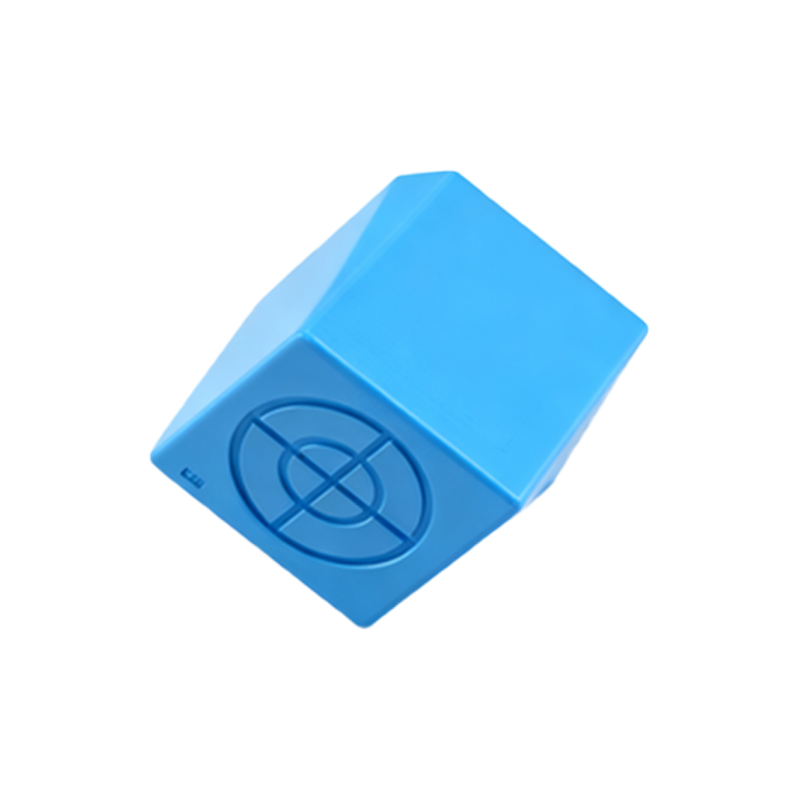
The environmental sealing of sensors is also enhanced. While the sealing itself is achieved through gaskets and O-rings, the rigid, non-deforming structure of a cast iron housing maintains seal integrity under stress and over wide temperature fluctuations. This robust sealing, typically meeting IP67, IP68, or IP69K standards, guards against ingress of coolants, oils, cutting fluids, metallic dust, and high-pressure washdowns. Consequently, these sensors are ideal for food and beverage processing, chemical plants, and outdoor applications.
From a technical perspective, integrating sensing technology into a cast iron body requires careful engineering. Designers must account for the material's influence on the sensor's electromagnetic field. Inductive proximity sensors, which detect metallic objects, are most commonly housed in cast iron. The housing design must ensure that the cast iron does not adversely dampen the oscillating field or create a blind zone. Advanced models use specialized coil designs and shielding techniques to optimize sensing distance and repeatability, even within the robust metallic shell.
Maintenance and lifecycle costs present a compelling economic argument. The initial investment in a cast-iron-housed proximity sensor is often higher than standard models. However, this cost is offset by dramatically extended service life and reduced failure rates in punishing environments. The total cost of ownership decreases through minimized production stoppages, lower replacement frequency, and less inventory needed for spares. It is a classic case of buying resilience, translating to long-term operational savings and enhanced equipment uptime.
Selection criteria for these workhorses extend beyond just the housing material. Engineers must consider the sensing technology (inductive, capacitive), sensing distance, output type (PNP/NPN, analog, IO-Link), electrical connection (connector or cable), and the specific environmental ratings required. Matching the sensor's technical specifications to the application's demands—such as the target material, required switching frequency, and ambient contaminants—is crucial for optimal performance.
In summary, the integration of proximity sensors into cast iron housings represents a strategic fusion of timeless material science with cutting-edge detection technology. It addresses the core industrial challenges of durability, reliability, and signal integrity head-on. For applications where failure is not an option and the operating environment is relentlessly tough, specifying a proximity sensor in a cast iron housing is not merely a choice—it is the definitive engineering solution for ensuring continuous, precise, and trouble-free operation.