Proximity switches, specifically inductive proximity sensors, are fundamental components in industrial automation for non-contact detection of metallic objects. Their operation hinges on the principles of electromagnetic induction, offering reliability, long service life, and high switching frequencies in challenging environments. Unlike mechanical limit switches, they have no moving parts to wear out, making them ideal for repetitive tasks.
The core of an inductive proximity sensor is a coil wound around a ferrite core, which forms part of an oscillator circuit. When powered, this oscillator generates a high-frequency alternating electromagnetic field that radiates from the active face of the sensor. In the absence of a metallic target, the oscillator operates at its base amplitude, and the sensor's output state remains unchanged.
The key operating principle unfolds when a conductive metal object enters this oscillating field. According to Faraday's Law of electromagnetic induction, eddy currents are induced on the surface of the target metal. These circulating currents create their own magnetic field, which opposes the original field generated by the sensor's coil, following Lenz's Law. This opposition results in a "loading" or damping effect on the oscillator circuit.
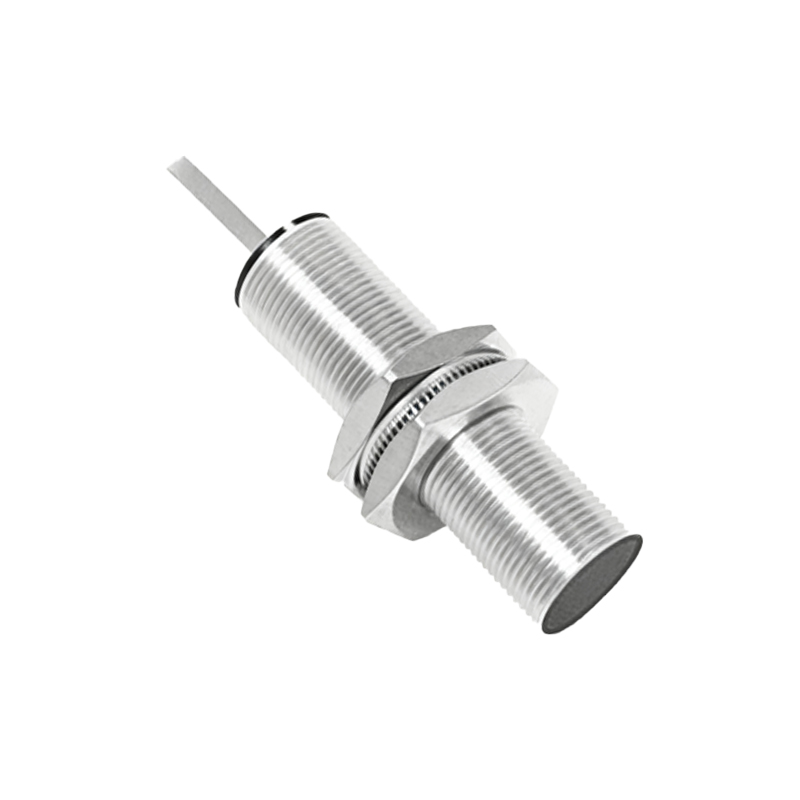
The sensor's internal circuitry continuously monitors the amplitude of the oscillation. The energy loss caused by the eddy currents leads to a measurable decrease in this amplitude. A signal evaluation circuit, typically a threshold trigger or Schmitt trigger, detects this drop. Once the amplitude falls below a predefined threshold—corresponding to the object being within the specified sensing distance—the trigger circuit activates. This action switches the sensor's solid-state output (e.g., NPN, PNP, or NO/NC). When the metal object moves away, the oscillator amplitude recovers, and the output reverts to its original state.
Several factors influence the performance and sensing range. The operating distance, or nominal sensing range (Sn), is standardized for a reference target of mild steel. Different metals affect the sensing distance due to their varying electrical conductivity and magnetic permeability. For instance, steel (ferromagnetic) typically provides the longest range. Non-ferrous metals like aluminum, copper, or brass (good conductors but non-magnetic) induce stronger eddy currents but have weaker magnetic properties, resulting in a shorter sensing range, often 30-60% of Sn. Stainless steel, depending on its grade, can also reduce the effective range.
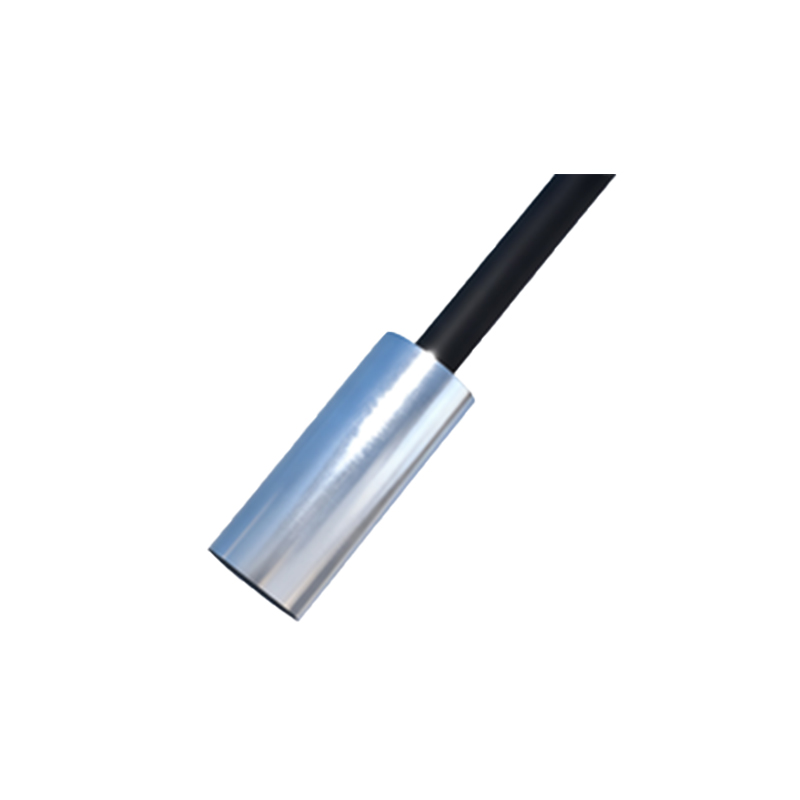
The sensor's housing is designed to shield the electromagnetic field, directing it forward to prevent side-sensing and ensure stable, repeatable detection. Key specifications include the repeatability (precision of switching point), switching frequency (maximum number of detections per second), and hysteresis (the difference between the switch-on and switch-off points to prevent output chatter).
Applications are vast across manufacturing and processing industries. They are used for part presence verification on conveyor lines, counting metal parts, detecting end positions of cylinders, monitoring rotational speed via gear teeth, and ensuring machine safety by confirming guard positions. Their sealed construction allows use in areas with dust, oil, or coolants.
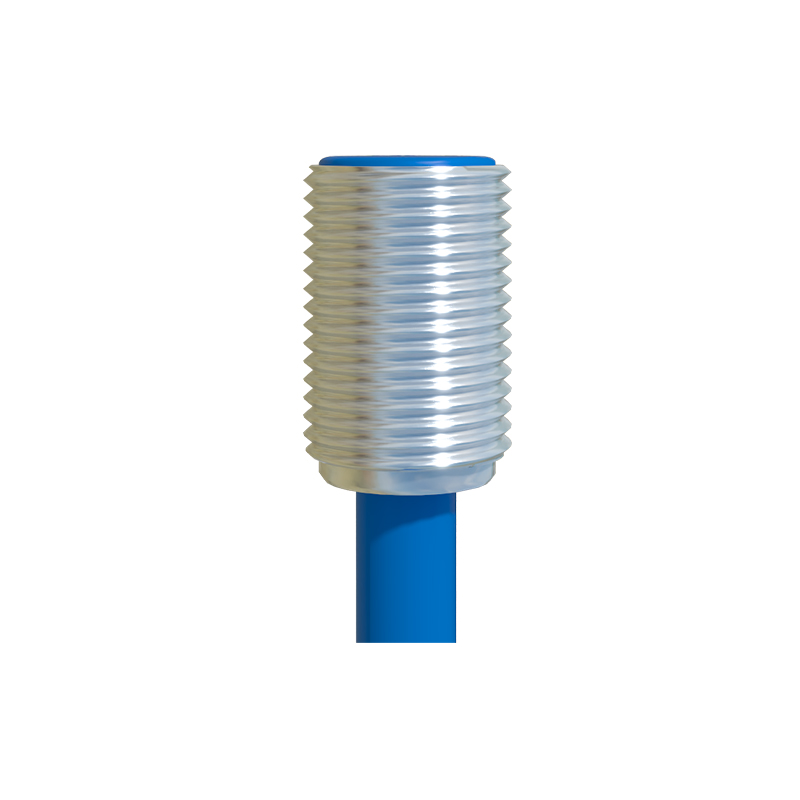
In summary, the working principle of a metal-sensing proximity switch is a seamless integration of electromagnetic theory and practical electronics. By converting the physical presence of a metal target into a change in an oscillating circuit's energy, it provides a robust, wear-free signal essential for modern automated system control and monitoring.