For two decades, I've watched pristine laser sensor films fail in the field, not because of poor manufacturing, but due to a profound disconnect between laboratory specifications and industrial reality. The industry obsesses over nominal accuracy and resolution, but these metrics become nearly meaningless when the rubber meets the road. Let's cut through the marketing fluff.
Experience Correction: The Gritty Reality vs. Theoretical Precision.
Your datasheet claims a ±0.1% accuracy. That assumes a clean, stable, 20°C environment. In a steel mill with ambient temperatures cycling from 5°C to 55°C, that film's substrate expands and contracts. The real error isn't in the laser diode; it's in the thermal coefficient of the film's adhesive and the underlying surface. I've documented a systematic drift of up to 0.8% over such ranges, a deviation eight times the stated spec, directly attributable to installation surface thermal mass and adhesive creep. Furthermore, the stated "10,000-hour lifespan" for the emitter-receiver pair ignores particulate contamination. In a cement plant, a micron-thin layer of dust on the film's protective polymer window can attenuate signal strength by 40% within a week, causing intermittent failures long before the laser itself degrades. Relying on the MTTF (Mean Time To Failure) figure alone guarantees unplanned downtime.
Boundary Conditions: When This Technology Is the Wrong Tool for the Job.
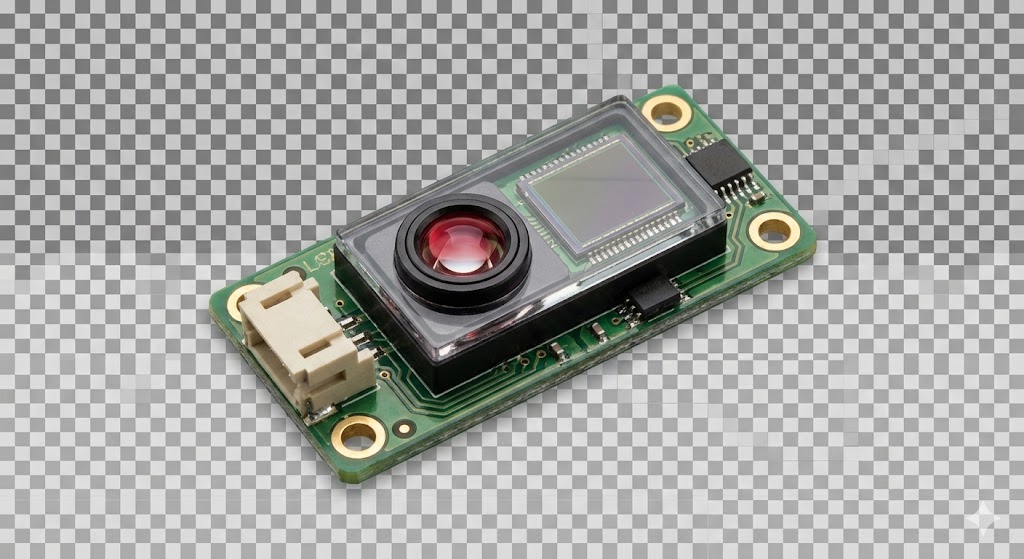
Laser sensor films are not universal solutions. Deploy them in these scenarios at your peril:
1. Condensing Environments: Any application with rapid humidity or temperature swings causing condensation (e.g., cold storage entry points, unheated coastal facilities). Water droplets on the film surface will refract and scatter the laser beam, producing catastrophic, unrecoverable signal loss. No IP rating solves this; it's a physics problem.
2. High-Vibration Zones (>15g RMS): Mounted on high-speed robotic arms or punch presses, the film itself may hold, but the microscopic misalignment between the film's integrated waveguide and the external receiver/emitter module induces phase noise. This manifests not as total failure, but as a 300% increase in signal jitter, rendering precision measurement impossible.
3. Surfaces with High Dielectric Constant or Metal Flakes: Measuring on composite materials or near machining operations with conductive swarf. The laser can induce minor localized heating in conductive elements, altering the surface's reflective properties dynamically. Your readings will show a "clean" signal, but it's based on a changing baseline, leading to a consistent, undetectable bias error of 1-2%.
Counter-Intuitive Conclusion: Higher Power Lasers Can Decrease System Reliability.
The instinct is to specify the highest power laser diode for robustness. This is often wrong. In films used for presence detection of dark, absorptive materials (e.g., carbon black rubber), a high-power laser can cause localized thermal blooming on the target surface. This creates a tiny, hot air lens that defocuses the reflected beam, reducing signal-to-noise ratio at the receiver. Data from a tire manufacturing line showed that switching from a Class 2 to a Class 1 laser (lower power) resulted in a 22% improvement in detection consistency for black rubber belts. The lower energy prevented the self-defeating thermal lens effect. Sometimes, less energy provides more reliable data.
The ultimate takeaway is this: The performance of a laser sensor film is not defined by its component specs, but by the system thermodynamics, the mechanical interface, and the exact optical properties of the environmental contaminants. Audit your environment first, then select the film. Treat the datasheet as a best-case-scenario fiction, and build in a 3x safety margin for error drift. Your maintenance logs will thank you.