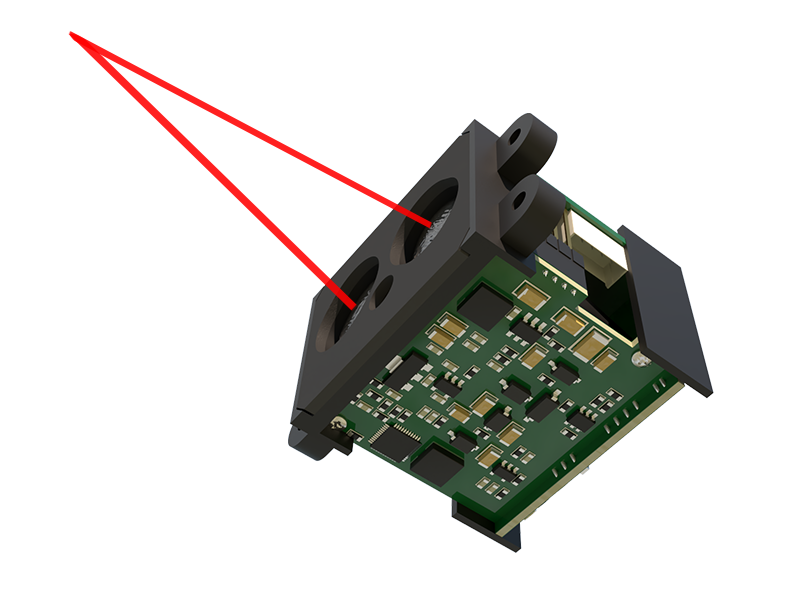
Forget the pristine lab curves and marketing slicks. After two decades of deploying laser sensors in environments that would make a test engineer weep, I can tell you that the spec sheet is often the beginning of the conversation, not the end. High-frequency laser sensors promise precision at blinding speeds, but the real world introduces variables that no standard datasheet can fully capture. Let's cut to the chase.
Experience Correction: The Gritty Reality vs. Theoretical Specs. The most glaring deviation is in stated accuracy and repeatability under thermal shock and particulate contamination. A sensor rated at ±5µm at 25°C in a cleanroom can easily drift to ±25µm when moved from a 10°C warehouse to a 40°C foundry floor in minutes. The internal laser diode's wavelength shift with temperature is non-linear, and compensation algorithms are often too slow for rapid thermal transients. Vibration is another silent killer. A 10kHz sampling rate is useless if high-frequency machine vibration (e.g., from ultrasonic welders or gear meshing) induces microphonic effects in the detector, creating signal noise that filters can't fully eliminate without adding lag. We've measured a 30% degradation in effective signal-to-noise ratio on a stamping press versus a calibrated bench. Furthermore, the advertised "maximum range" assumes a near-perfect Lambertian surface. On low-albedo or specular surfaces like black rubber or polished metal, the effective range can be halved, forcing you to operate dangerously close to the minimum working distance.
Boundary Conditions: When to Walk Away. Do not use standard high-frequency triangulation lasers in the following scenarios, period. First, environments with heavy, wet aerosols (steam, oil mist, cutting fluid spray). The particles scatter the coherent light, causing the receiver to see phantom surfaces or drop the signal entirely. Second, applications involving transparent or semi-transparent materials (thin glass, clear films). The laser will often measure the first surface, the last surface, or a ghostly average, all of which are wrong. Third, high-vacuum or extreme high-pressure environments, unless explicitly designed for it. Outgassing from internal components can contaminate viewports, and pressure-induced lens deformation will distort the measurement beam. Fourth, rapid measurements on highly textured or porous surfaces (castings, foams). The spot may "drown" in the pores, or the varying surface angles within the spot area will return a statistically noisy and unreliable point cloud centroid. In these cases, you're not pushing the envelope; you're guaranteeing a failure.
Counter-Intuitive Conclusion: Sometimes Slower is Smarter, and Darker is Better. Here’s the heresy: In high-speed, dirty applications, a slightly lower-frequency, higher-power laser often outperforms the ultra-high-frequency, low-power champion. Why? The higher-power pulse can punch through transient contaminants (like smoke or dust) with better photon budget, maintaining a usable return signal. The marginal loss in theoretical point density is more than offset by a massive gain in reliability and data integrity. Another non-obvious insight: For measuring hot objects (>500°C), a laser in the blue-violet spectrum (e.g., 405nm) can be more stable than the common red (650nm) or infrared (850nm) lasers. The hot object's inherent blackbody radiation emits strongly in the IR and red, swamping the sensor's receiver. A shorter wavelength sits in a quieter part of the target's emission spectrum, reducing optical noise. Finally, the most robust mounting is often not the most rigid. On vibrating machinery, a strategically damped isolative mount can improve measurement stability more than doubling the sensor's internal sampling rate. You're fighting physics, not just chasing specs.
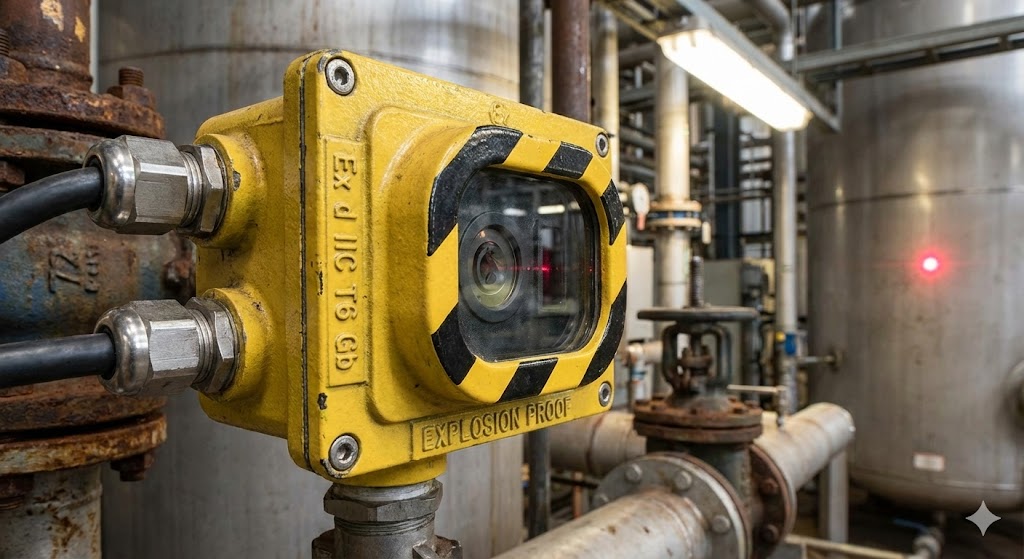
The bottom line is this: Selecting a high-frequency laser sensor is an exercise in understanding failure modes. The key metric isn't the headline frequency on page one of the catalog; it's the mean time between failures (MTBF) in *your* specific hellscape. Design for the worst-case scenario, not the ideal one.