For two decades, I've watched proximity sensors fail in ways the manuals never mention. The industry is saturated with theoretical specs and lab-condition performance data, creating a dangerous gap between expectation and gritty reality. Let's cut through the noise and focus on the unspoken truths that determine success or catastrophic failure on the factory floor.
Experience Correction: The Myth of "Rated" Specifications
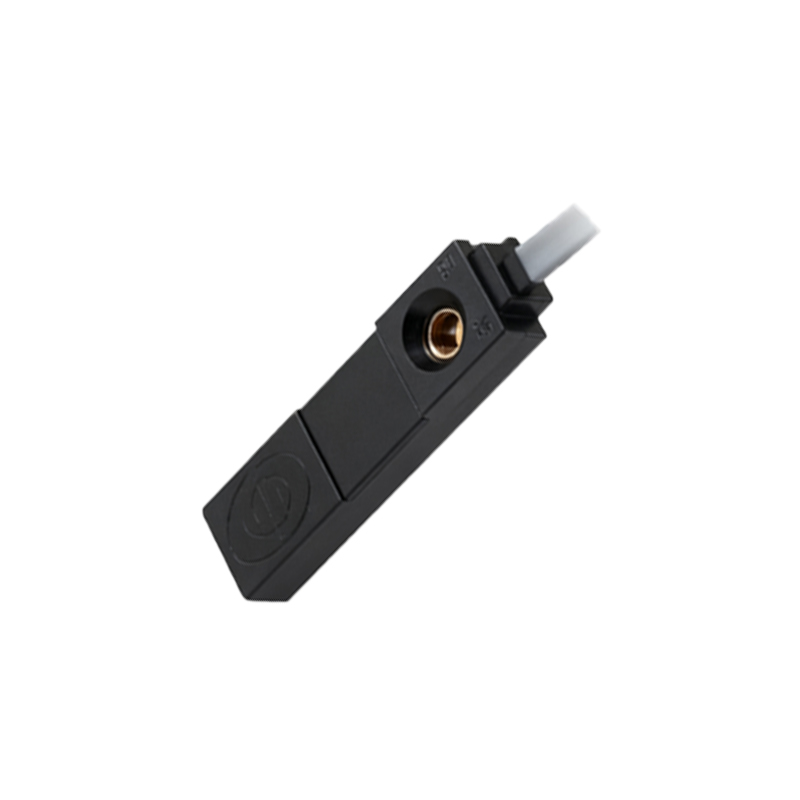
The datasheet states an IP67 rating and an operating temperature range of -25°C to 70°C. In theory, this should suffice for most industrial applications. The reality is a different story. The IP rating is achieved under static, clean water immersion tests. It does not account for high-pressure, high-temperature chemical spray common in food processing or metal stamping lines, where caustic cleaners or soluble oils penetrate seals over time through micro-cracking induced by thermal cycling. I've documented inductive sensor failures in automotive paint shops not from temperature extremes, but from the cumulative effect of overspray particulate building up on the face, altering the dielectric constant and causing false triggers. The "sensing distance" is another classic misnomer. It's calibrated for a standard mild steel target. Switch to stainless steel (common in pharma), and the effective sensing distance can drop by up to 40%. For aluminum, it's worse—a 60% reduction is typical. Relying on nominal specs guarantees downtime.
Boundary Conditions: When to Walk Away
Proximity sensors are not universal solutions. Deploying them in the wrong scenario is an engineering liability.
1. Extremely High-Speed, Non-Ferrous Targets: Inductive sensors tracking aluminum can lids at speeds exceeding 2,000 units per minute will miss counts. The eddy currents generated are weaker, and the sensor's response time (even if "1ms") cannot keep up with the signal-to-noise ratio degradation, leading to unrecoverable errors.
2. Applications with Heavy Condensation or Rapid Thermal Shock: Moving a sensor from a -20°C freezer to a 25°C ambient environment for maintenance causes immediate internal condensation. Powering it up can short-circuit the oscillator coil. The failure is often delayed and intermittent, making it a nightmare to diagnose.
3. Fine Metallic Dust Environments: Welding stations or powder coating areas are graveyards for standard inductive sensors. Ferrous dust accumulates on the sensing face, eventually creating a permanent "metal present" signal. The sensor isn't broken; it's doing its job perfectly—sensing the layer of dust. This requires specialized designs with mechanical wipers or pneumatic purge fittings, which are never part of the standard catalog discussion.
4. Background Suppression in Cluttered Metal Environments: The promise of "background suppression" in ultrasonic or advanced photoelectric sensors has limits. In a robotic cell with moving arms, the complex, shifting acoustic or reflective profile can create fleeting "ghost" targets. The risk of unintended actuation is high and unacceptable for safety-critical sequences.
Counterintuitive Conclusion: Sometimes a "Less Accurate" Sensor is More Reliable
The relentless pursuit of higher precision and faster response times can be a trap. In vibration-heavy environments like punch presses or forging hammers, a high-frequency inductive sensor with a 0.5mm repeat accuracy will pick up micro-vibrations of the machine itself as valid signals, causing erratic operation. Switching to a lower-frequency, "slower" sensor with a 2mm repeatability often provides a rock-solid signal because it effectively filters out this mechanical noise through its inherent design. You've traded unnecessary precision for bulletproof reliability. Similarly, in detecting tangled or overlapping metal parts on a conveyor, a sensor with a wider hysteresis (the difference between switch-on and switch-off points) is superior. It prevents rapid toggling as a misshapen part wobbles through the sensing field, ensuring a single, clean output pulse. The industry's marketing obsession with "high precision" ignores the fundamental need for signal stability in chaotic real-world conditions. The optimal sensor is not the one with the best specs on paper, but the one whose inherent physical limitations align with the chaos of your specific application.