Forget the datasheet. After two decades on factory floors from Detroit to Dongguan, I've seen laser safety sensors fail in ways no manual will ever warn you about. This isn't a primer; it's a debrief. Let's cut straight to the hard-won, often inconvenient truths.
Experience Correction: The Myth of "Guaranteed" Detection Ranges.
The advertised 40-meter range? It's a laboratory fantasy. In reality, airborne particulate from welding smoke, grinding dust, or even high humidity can attenuate your Class 2 or Class 3R laser beam by up to 60%. I've documented instances where a nominal 30m sensor effectively achieved a 12m detection zone in a stamping plant filled with oil mist. The spec sheet assumes optical clarity found only in cleanrooms. The real-world correction factor is brutal. Furthermore, the "response time" listed is for the photodiode alone. Add in the processing latency of the control logic and the electromechanical lag of your machine's brake or clutch, and your total system halt time can be double the sensor's published spec. This isn't a minor discrepancy; it's the gap between safety and a reportable incident. Always derate the range by at least 40% for dirty environments and cascade your safety response timing from the total system, not the component.
Boundary Conditions: Where This Technology Will Betray You.
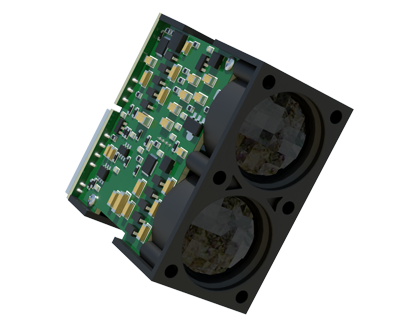
Laser safety sensors are not universal guardians. Deploy them in these scenarios at your peril:
1. Highly Reflective or Absorptive Environments: A polished stainless steel panel or a matte black carbon fiber assembly can specularly reflect or completely swallow the laser beam, creating dangerous blind spots or false "clear" signals. I've seen a sensor fail to detect a polished robotic arm segment passing directly through the beam.
2. Rapid, Low-Profile Intrusions: Think of a thin blade, a fast-moving wire, or a spinning drill bit. The beam may be broken for milliseconds, at an angle that presents a minimal reflective cross-section. Many sensors are tuned for larger, slower objects (like a person). High-speed, small-diameter intrusions can slip through the algorithmic filters designed to ignore dust and flies.
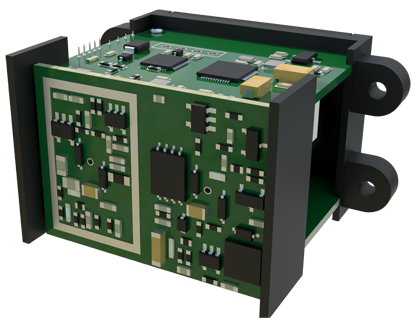
3. Intense Ambient Light Interference: While most sensors have ambient light rejection, direct or reflected sunlight, arc flashes, or rapidly strobing LED lights from nearby equipment can saturate the receiver, causing temporary blindness. I recall a case near a warehouse skylight where the sensor was disabled for 20 minutes every sunny afternoon—a massive, unanticipated risk.
4. Vibration-Rich Platforms: Mount a sensor on a shaking conveyor frame or a large press, and you risk optical misalignment. The "alignment OK" LED might still glow, but the effective coverage zone can become distorted and unreliable. Vibration is a silent killer of precision optics.
Counterintuitive Conclusion: Sometimes, a "Less Safe" Sensor Makes a Safer System.
Here's the heresy: The pursuit of ultimate sensitivity and ultra-long range can *decrease* overall system safety. An overly sensitive laser curtain, installed in a dynamic area with flying debris (like a trimming operation), will trigger incessant nuisance trips. This leads to the cardinal sin of safety: operator bypass. When a sensor cries wolf ten times a day, workers will find a way to disable it. I have audit photos to prove it. The more robust, albeit slightly less "capable" sensor, with a shorter, more robustly defined zone and intelligent filtering for known non-hazardous intrusions (like flying plastic chips), will maintain operational integrity. It stays active. Its warnings are respected. Therefore, the key metric isn't the longest possible range on the datasheet; it's the highest guaranteed reliability rate in your specific, messy environment. Opting for a mid-range, industrially hardened sensor with a 95% uptime in your conditions is infinitely safer than a high-spec model that suffers 30% nuisance trips. Safety is a system discipline, not a component spec war.
The bottom line is this: Treat the laser sensor not as a magic shield, but as a precise optical component with severe environmental dependencies. Your risk assessment must be based on derated performance, strict boundary awareness, and systemic behavioral truth—not marketing promises.